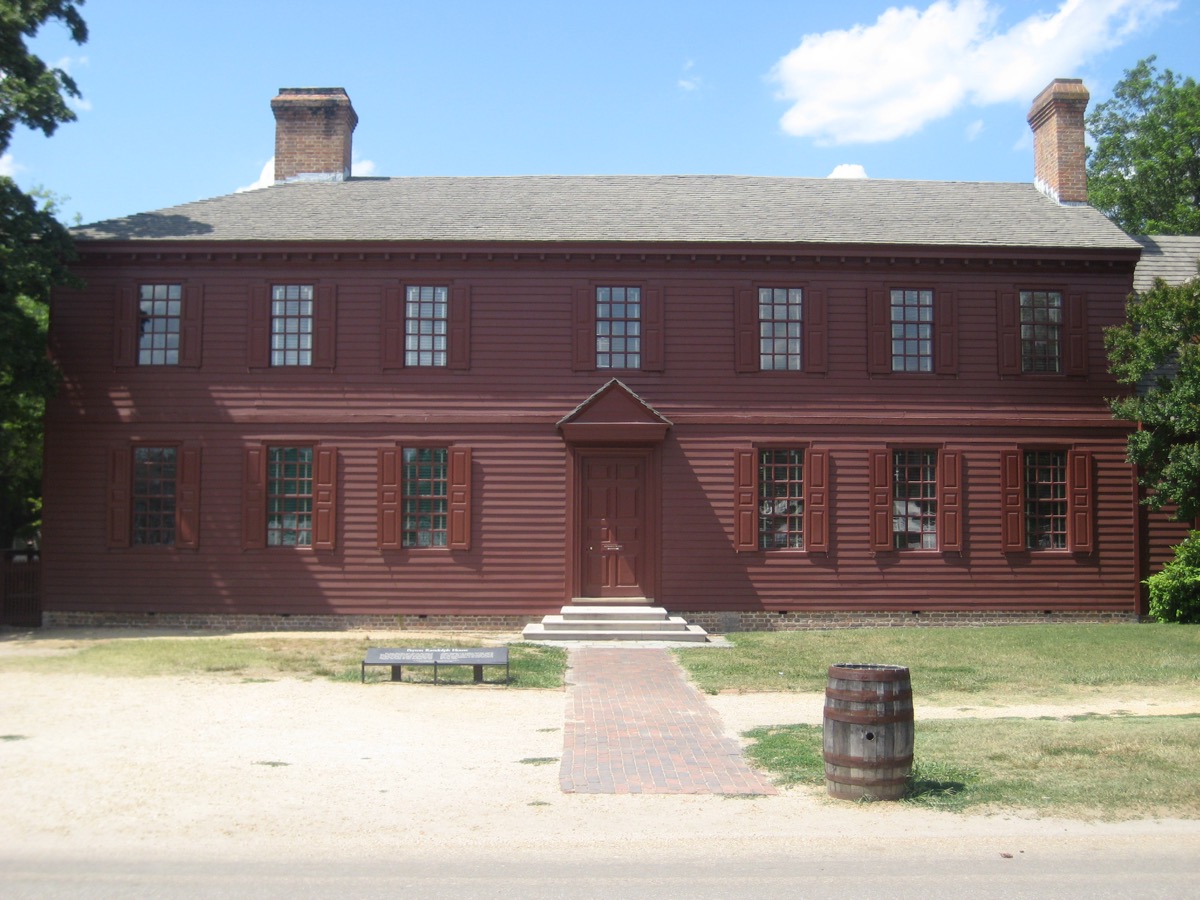
Williamsburg's 1715 Randolph house: a sealed-room fire extinguisher that drained itself, Peachy children in the yard lore, one Lafayette quote to skip.
Firefighters walked into the Peyton Randolph House on a fire alarm in December 2014 and found a fully discharged fire extinguisher sitting in the middle of a sealed room in the east wing. Handle in normal position. Hose down. Safety pin missing. No powder visible anywhere outside the room. The responding firefighter went on camera with Colonial Ghosts and said, "the only thing I can deem it to be is a paranormal ghost experience." Not a tour guide. The guy who showed up to the call.
Williamsburg has a ghost-tour industrial complex, and most of the lore around the Randolphs gets recycled from site to site with no source. The extinguisher story is different. Names attached, a date attached, and two witnesses, the firefighter and a Colonial Williamsburg security guard. It's the cleanest piece of physical weirdness on the property.
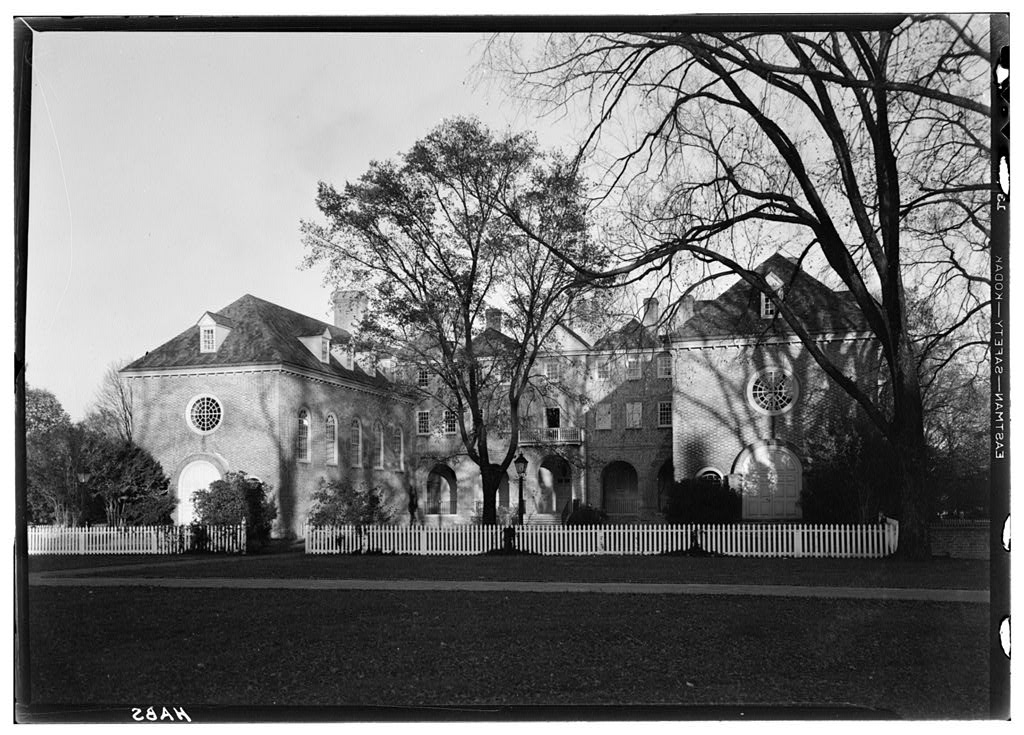
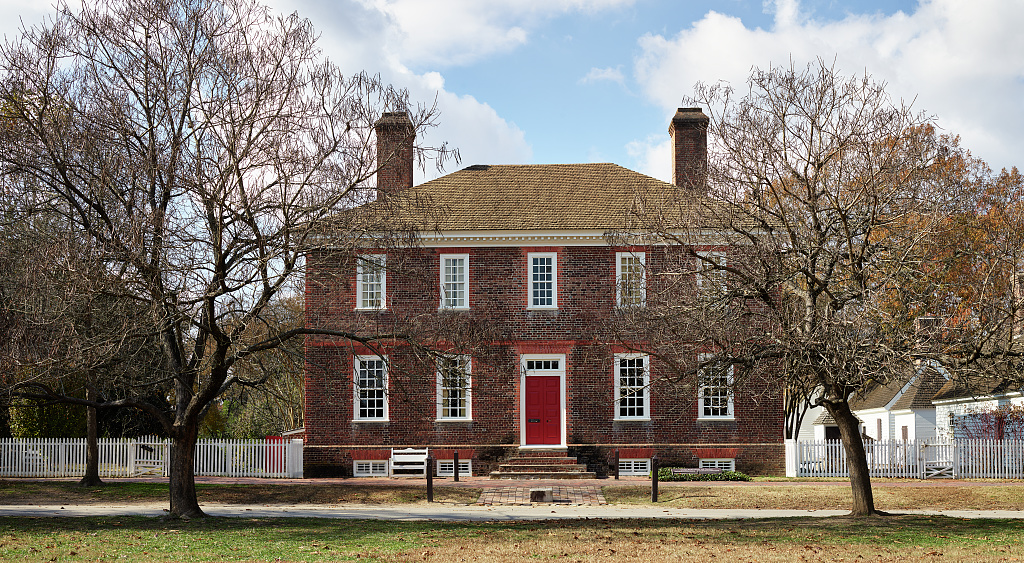
The house itself has been on the corner of Nicholson and North England Street since around 1715. William Robertson, clerk of the Council, built the original west block. Sir John Randolph bought it in 1724 and added the east tenement. His son Peyton Randolph, who would become the first President of the Continental Congress, stitched the two halves together with a central connector sometime in the mid-1700s. The front of the house reads as a seven-bay wood-frame block today because of that stitching job: it's three buildings pretending to be one. Colonial Williamsburg Foundation restored it in 1939 and 1940. National Historic Landmark designation came April 15, 1970.
Peyton Randolph died of a stroke in Philadelphia on October 22, 1775, while serving the Continental Congress. Not in the house, which is where some accounts try to put him.
The history before you get to ghosts is dense enough to carry the page on its own. French General Rochambeau used the house as his headquarters during the Yorktown campaign in 1781. The Peachy family owned it during the Civil War, and it served as a field hospital for both Union and Confederate wounded after the Battle of Williamsburg on May 5, 1862. Lafayette stopped in during his 1824 American tour. Whatever you've read about Lafayette experiencing a phantom hand on his shoulder in the foyer, skip it. That quote turns up verbatim on tour-operator pages with no citation, and the researchers who've actually dug into this house, including Michael Kleen and the local writer Tim Scullion, don't repeat it. The visit happened. The ghost story attached to it is laundry passed between tour sites.
The names that come up in the documented ghost lore, again and again across Taylor, Kleen, and the official Ghost Walk companion, are the Peachy children. *Colonial Williamsburg Hauntings*, the 2016 companion to the official Colonial Williamsburg Ghost Walk, calls Sally and Mary Peachy the most active reported phantoms in the house. The backstories aren't dated in any record I can find, only that a Peachy boy is said to have fallen from a tree in the yard and died of his injuries, and a Peachy girl is said to have fallen from a second-story window. Tour sites repeat these as gospel. I'd put them in the "named in published Williamsburg ghost lore" bucket and leave it there.
L.B. Taylor Jr.'s *The Ghosts of Williamsburg* (1983) is the source most often cited for an upstairs oak-paneled bedroom with a Woman in White, and for a figure called the Apprehensive Woman. Tour operators lean on Taylor heavily. Nothing else I've seen pins down exact rooms or dates.
The part of this house's story that I think gets shortchanged sits in the Randolph family's own probate paperwork. Eve, enslaved by Peyton Randolph, was valued at £100 in his 1775 estate inventory, one of the highest valuations of any woman in the household. In 1781, when Cornwallis occupied Williamsburg, Eve escaped to the British lines along with Nanny, Aggy, and Lucy. A codicil to Betty Randolph's will dated July 20, 1782 notes she had sold Eve due to "bad behavior," which was the family's way of putting the escape on paper. A Randolph nephew's runaway advertisement described Eve as about forty, with a mole on her nose, last seen heading toward Hampton. None of that is ghost lore. It's documented. It's also more haunting than any tour-script line about a foyer.
A few things you'll see online that aren't in the historical record at all: two visitors shooting each other inside the house, a Confederate veteran dying mysteriously on the property, a tuberculosis death, a matriarch named Mary Monro Peachy dying in 1836, and Colonial Williamsburg "repeatedly denying" Ghost Adventures access for a lock-in. None of it is documented anywhere I could find. The "approximately thirty people have died in or at the house since 1715" figure that gets quoted everywhere has no documented basis either. The paperwork isn't there.
What you should do instead is walk past it. The house is operated as a historic house museum by Colonial Williamsburg, open to visitors as part of the Historic Area. You don't need a ghost tour. Stand at the corner of Nicholson and North England, look at the seven-bay façade, and remember it's three different builds welded together over three generations of a family that helped design the country and owned people. The east wing where the extinguisher discharged itself, sealed room, no powder anywhere beyond the door, is still there.