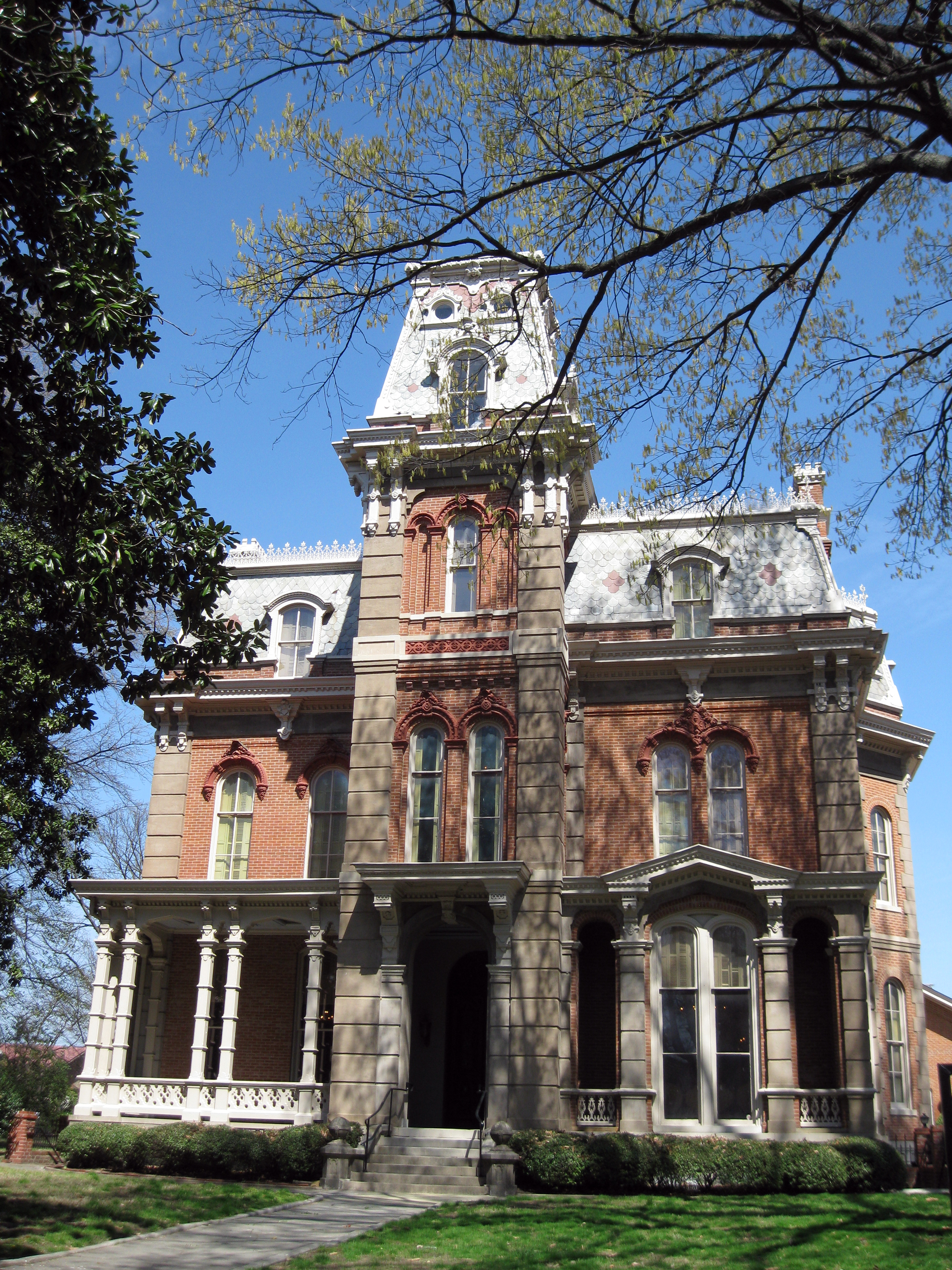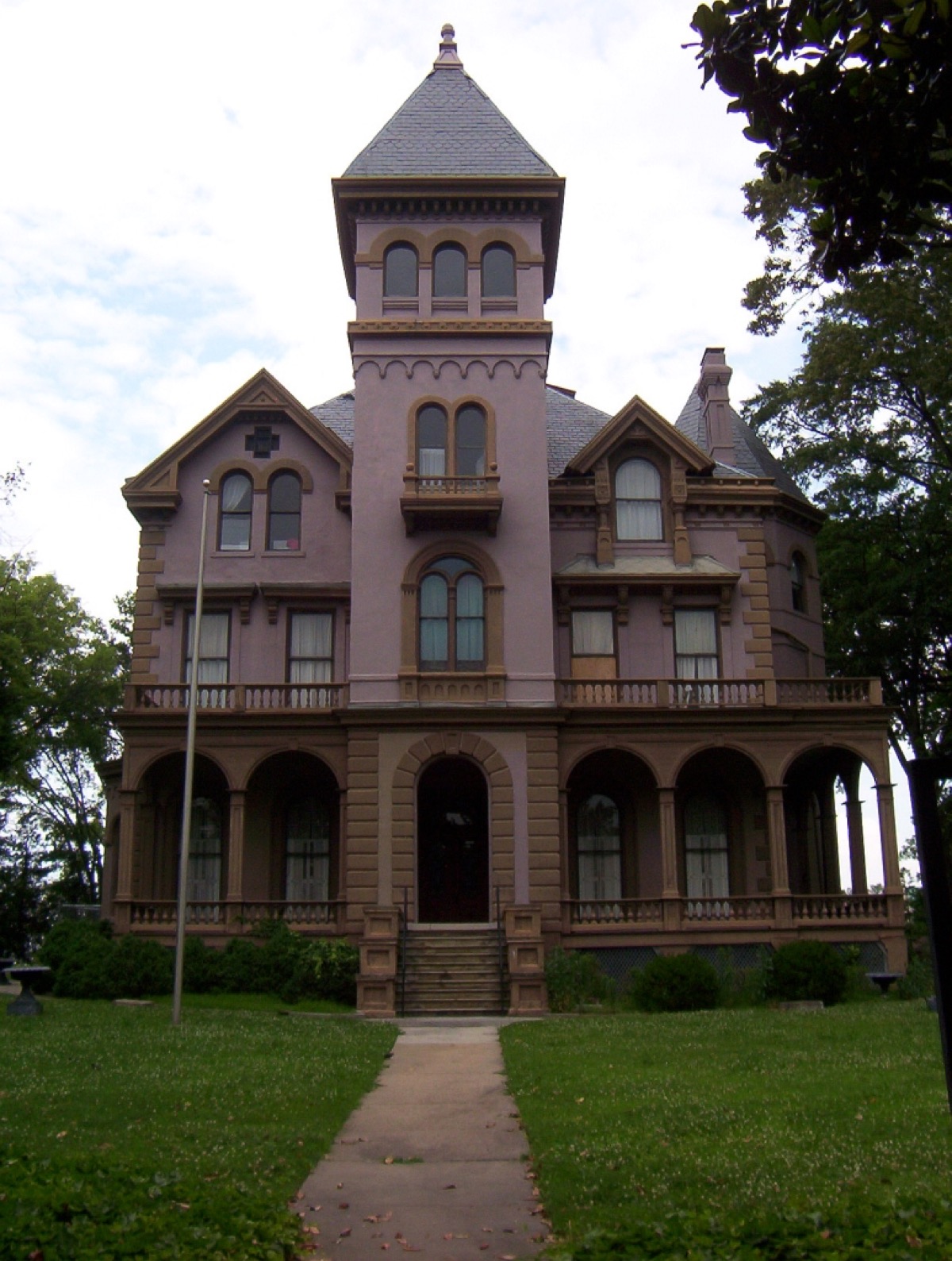
The Mallory-Neely House in Memphis was never restored to look Victorian; it simply stayed that way, right down to the furniture. On its third floor, visitors report a white-haired woman guarding the staircase and a woman crying overhead, a ghost with no name and no story of her own.
Visitors and staff at the Mallory-Neely House in Memphis describe an older woman at the head of the grand staircase, wild white hair, standing as if to guard the top of the stairs. Others only hear her — a woman crying somewhere on the third floor. And one account puts a single disembodied hand curled around the banister, resting there, attached to no one.
That third floor was the family's old private quarters, added when the Neelys enlarged the place in the 1880s and raised it to three full stories. And the family is the real reason this house unsettles anyone. The Mallory-Neely wasn't restored to look Victorian. It simply stayed that way: the actual parlor, the actual furniture, the stained glass the owners carried home from the 1893 Chicago World's Fair, the Chinese pieces kept from the 1904 fair in St. Louis, almost none of it ever swapped out across a century and a half.
Most of that is one woman's doing. Frances Neely Mallory — everyone called her Miss Daisy — moved into the 25-room mansion at 652 Adams Avenue as a child, after her father, a cotton factor, bought it in 1883. She married in 1900, was widowed in 1938, and kept living in the same rooms until she died in 1969, at 98. For most of her life it was her house, and she let it sit unchanged. She asked that it become a museum, and in 1973 it did — the only Victorian Village mansion in Memphis to keep essentially all of its original family furnishings.
The woman on the staircase has no name. Nothing dark is fixed to her. No death anyone can point to explains why she watches the top of the stairs, only a house one woman refused to let change. Next door, at the Woodruff-Fontaine House at 680 Adams, the resident ghost has both a name and a story: Mollie Woodruff, seen most often in her old second-floor bedroom, the Rose Room. Memphis ghost tours pair the two houses on the same walk.
None of the Mallory-Neely's third-floor phenomena come from an investigation. No name is attached to a first sighting, and no date pins one down, just travel write-ups handing the same three down the years: the crying woman, the white hair, the hand on the rail. What actually unsettles people isn't the figure at the railing at all. It's the house beneath her — one woman's whole life left exactly where it sat, for decades, and nobody moved a thing.