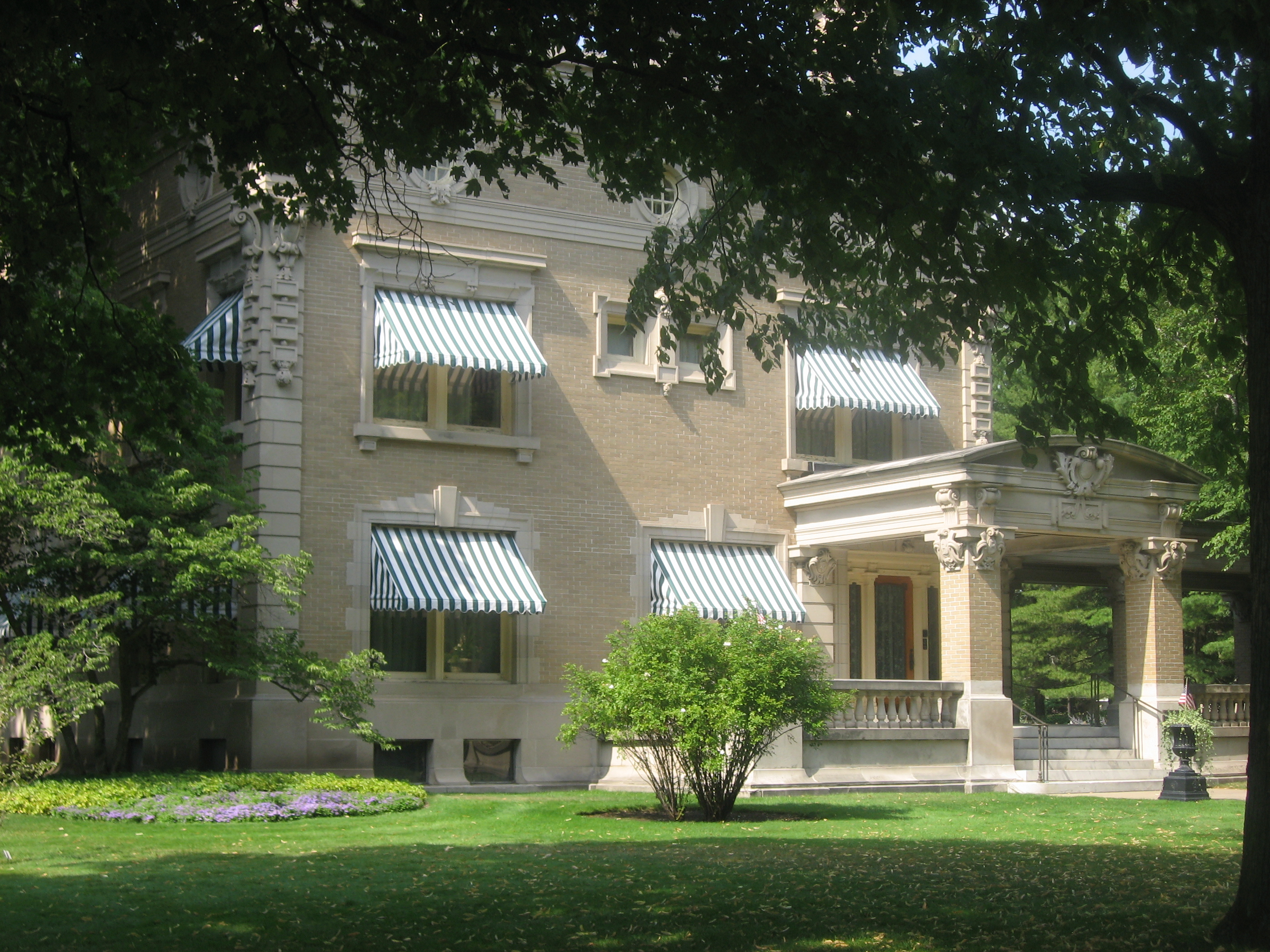
Ruthmere Mansion in Elkhart, Indiana is named for a baby who died at seven months — a house built to memorialize a child who never lived in it. Visitors report phantom gunshots and alarms that trip with no one near them.
At Ruthmere Mansion in Elkhart, Indiana, the alarms go off with no one inside. They trip on their own, mostly around Halloween, and visitors say they've heard gunshots come from the empty house. Other people describe objects moving in rooms with no one in them, lights and equipment switching on and off. Where the gunshots come from, nobody can say. No one was ever shot here.
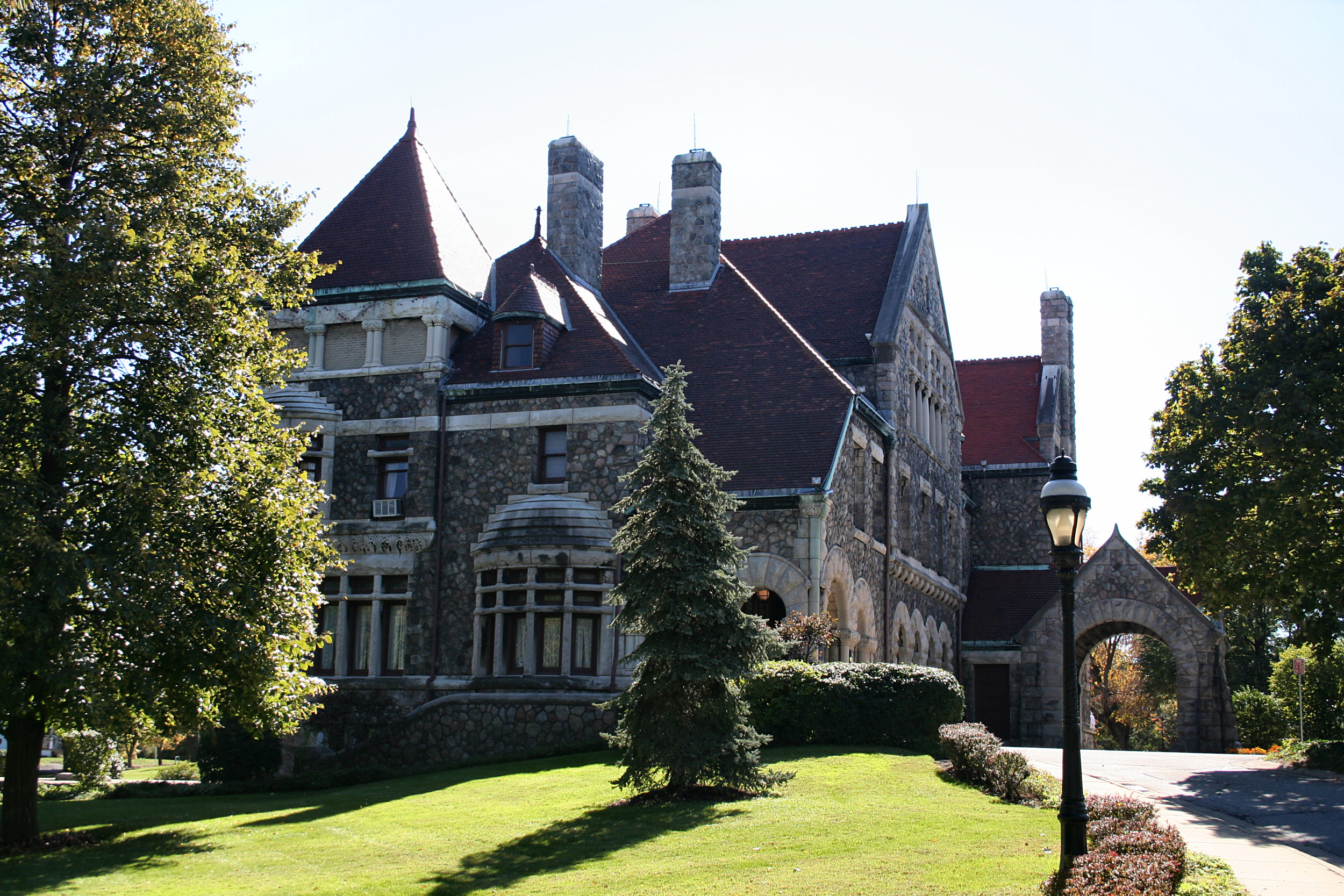
The house is named for a girl who died at seven months. In 1908, Albert and Elizabeth Beardsley commissioned a Beaux-Arts mansion on the St. Joseph River and called it Ruthmere — Ruth, for the only child they ever had, and "mere," from the Latin for water. Ruth had died years before they broke ground. They hired a Chicago-trained architect, faced the three stories in buff brick and Indiana limestone, and moved in around 1910, alone. They lived there fourteen more years.
Albert had the money for it. He ran the Dr. Miles Medical Company in Elkhart, the firm that became Miles Laboratories and gave the country Alka-Seltzer and One-A-Day. The fortune filled the house with Tiffany glass and sculptures by Auguste Rodin, silk on the walls, hand-carved woodwork, painted murals, a tunnel in the basement running out to a greenhouse. A monument to a baby, furnished like a museum.
Then it ended the way it began, fast and close. Elizabeth died in March 1924 of diabetes. Albert followed five months later, in July. The couple who had built a house for their dead daughter were both gone inside the same year. After them the place passed through other hands — a nephew, then a family named Deputy whose children were the only ones who ever actually lived there.
A few ghost-lore sites estimate more than ten spirits drift the rooms, though even they admit nobody knows who. There's no named ghost, no recorded murder, no body the gunshots answer to. The museum that runs Ruthmere today wants no part of any of it — staff say they've never experienced anything, and management has asked to be pulled from the haunted listings and won't allow paranormal investigations inside.
The house opened to the public in 1973 and made the National Register in 1978. People walk through it now, past the Tiffany glass and the Rodins, through rooms a grieving family built and filled and then died inside, all in the name of a child who never opened her eyes there. The ghost story barely holds together. The house doesn't need it.