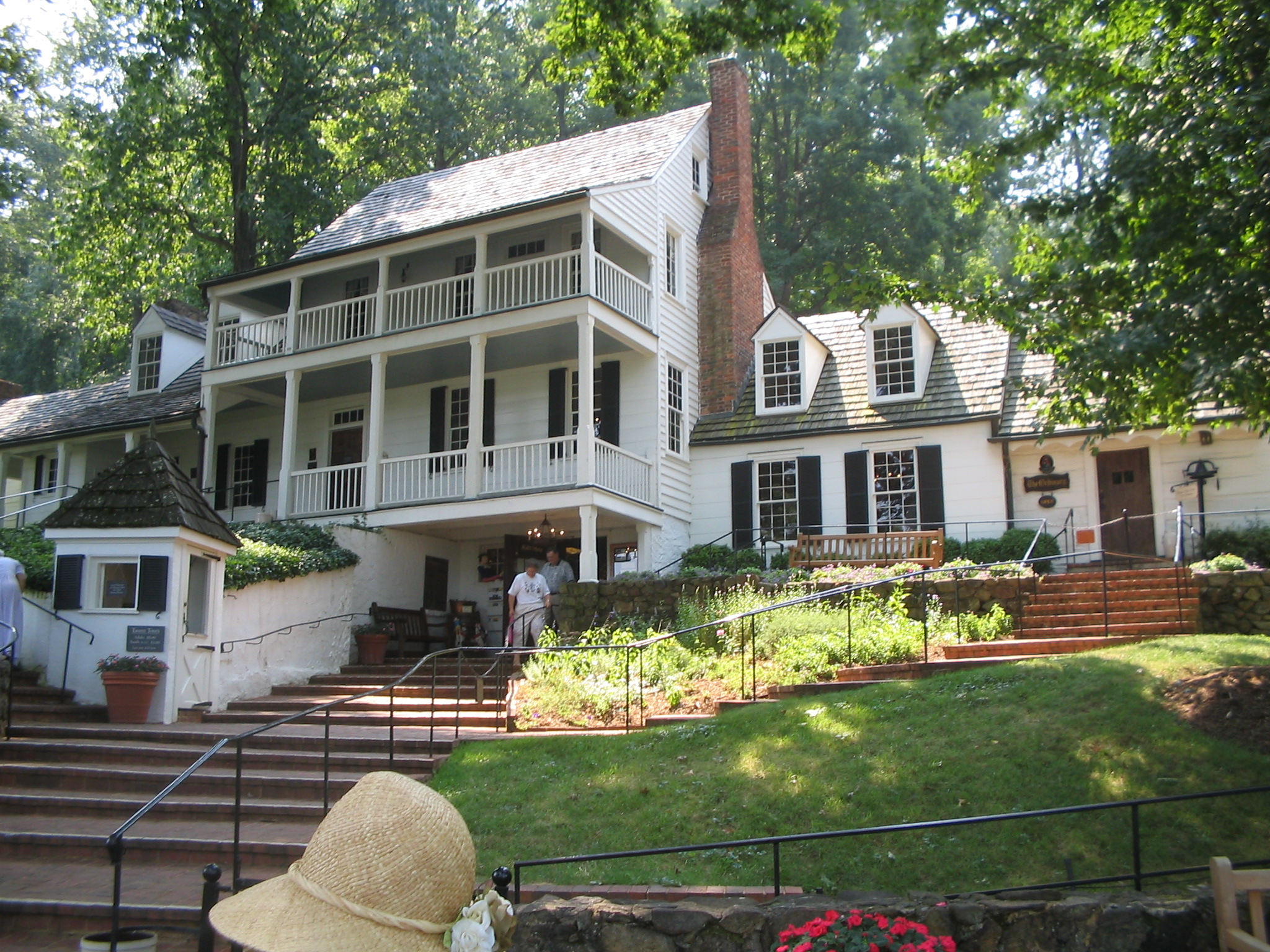
Hans Holzer's medium said the colonial party in Michie Tavern's upstairs Assembly Room never ended. The building has since been picked up and moved 17 miles.
When paranormal investigator Hans Holzer brought his medium Ingrid to Michie Tavern, she didn't report a tragedy. She reported a party. Spirits dancing, glasses clinking, the rhythm of an Assembly Room that closed for the night two hundred years ago and apparently kept going anyway. Holzer liked it enough to give the visit its own chapter in his book *Ghosts: True Encounters with the World Beyond*. He called it "Michie Tavern, Jefferson, and the Boys."
The haunting in one line: not vengeful, not tragic, a colonial party that never figured out it was over.
Which is already a strange piece of folklore, and then you remember the building has been moved.
William Michie built the place in 1784 on Buck Mountain Road, near Earlysville in northern Albemarle County. He'd come back from Valley Forge in 1777 to bury his father and inherit the land, and within a few years he had a license to run an "ordinary," which the tavern's own history calls the first such license issued under the new American government. The tavern sat on Buck Mountain Road, a main route through northern Albemarle, and the upstairs Assembly Room became the social engine of the countryside. Dances. Church services. Visiting magicians, doctors, and dentists working the room one after another. In 1779 Michie signed the Albemarle County Declaration of Independence at the tavern and, the story goes, talked his patrons into signing too, over ale and spiced rum.
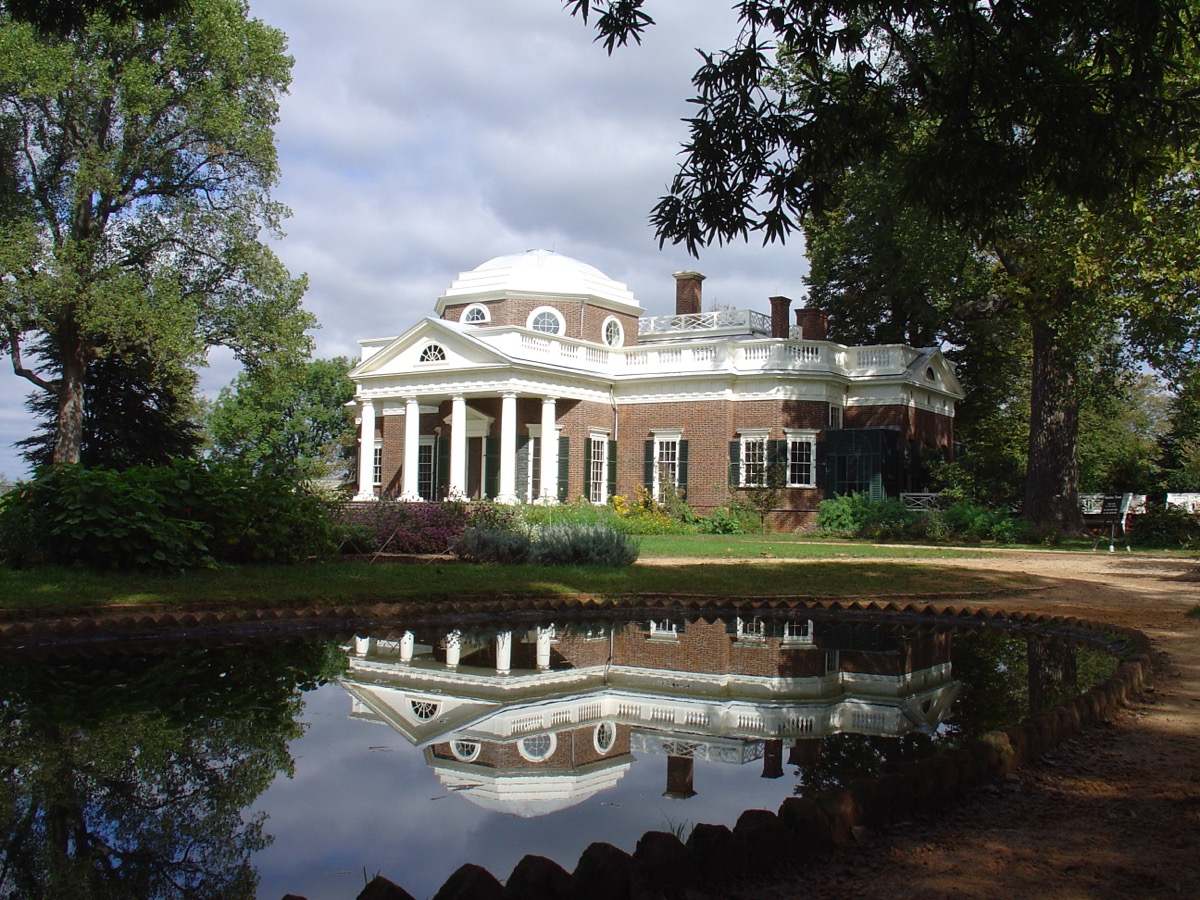
The Michie family kept the tavern until 1910. Then in 1927, a woman named Josephine Henderson (referred to in most records as Mrs. Mark Henderson) bought the deteriorating building and did something almost no one would do today: she had it numbered piece by piece, taken apart, and moved 17 miles by horse, wagon, and truck to a new site on Route 53, half a mile below Monticello. It reopened in 1928 as a museum for her antique furniture collection, with the bonus that tourists driving up to Jefferson's house would now pass right by. The National Register added it in 1986.
So when staff today say they hear laughter and the sound of dancing coming out of the empty Assembly Room after closing, the catch is that the room those sounds are coming from is not the room where those parties happened. The lumber is the same. The floorboards are the same. The location is seventeen miles south of where the colonial patrons actually drank. If a spirit is partying upstairs at Michie Tavern, it followed the wood.
The Assembly Room is on the second floor, by the way. Some ghost-story aggregators bump it to a "third floor," but Michie Tavern is and has always been a two-story inn. The official site and the Virginia Department of Historic Resources nomination both confirm it. Upstairs means the floor above the dining room, not some attic.
A few specifics from the modern paranormal record are worth listing, with appropriate hedging because the documentation is thin. A Virginia paranormal team affiliated with TAPS investigated the tavern in January of an unspecified year and reported capturing an EVP at 3 a.m., a single word, "no," recorded while every team member was accounted for. The Central Paranormal Research Institute investigated in March of another unspecified year and reported whistling in the basement when no one was there to be whistling. Staff have described hearing the sounds of a party from the empty Assembly Room. None of this comes with dates I can pin to a calendar.
What does have a date is the Holzer visit, sort of. *Ghosts: True Encounters with the World Beyond* came out in 1997, so the visit happened before then, but no source on this pass nailed down the year. Holzer connected the tavern's spirits to the Jefferson-Madison-Monroe political circle that ran through this corner of Virginia, which is how he got the chapter title. Some secondary sources say Holzer and Ingrid thought one of the spirits might be a Revolutionary War-era woman, though that detail floats around without a primary anchor, so take it loosely.
What there is *not* is a named ghost. No Civil War colonel. No grieving bride. No murdered tavern wench in the cellar. The lore here is plural and oddly cheerful: spirits, partying, in the same upstairs room they always partied in, just relocated. Most haunted tavern pages would invent a single mournful figure to anchor the story. Michie Tavern's story refuses to do that, and the page is better for it.
The complex you visit today is bigger than the original tavern. The Meadow Run Mill was relocated onto the property in 1976. There's a pub, a restaurant where servers wear period costume, a general store, and a tavern shop. The food is part of the draw and the food gets most of the reviews. The ghost stories aren't on the tour. You have to ask, or you have to be in the building after the last guest leaves and hear something that doesn't have a body attached to it.
If the haunting is real, here's the thing about it. Most ghost stories are about the dead being unable to leave. Michie Tavern's ghost story is about the dead following the building when *it* left. Whoever is dancing upstairs is dancing in a building that was disassembled, hauled seventeen miles south, and put back together at a different address on a different road below a different hill. They came along for the ride. That's a strange detail to sit with.
The whistler in the basement, for what it's worth, was recorded at a moment when the basement was empty.