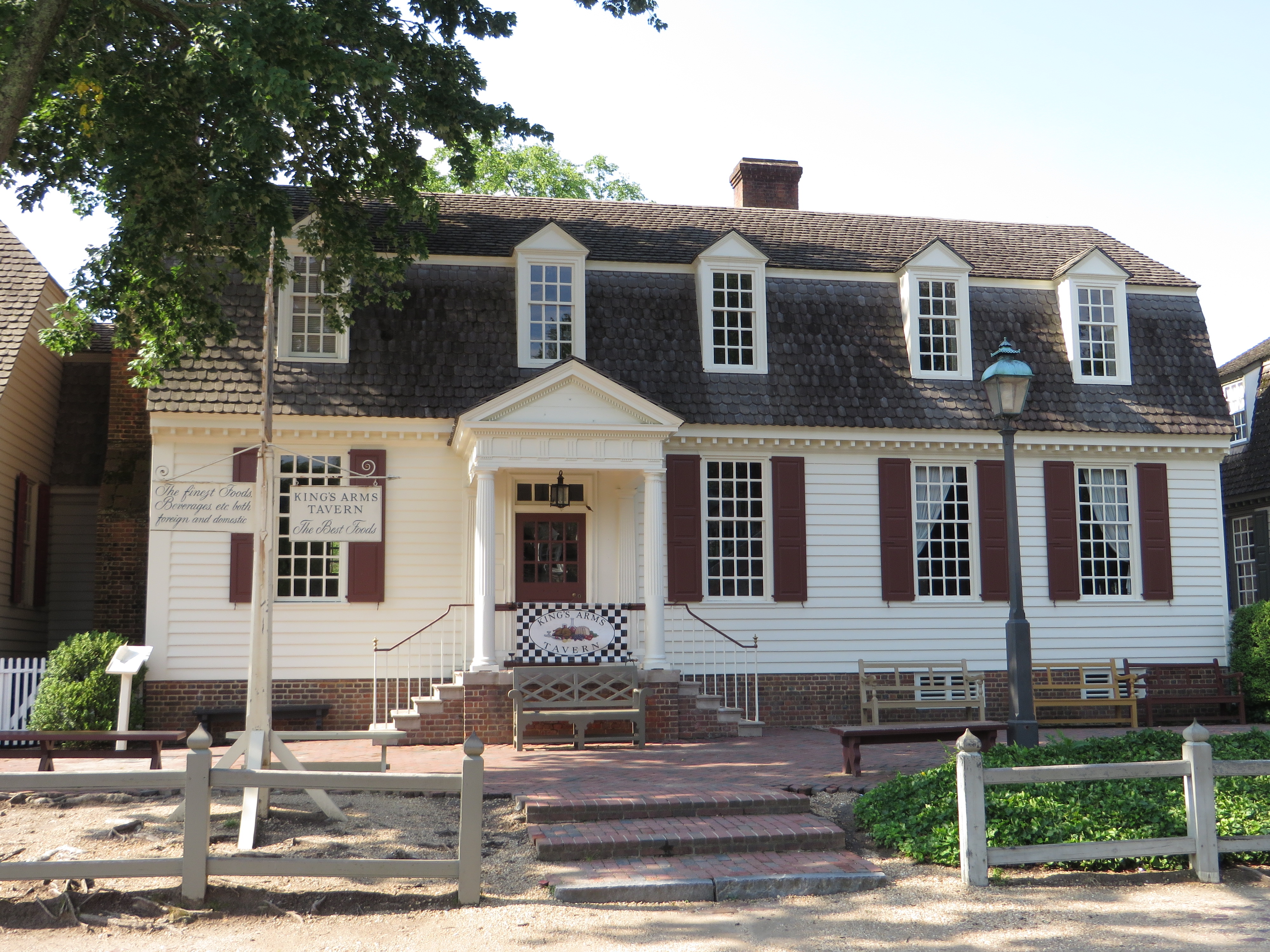
The King's Arms Tavern ghost has a name, an apartment upstairs, and a closing ritual. Staff still say good night to her.
Every night at the King's Arms Tavern, the closing staff used to say good night to a woman who had been dead for years. They said her name out loud. They said good morning when they opened. When they kept it up, the candles behaved. When someone forgot, the candles started snuffing themselves again, and the windows in the upstairs apartment kept latching on their own.
Her name is Irma, in most retellings. The older Williamsburg ghost tour spells it Erna Gendrel. The Original Ghost Tour and a 2008 blog post by a Williamsburg insider tell the same story about her: she was an African American assistant manager at the tavern, well-liked by everyone, and she lived in an apartment built into the Alexander Purdie House wing of the building. Staff called the apartment the Up Room. One January, she died in her sleep there. After her funeral, the smell of lilac perfume started showing up in the Up Room. Windows the closing crew had left open were found shut and latched. Candles blew out around closing. Cold patches moved through rooms that had no draft.
So they started talking to her. Good morning, Erna. Good night, Erna. The activity stopped. Then someone new came on, or someone forgot, and it started again. This is the haunting the place is actually about, and it's a much quieter, weirder, more specific story than the usual Colonial Williamsburg ghost-tour script.
The building itself is old in the way Colonial Williamsburg things are old, which is to say partly old and partly very precisely reconstructed. Jane Vobe ran a tavern on this corner from the early 1770s. She'd been in the business in Williamsburg since 1751, and by the time she opened on this site she was one of the most successful tavernkeepers in town. Her labor force grew from three people in 1752 to eighteen by 1770. The Virginia Gazette ad for her new place, dated February 6, 1772, billed it as "opposite to Raleigh, at the Sign of The King's Arms." The Raleigh Tavern stood diagonally across Duke of Gloucester Street.
A French traveler had written a few years earlier that he'd gotten a room at "mrs. vaube's tavern, where all the best people resorted," and that pretty much stayed the brand. George Washington ate here. So did General Thomas Nelson, Baron von Steuben, and Thomas Jefferson. Colonial Williamsburg's history page has Washington holding a private club here. Vobe moved her operation to Manchester, in Chesterfield County, in November 1785, and her obituary ran in the Maryland Journal and Baltimore Advertiser on December 8, 1786.
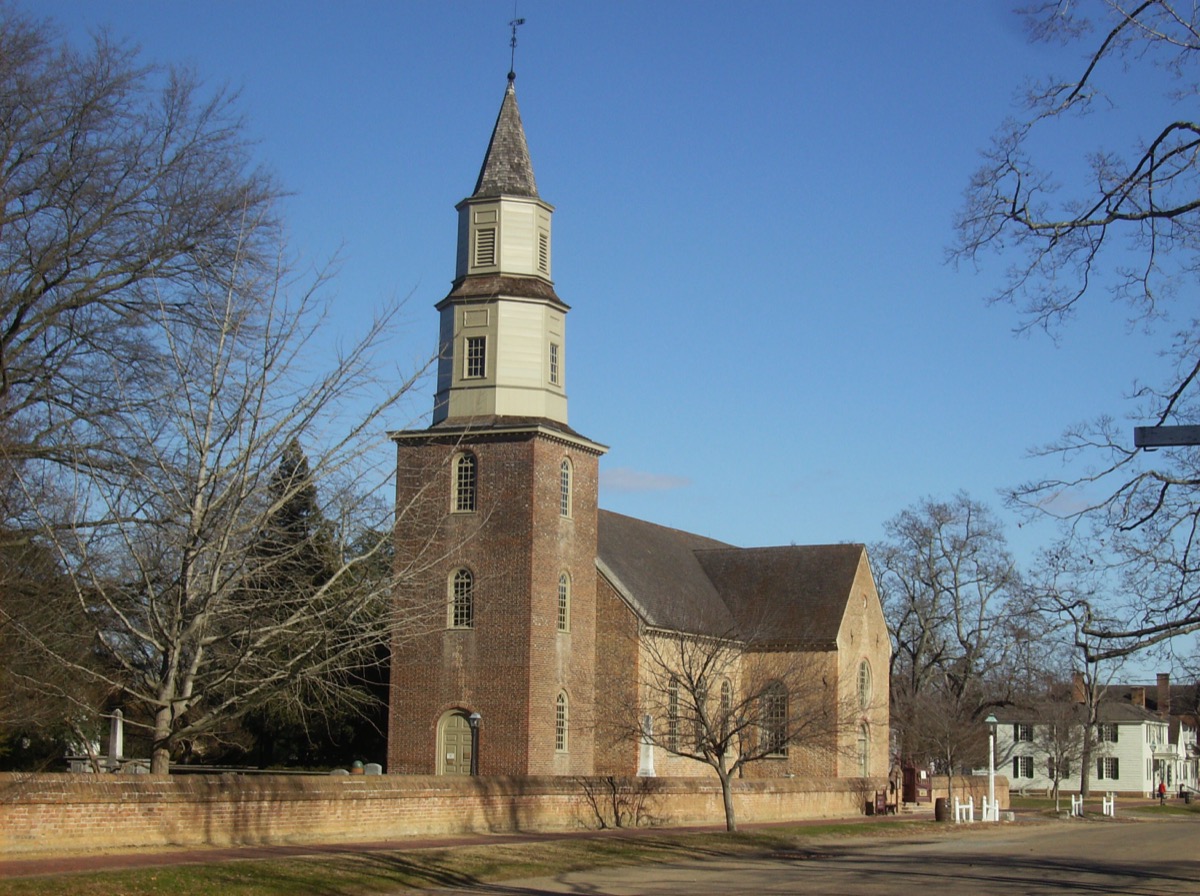
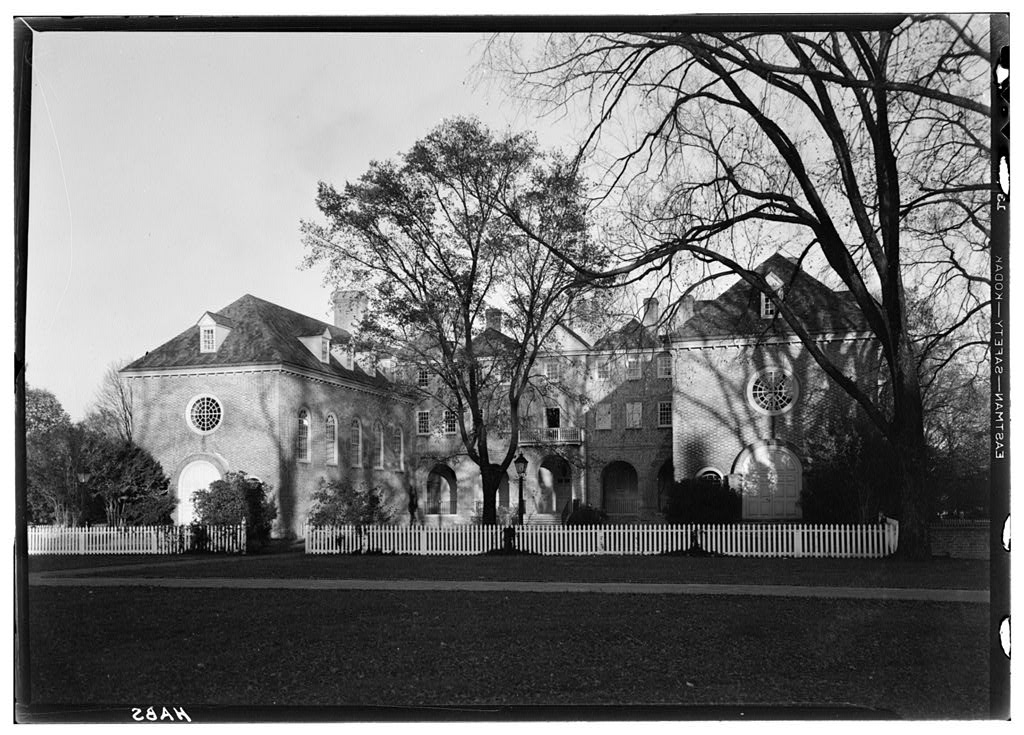
The original building burned down at some point in the first half of the 1800s, decades after Vobe was gone. Colonial Williamsburg started reconstructing it in 1949. The work took about two years, and they combined the King's Arms with the adjacent Alexander Purdie House, which had belonged to the Virginia Gazette publisher. The two became one restaurant. It reopened to diners in the early 1950s and has been operating as a tavern restaurant on East Duke of Gloucester Street ever since. The address is 416 East Duke of Gloucester Street, near the Capitol end of the historic area.
The two-building combination matters for the haunting, because the Up Room is in the old Purdie wing. The apartment Erna lived in is up there. Today it's a dining room.
Every source describes the same candle behavior. They go out on their own, especially around closing. Sometimes a room gets re-lit on its own a few minutes after staff have put it out. The 2008 blog post from a Williamsburg insider, with a confirming comment from someone who worked at the tavern for ten years, adds the Christmas detail: every December, staff installed electric candles in the Up Room windows. The ex-employee writes, "The next day, the lights were ALWAY back on in Up Room, even if we were the last people to leave the building." Capital letters in the original. That's a lighting circuit running by itself overnight, in a building empty after midnight.
Another version of Erna's origin story puts her in the 1700s and says she died in a fire started by a dropped candle. That one shows up on a couple of generalist haunted-place sites and doesn't have a primary record behind it. The 1950s assistant manager version, by contrast, has a named role, a named apartment, and a former staffer on record confirming the building activity. Lead with the modern version. The fire story is a folk variant that probably got rewritten in over the decades.
There's a second presence in the lore here, and it's a much heavier one. Gowan Pamphlet lived from 1748 to 1807. He was enslaved by Jane Vobe and worked at the King's Arms during the years Washington and Steuben were customers. The earliest documented mention of him is a Virginia Gazette notice from July 3, 1779, accusing him of horse theft. He was also a preacher. He led informal Black Baptist gatherings while still enslaved, growing the congregation from around 200 members in 1781 to about 500 by 1791. In 1783, regional Baptists tried to shut him down, "advising that no person of color should be allowed to preach." Pamphlet kept going. In 1793, the Dover Baptist Association officially accepted his church, deciding the congregation "could not have done better in their circumstances." The same year, on September 25, Jane Vobe's son David Miller signed the deed manumitting him. Pamphlet's church became the First Baptist Church of Williamsburg, one of the oldest Black Baptist congregations in America.
In ghost-tour terms, Pamphlet's presence at the tavern shows up as soft singing of spirituals in empty rooms and a calming figure occasionally seen. That layer is folklore-tier, not primary-source. But the documented arc of his life happened in this building. He served George Washington dinner in a room that is still a dining room. He went on to found a church that's still a church. If you're standing in the King's Arms thinking about haunted places, the heaviest fact on the property has nothing to do with candles.
This is the strange thing about the place. The headline ghost story is small and domestic: a woman who liked her apartment, didn't want to leave it, and was apparently soothed by being greeted by name. The most important history is enormous and lives right next to it. The reconstruction stitched two buildings into one footprint, and the haunting and the history seem to follow the seam.
If you're going, the original advertisement is still the cleanest description of where it sits. Opposite to Raleigh, at the Sign of The King's Arms.