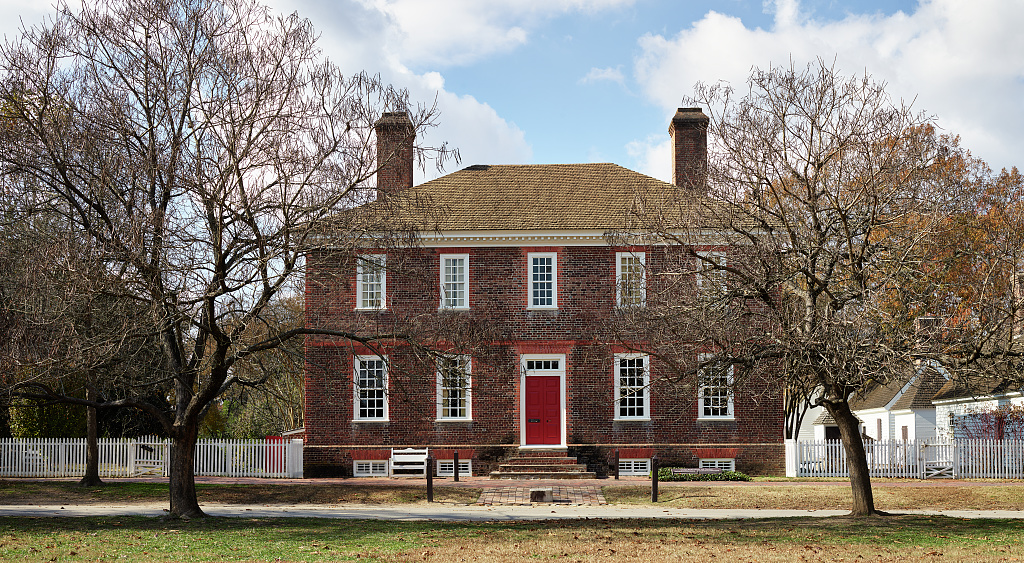
Colonial Williamsburg says the Wythe House has no ghosts. Its own former archaeologist spent a midnight there in 2000 and wasn't so sure.
Colonial Williamsburg's official line on the George Wythe House is one sentence long: "There are no ghosts in the Wythe House, and there never have been." Senior interpreters there will tell you they're tired of the question. "Far too many visitors come to the house and ask about the ghost," one told the Colonial Williamsburg Journal. "That's all they are interested in."
Then there's everyone else who works the building.
Ivor Noël Hume, the foundation's former chief archaeologist, spent a December midnight inside the house in 2000 trying to settle the question for himself. The security duty officer who let him in just said, "Rather you than me." Hume's piece in the Spring 2001 Colonial Williamsburg Journal, "Doctor Goodwin's Ghosts," is where the actual documented encounters live. Almost every witness is anonymous, which is how a Colonial Williamsburg interpreter keeps a job. But the incidents themselves are specific enough to chew on.
Around 1986, an employee tracking visitor groups sat in a chair at the back of the central hallway with her clipboard. The last group had left twenty minutes earlier. She smelled strong perfume, a close-range hit like someone leaning over her shoulder to read what she was writing. No one was there.
Around 1988, a young interpreter opened the understairs door to the basement break room. Something pressed her behind the knees and she sat down hard on the step. Beside her on the step was a red-haired woman who smiled at her, then faded into the white-painted brick wall.
Hume's stepdaughter Andi, a CW lantern-tour facilitator, was working the Wythe House kitchen around 1989 when she heard heavy footsteps moving on the floor above, then coming back down. A candlestick she'd left in the window had moved to the central table. The exterior door swung open. No one walked in. Five years later, in 1994, three CW employees stood on the garden steps trying to summon Lady Anne Skipwith and saw a woman in a white shift watching them from the second-floor southeast window.
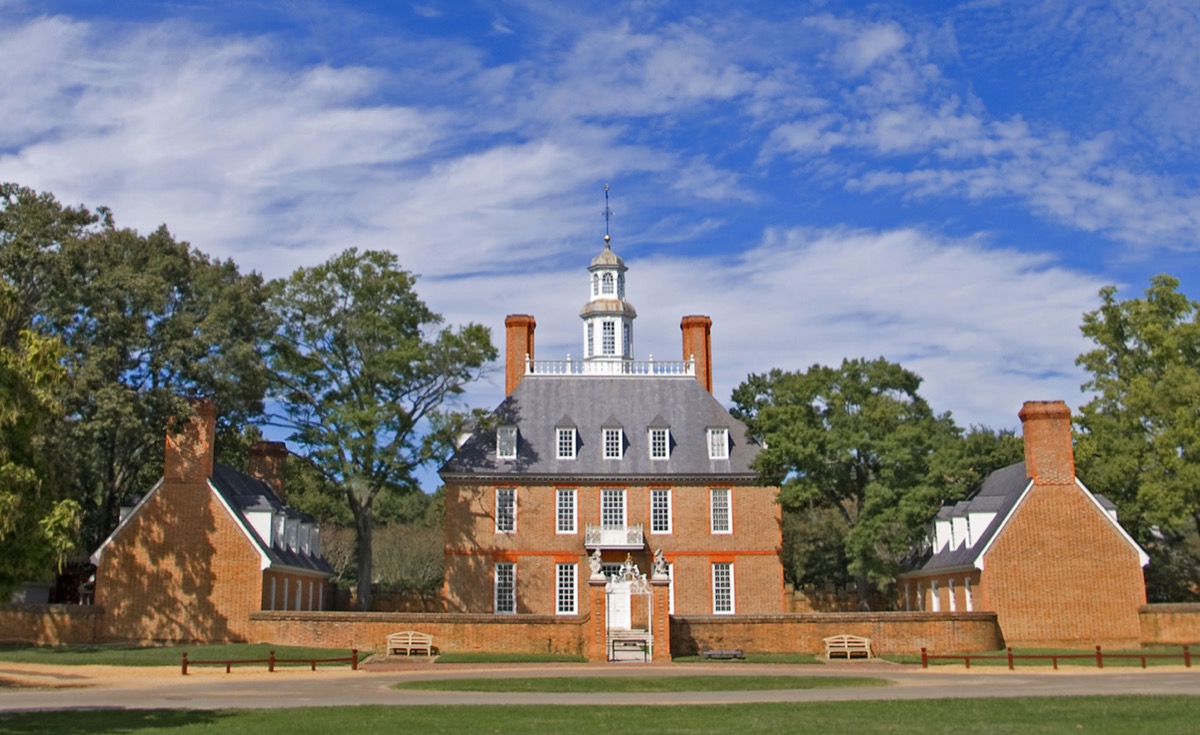
The Lady Anne story is the one most ghost tours sell you, and it's worth being honest about. The legend goes that at a ball at the Governor's Palace across Palace Green, Lady Anne caught Sir Peyton Skipwith flirting with her younger sister Jean, had what L. B. Taylor Jr. called a "violent altercation," fled across the green to the Wythe House losing a shoe along the way, ran upstairs in the remaining shoe, and killed herself. Taylor's books are the ones that locked the legend in. He quotes the canonical version of the haunting: "The most frequent occurrence, almost always at midnight, is the distinct clicking sound of one high-heeled slipper on the shallow steps of the broad stairway. Yet when the stairs and upstairs rooms are searched, no one is ever found."
The trouble is it didn't happen. Lady Anne died in 1779 in childbirth with her fourth child, roughly three months after the supposed ball-night suicide. Historian Kelly M. Brennan put it plainly to WHRO: "Ann's death in the immediate aftermath of the fight is unfounded. The pregnant Ann actually died three months later during childbirth." She isn't buried at Bruton Parish next door either, despite what tour scripts say. Sir Peyton married her sister Jean in 1788, which is the detail that gave the legend its shape in the first place.
So the canonical ghost is fiction. The encounters keep coming anyway, and not all of them are perfume and shoe-clicks.
The doors are the strangest part. A former Colonial Williamsburg security officer told the Williamsburg Ghost Tour about a Sunday morning when staff couldn't get into the building. Every door had been locked from the inside with the original 18th-century thumb-bolts. "The door on the inside of the main entrance door was not only locked, the thumb bolt had been engaged," he said. "There's no way you can push the thumb bolt from the outside. It can only be done from the inside." A maintenance worker later told him the same thing had happened to him thirty years before. The thumb-bolts take real force to engage. They don't lock accidentally.
The same officer described a slow summer night on the second floor with another guard. "We heard the air conditioning unit kick on. Couple minutes later we heard down on the floor below us a lady singing. She was just as happy as could be. She had a beautiful voice, very melodic. It wasn't scary. That one was actually kind of peaceful."
A note on the house itself, because the people interested in it deserve more than the ghost. Built between 1752 and 1754 by Richard Taliaferro, given to his son-in-law George Wythe in 1755. Wythe taught Thomas Jefferson, John Marshall, and Henry Clay law. He was the first Virginian to sign the Declaration of Independence. George Washington used the house as his Yorktown-campaign headquarters in two specific windows, September 14 through 17 and September 22 through 28, 1781. Comte de Rochambeau took it over after the victory and stayed about eight months, until the French marched out on June 23, 1782. Reverend W. A. R. Goodwin, the rector who's often credited with the entire idea of Colonial Williamsburg, kept his office on the second floor from 1926 on. The Foundation bought the property in 1938. Goodwin told columnist Ernie Pyle in 1936: "I wouldn't give a hoot for anybody who doesn't believe in ghosts."
Wythe didn't die here. His grandnephew George Wythe Sweeney, drowning in gambling debts and forging his great-uncle's checks, poisoned the household coffee pot with yellow arsenic at Wythe's Richmond home on May 25, 1806. A free Black teenager Wythe was tutoring, Michael Brown, died June 1. Wythe died June 8 at age 80, but not before signing a codicil that cut Sweeney out of the will. Lydia Broadnax, Wythe's free Black housekeeper, survived but was left nearly blind. A Richmond jury acquitted Sweeney on September 8, 1806 after the judges ruled Lydia's testimony inadmissible against a white defendant. None of this happened in Williamsburg. The ghost they keep meeting in this house isn't his.
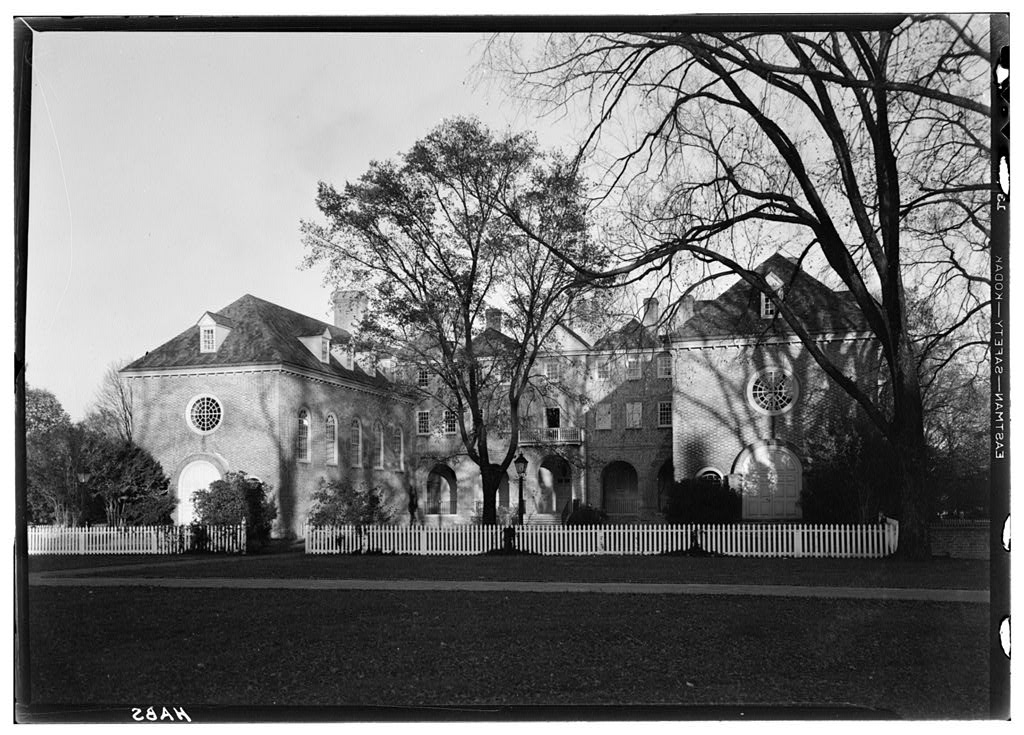
What the house is, finally, is a Georgian rectangle at 101 Palace Green Street that the people who work it have stopped explaining and started just describing. Perfume over a shoulder. A red-haired woman on a basement step. Thumb-bolts thrown from the inside of an empty building. A woman singing on the floor below you, happy as could be.
The Foundation says there are no ghosts here. The Foundation's own former archaeologist disagreed in print.