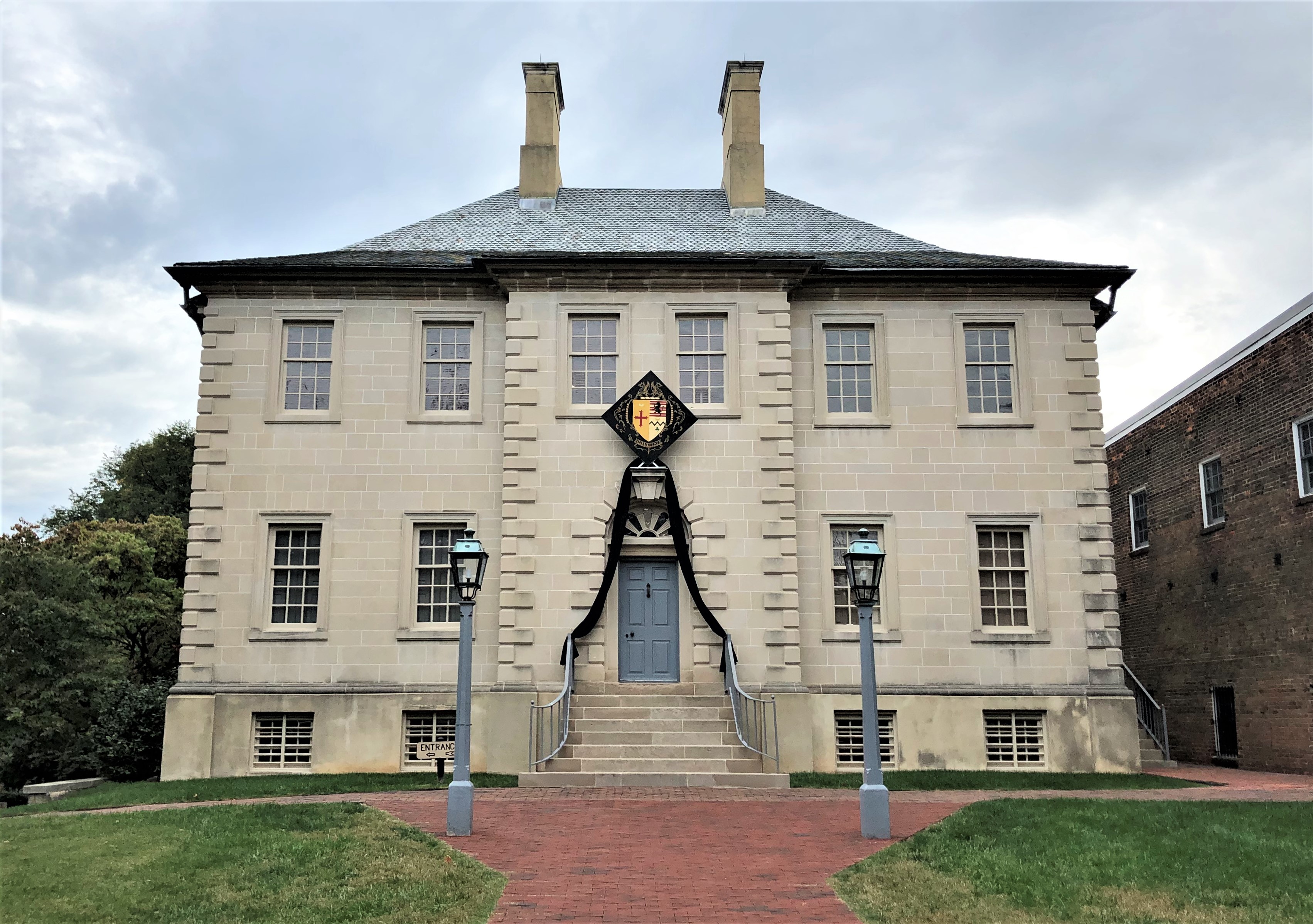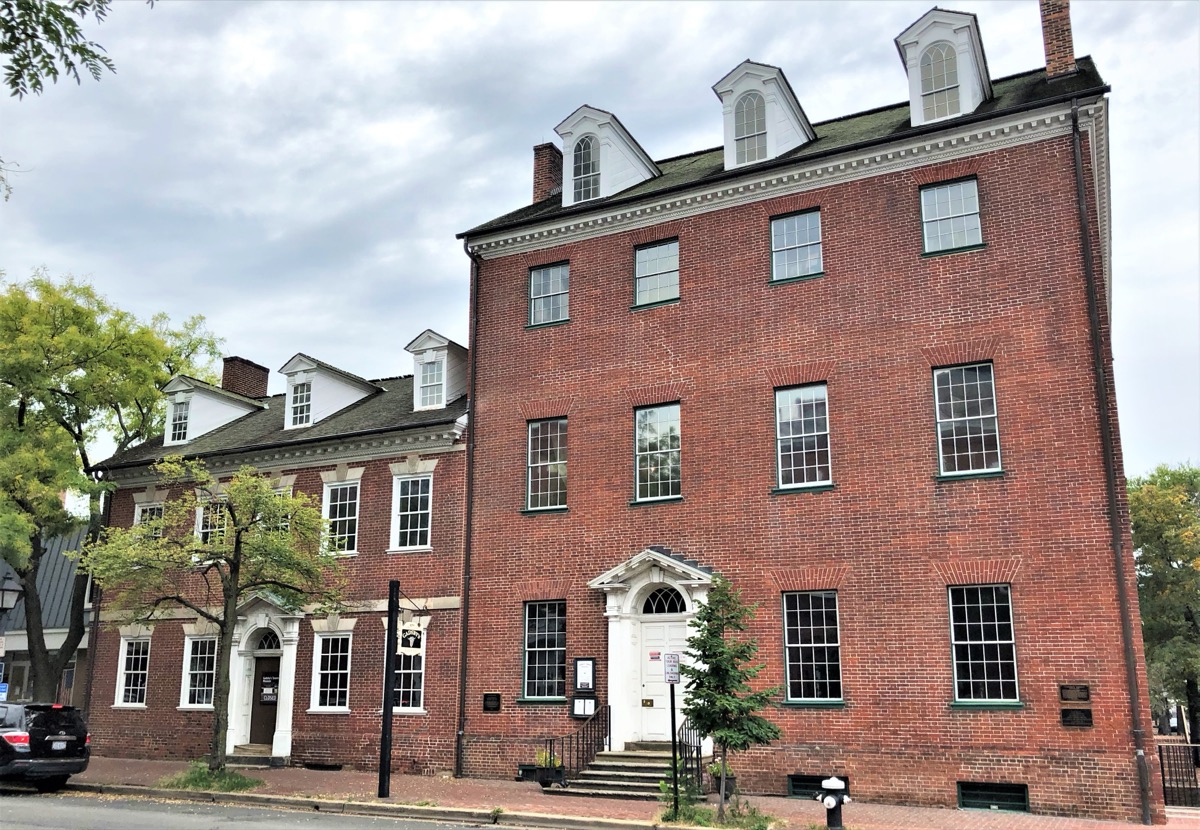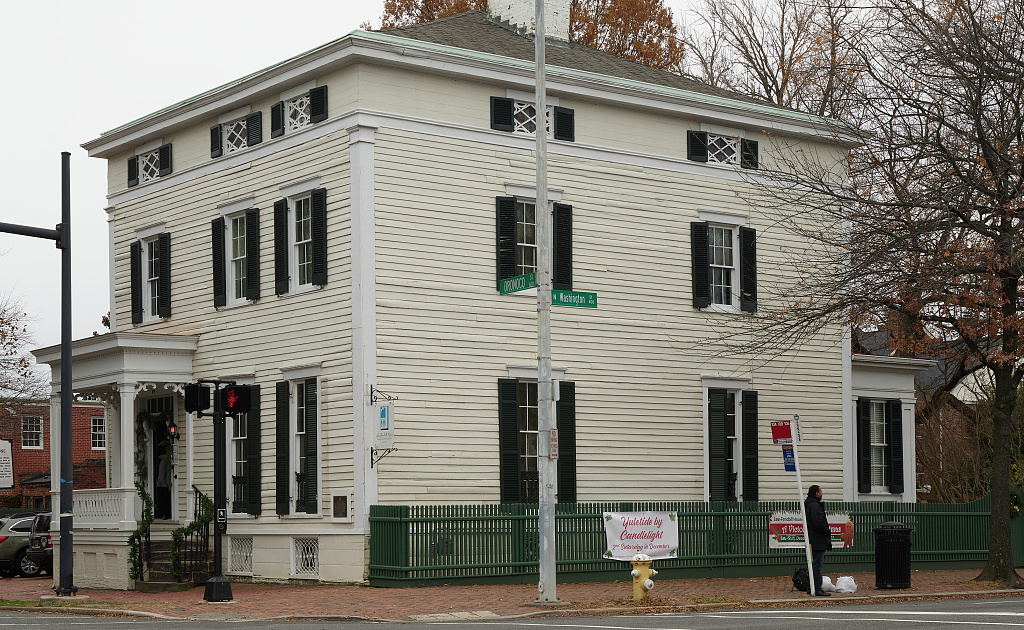
A Georgian Lee-Fendall house at Lee Corner in Old Town Alexandria where 37 Lees lived, a Union hospital ran in the ballroom, and a labor king died in bed.
Thirty-seven members of the Lee family lived in this house between 1785 and 1903. Not all at once, but across 118 years, in one Georgian building on the corner of Washington and Oronoco. Locals called the intersection "Lee Corner." It earned the name honestly.
The founding move is small and worth saying out loud, because the house gets misattributed constantly. Robert E. Lee did not live here. He grew up directly across the street, at 607 Oronoco, in a different building. The Lee who matters at 614 is Henry "Light-Horse Harry" Lee, Revolutionary War cavalry officer, who bought three Alexandria lots in November 1784 and on December 4 of that year sold one of them to his relative Philip Richard Fendall for £300. Fendall built the house in 1785, using enslaved labor, for his second wife Elizabeth Steptoe Lee. Then he married two more Lees. Across three marriages he was wed to Sarah Lettice Lee, Elizabeth Steptoe Lee, and in 1791 Mary "Mollie" Lee, who happened to be Light-Horse Harry's sister. That is how a single house ends up housing 37 of them.
George Washington dined here. His own diary records at least seven visits in 1785 and 1786. The November 10, 1785 entry reads, in full: "Went up to Alexandria to meet the Directors of the Potomack Company and dined at Mr. Fendall's." John Quincy Adams visited in 1841. Woodrow Wilson showed up for a reception in 1914 after the George Washington Birthday Parade. The point is that this building has been a place people stopped in at for two and a half centuries, and that fact alone makes the ghost stories feel less like advertising and more like sediment.
The hospital is the heaviest layer. In April 1863, the Union Army confiscated the property and renamed it Grosvenor Branch Hospital. Dr. Edwin Bentley, Chief Surgeon of the U.S. Army General Hospital in Alexandria, ran it. The ballroom became a ward. The branch held 146 to 156 beds at any given point and was part of a network with a combined capacity of 1,359 beds by December 1864. Roughly 1,700 soldiers passed through. One hundred of them died there. That figure was finalized in winter 2025 after a fresh ledger analysis, replacing older estimates of 105 to 150. Over 50 of those men are buried at Alexandria National Cemetery, the first government cemetery established during the Civil War.
Bentley also performed what the City of Alexandria's historic-sites page calls "the first blood transfusion in North America," on a soldier named Pvt. George Cross. Other framings call it the first successful transfusion of the Civil War. The careful framing is an early, by some accounts the first, successful blood transfusion. Whether Cross survived the war itself is not recorded. The transfusion worked. After that the trail goes cold.
After the hospital closed on April 24, 1865, the house went through more decades of Lee occupancy until the family moved out in 1903. Then in 1937 it changed hands in a way nobody saw coming. John L. Lewis, the labor leader, founder of the Congress of Industrial Organizations and longtime president of the United Mine Workers, bought the place. He retired there. He died there, in the house, on June 11, 1969, at age 89. A coal-country bruiser, dead in a Georgian corner house once filled with Lees. The Virginia Trust for Historic Preservation acquired the property and opened it as a museum in 1974.
Now the ghosts. They are quieter than the history. Visitors and staff have seen a woman in 19th-century dress on the main floor. Folklore doesn't name her, and nobody should. With three centuries of Lee women through these rooms, picking one is making it up. A second woman and a young child have been seen on the back stairs leading to the former servants' quarters. There's a jingling sound through the house that several people describe as a 1930s-style telephone, except there is no working period telephone in the building. Some people get a wave of dread on the second-floor staircase. Those are the reports.
Ghost Hunters came in 2009. Season 5, Episode 11, "Civil War Spirits," aired September 2. TAPS found high EMF readings on the first floor and traced them to exposed wiring in the basement. They traced the jingling to door chimes in the kitchen. They concluded the property was "not haunted." Take that for what it's worth, which is a particular kind of evidence about a particular kind of investigation. The reports kept coming.
The honest case for visiting Lee-Fendall has nothing to do with whether you accept the ghosts. The history alone makes this place worth the trip. The museum interprets all who lived and worked at the property from 1785 through 1969, including the enslaved and free African Americans whose labor built and ran it. That breadth is rare. Most historic houses in Virginia pick a comfortable century and stay there. Lee-Fendall holds the Lees, the Union surgeons, the dying soldiers, and the union man in retirement, all at once.
The museum keeps hours Wednesday through Saturday 10 to 4 and Sunday 1 to 4. From the front steps you can see 607 Oronoco across the street, the brick house where Robert E. Lee actually grew up. Turn back around and you are standing on the threshold of a room where one hundred soldiers died.