At Virginia Military Institute, the Yellow Peril walks the third stoop of Old Barracks at 3:30 a.m., face yellowed, gash across it.
The Yellow Peril shows up on the third stoop of Old Barracks at 3:30 a.m. Dark grey blouse, garrison cap pulled low, face faintly yellow with a gash across it. 3:30 a.m. is the hour of the cadet drum-out ceremony, when an Honor Court conviction gets walked out of the barracks for the last time. Cadet folklore claims that in the early decades, boys slept with revolvers under their pillows because of him. True or not, the Yellow Peril is the ghost everyone at VMI knows by name.
VMI was founded November 11, 1839 in Lexington, the oldest state-supported military college in the country. Thomas Jackson, not yet Stonewall, taught natural philosophy and artillery tactics here from June 1851 to April 1861. He was terrible at it. Superintendent Francis H. Smith said flatly that Jackson "had not the qualifications needed" and "was no teacher." Cadets called him Tom Fool, Old Jack, and Square Box, that last one a jab at his exceptionally large shoe size. He walked out of the VMI gates in April 1861 after Virginia voted to secede and never returned alive.
Since the early 1900s, a blue ball of light has drifted through the halls of Old Barracks and into Jackson's former classroom, where it vanishes. Same room he taught in for a decade.
Then there's the violence the campus has never quite shaken off. On May 15, 1864, roughly 250 VMI cadets, most of them teenagers and some as young as fifteen, marched 85 miles north to join Confederate forces under General John C. Breckinridge at New Market. Breckinridge needed bodies to plug a gap in his line and didn't want to use the boys. He used them anyway. "Put the boys in, and may God forgive me for the order," he said. Ten were killed or mortally wounded. About fifty more were wounded but survived. They charged through a rain-soaked plowed field near Bushong's orchard and the mud sucked their shoes off, which is where the Field of Lost Shoes comes from.
One of the dead was Thomas Garland Jefferson, great-grand-nephew of the president. He was seventeen, shot in the stomach, and died three days later at a nearby farmhouse with fellow cadet Moses Ezekiel reading him John 14. Ezekiel survived the war and became a sculptor. In 1903 his bronze, Virginia Mourning Her Dead, was dedicated on the VMI parade ground. Six of the ten fallen cadets are buried beneath it. Of seeing young cadets at the dedication, Ezekiel said: "something arose like a stone in my throat, and fell to my heart, slashing tears to my eyes."
Alumni report hearing moans and cries near the statue. Some claim to have seen tears streaming from Virginia's bronze eyes.
A month after New Market, on June 12, 1864, Union General David Hunter ordered VMI burned. His 18,000 troops had occupied Lexington the day before. They torched the Barracks, two faculty residences, the library, and lab equipment, and on their way out they hauled off VMI's George Washington statue to Wheeling, West Virginia, as a war trophy. The statue didn't come back until 1866. VMI reopened in Richmond, returned to Lexington, and resumed classes in October 1865.
Near Jackson Memorial Hall, where Benjamin West Clinedinst's enormous 1914 painting of the cadet charge hangs at 18 by 25 feet, cadets report hearing yelling, cannon fire, and screams. "They heard yelling, and they heard cannon fire, like gunfire and screaming," one VMI account puts it. Memorial Hall sits a few hundred yards from the parade ground where the names of the ten cadets are called out every May 15 by their company commanders, with another cadet responding "Died on the Field of Honor, Sir." That roll call tradition was added in 1887, adapted from a French custom going back to Napoleon.
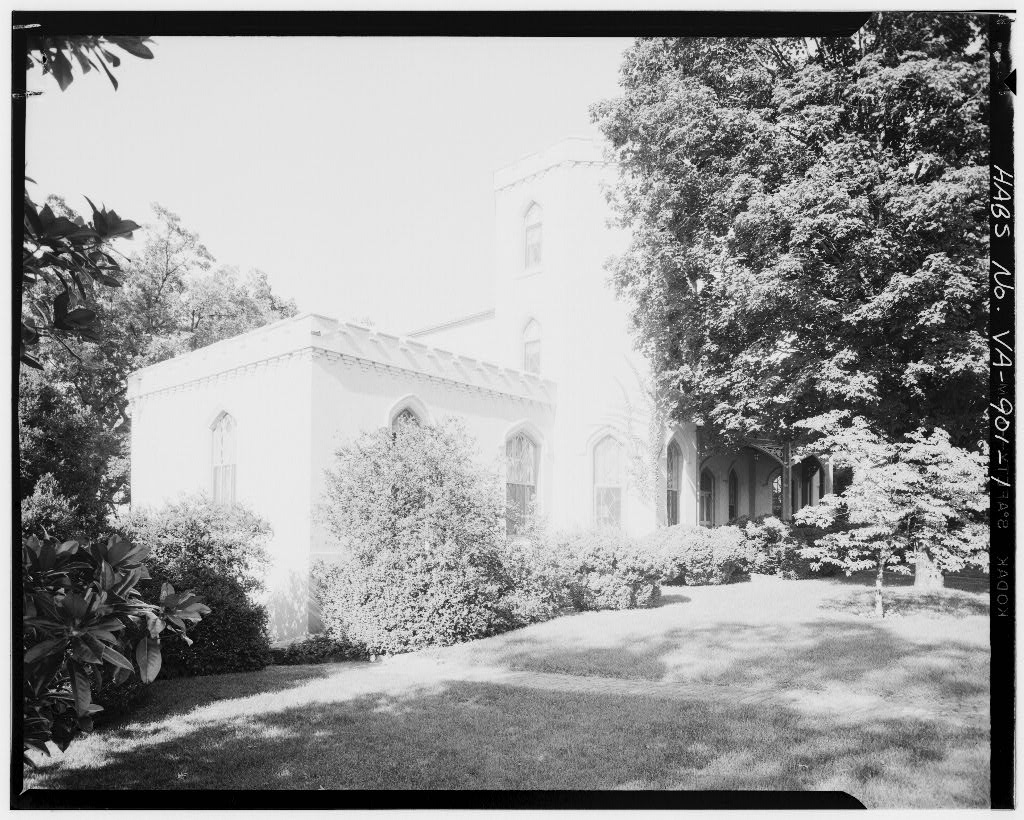
The Old Barracks itself is the dense part of the haunting. Above Washington Arch sit a set of turret rooms that once held cadets convicted by the Honor Court while they waited to be expelled. The story is that the accused was left with a rope, a knife, and the phrase "Death before dishonor" etched into the stone. Cadets in Room 401 directly below report disembodied footsteps, late-night knocks, electronics cutting out, and a black figure hovering over them while they sleep. Sentries walking outside have reported seeing the shadow of a hanged man on the exterior barracks walls. One alumnus, Robert Rainer, watched it for several seconds before it vanished and later found dozens of his classmates had seen the same thing. VMI's official position is that there's no record of anyone ever being hanged on post.
Not all the ghosts are scary. A helpful sentinel knocks three times on a cadet's door moments before he'd be late for guard duty. Cadet Trey Copenhaver '12 said it happened to him in Room 104 of Old Barracks in 2011, at exactly 4:55 a.m., five minutes before breakfast call. "yeah, it's probably the ghost that wakes you up if you're going to be late," he told a VMI News writer. Cadet Tim Frederickson credits the same knocker with saving him from punishment.
Underneath the barracks runs a warren of tunnels including former trunk rooms and a space the cadets call the Bear Den, named for an old carpenter's room. A figure was caught on VMI security cameras down there, according to cadet accounts collected by VMI News. Cadets studying late in their rooms say they sometimes catch it in a corner of the room out of the side of their eye.
Some accounts in older cadet folklore describe a mounted rider with a sword and cowboy hat appearing near the parade deck, and a separate story about the Stonewall Jackson statue's eyes shifting and a decomposing figure on a cadet's bed. Neither story traces cleanly back to a named source beyond passing references in the student paper. Treat them as folklore.
What lasts at VMI is harder than ghost lore. Ten cenotaphs for the New Market dead. Six bodies under Virginia Mourning Her Dead. Jackson's horse Little Sorrel, or what's left of him, mounted as a skeleton in the museum next to Jackson's personal effects.
"Death before dishonor," cut into stone above an arch where boys with ropes used to wait out their last night.