TLDR
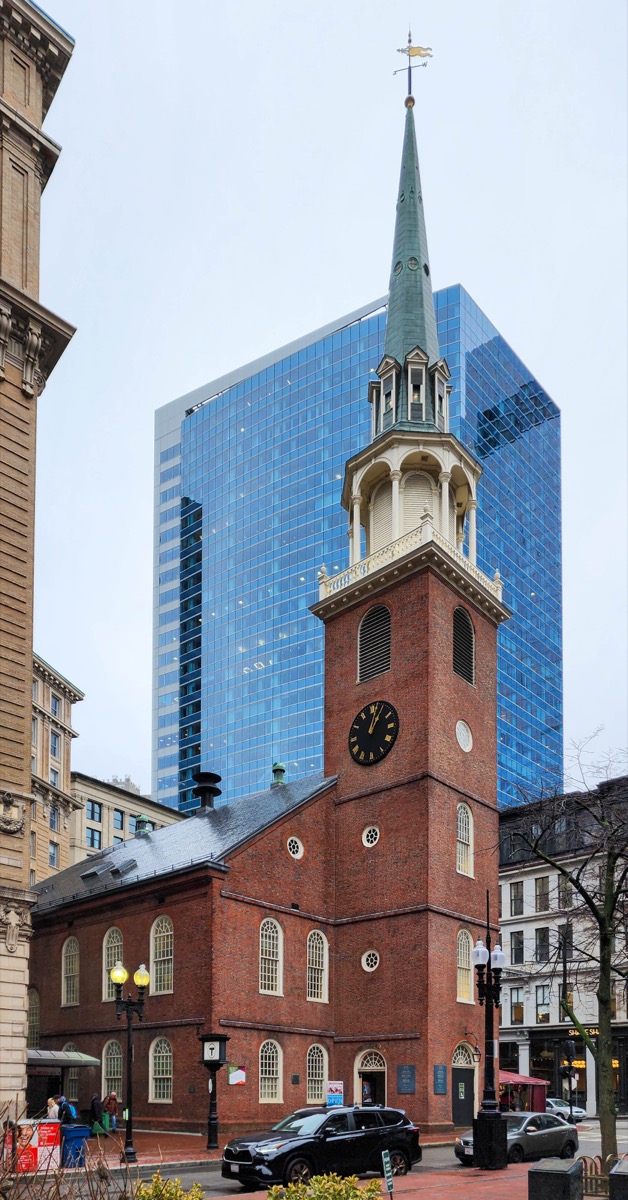
Samuel Adams stood here in 1773 and sparked the Boston Tea Party. During British occupation, the redcoats turned it into a riding school for cavalry horses — inside the church.
The Full Story
The Old South Meeting House was built in 1729 as a Puritan house of worship, rising to become the largest building in colonial Boston. In the days leading to the American Revolution, citizens gathered here to challenge British policies, protesting the Boston Massacre and the despised tea tax. On December 16, 1773, over five thousand colonists -- more than a third of Boston's entire population -- crowded into the meeting house for a final confrontation. As night fell, Samuel Adams spoke the words that would change history: "This meeting can do nothing more to save the country." It was a covert signal. Men disguised as Mohawk Indians boarded three ships in the harbor and threw the cargo of tea into the water. The Boston Tea Party had begun, and the Old South Meeting House became hallowed ground of American independence.
The British exacted revenge in October 1775. Led by Lieutenant Colonel Samuel Birch of the 17th Dragoons, they occupied the meeting house because of its association with the revolutionary cause. They gutted the interior, filled it with dirt, and used the building to practice horse riding. They destroyed much of the interior and stole various items, including William Bradford's "Of Plymouth Plantation," a unique Pilgrim manuscript hidden in Old South's tower.
But the building's history extends beyond revolution. Phyllis Wheatley, America's first published African-American author, worshiped here as an enslaved person. Benjamin Franklin was baptized within these walls. George Washington spoke out against the British desecration. Elizabeth Foster, known by her pen name Mother Goose, sang hymns in these pews. Ralph Waldo Emerson and Julia Ward Howe recited their famous works from this platform.
A spectral presence reportedly inhabits the Old South Meeting House, one that acts as a harbinger of impending death. Some believe this specter may not merely be a messenger of doom but directly responsible for the string of deaths that have followed those who encountered it. Another account describes the ghost of a firefighter, lost in a blaze, who searches for something that eludes him even in death.
The Old South Meeting House was saved by the Old South Association and opened as a museum -- the first time in United States history that a public building was preserved because of its association with a historic event rather than a famous person. In a building where revolution was born and where the spirits of patriots may still linger, nearly three hundred years of history echo through every beam and pew.
Researched from 8 verified sources. How we research.