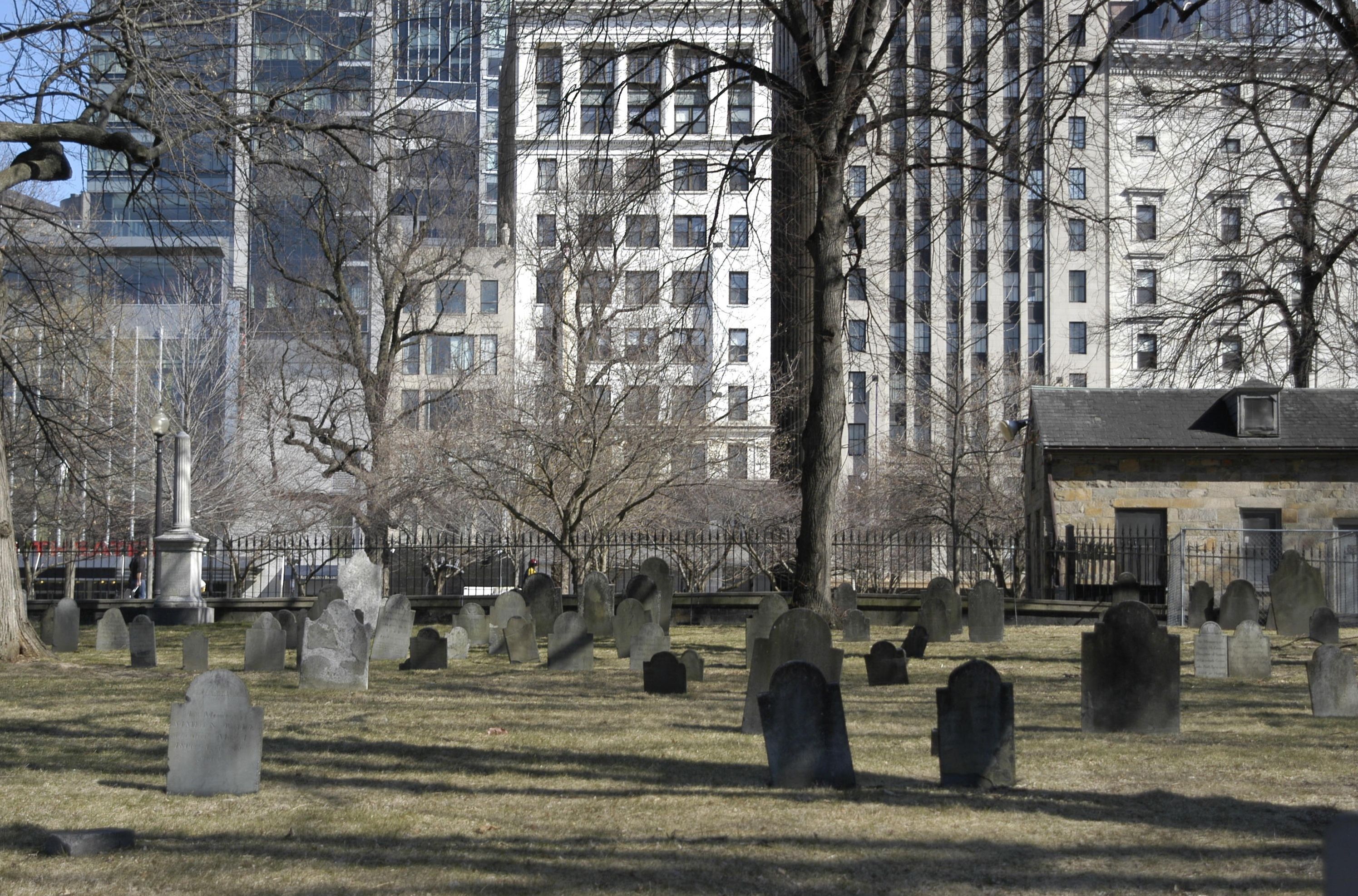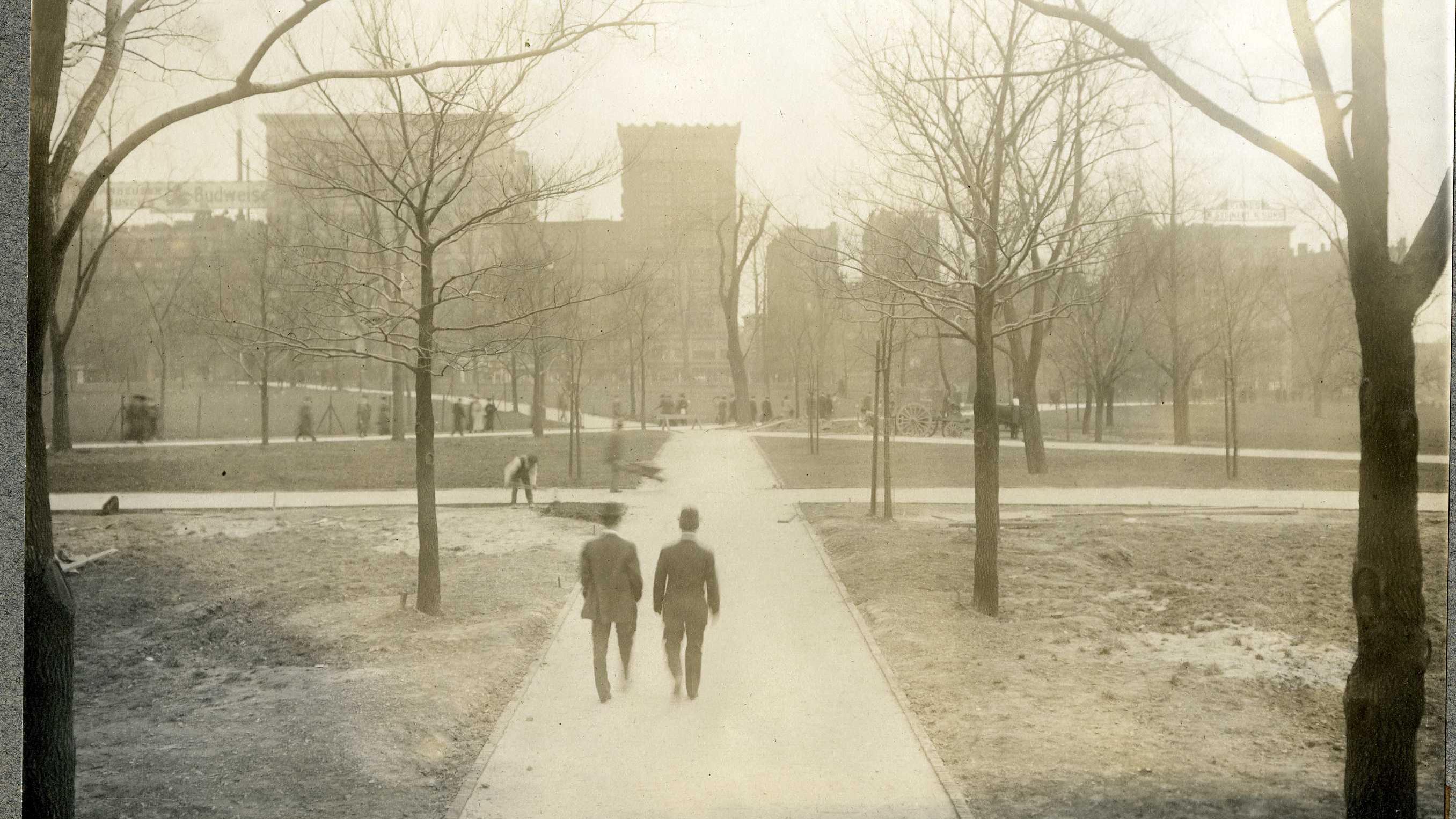
Boston Common is America's oldest public park, and for 175 years it was the city's gallows. The lore that clings to it now is the lore of that hanging tree near Frog Pond, where guides say figures still dangle from a limb that fell over a century ago.
At Boston Common in the heart of the city, ghost-tour guides will point you toward Frog Pond and tell you people have seen pale figures hanging from tree branches there. The branches aren't there anymore. The tree they hung from fell in a windstorm on February 15, 1876, and some visitors say they still hear a rope creaking where it used to stand. A clerk at a tobacco shop near the park is supposed to hear the rattle of chains in the early morning, though that one, like most of the sightings, comes from the tour pages and not from anything written down.
The Common is the oldest public park in America, founded in 1634 on land that had been a cow pasture. For most of the time since, it was also where Boston killed people. From the limb of the Great Elm near Frog Pond, and later from a wooden gallows raised in 1769, the colony hanged criminals, deserters, pirates, Quakers, and accused witches until the practice ended in 1817. Tradition holds that many of the earliest executions took place on a single limb of that elm.
The names that survive are worse than the lore. Ann Hibbins, a wealthy widow, was hanged for witchcraft on June 19, 1656 — 36 years before Salem — after winning a lawsuit against carpenters who'd overcharged her. A minister said she "was hanged for a witch only for having more wit than her neighbours." Mary Dyer, a Quaker, was hanged here on June 1, 1660, refusing a last chance to save herself: "in obedience to the will of the Lord God I came, and in his will I abide faithful to the death."
In 1676, during King Philip's War, a Nipmuc healer named Tantamous was marched through the streets with a noose already around his neck and executed at the elm. His own son had turned him in. After he died, the rest of his family was sold into slavery. Dozens of Native people were killed at the tree that year; no two accounts agree on how many.
A generation later came the last of the witch hangings. Ann Glover, an Irish Catholic servant and native Irish speaker, was hanged on November 16, 1688, after the children of a family she worked for fell sick and blamed her. She was the last person executed as a witch in Boston, four years before the Salem trials began. In 1988 the city council named November 16 in her memory.
The last woman hanged in Massachusetts died here too — Rachel Wall, in 1789. She confessed to piracy and asked to hang as a pirate. The court convicted her of robbing a young woman of her bonnet instead.
A plaque marks where the elm stood. The guides bring people anyway, to watch a limb that isn't there.