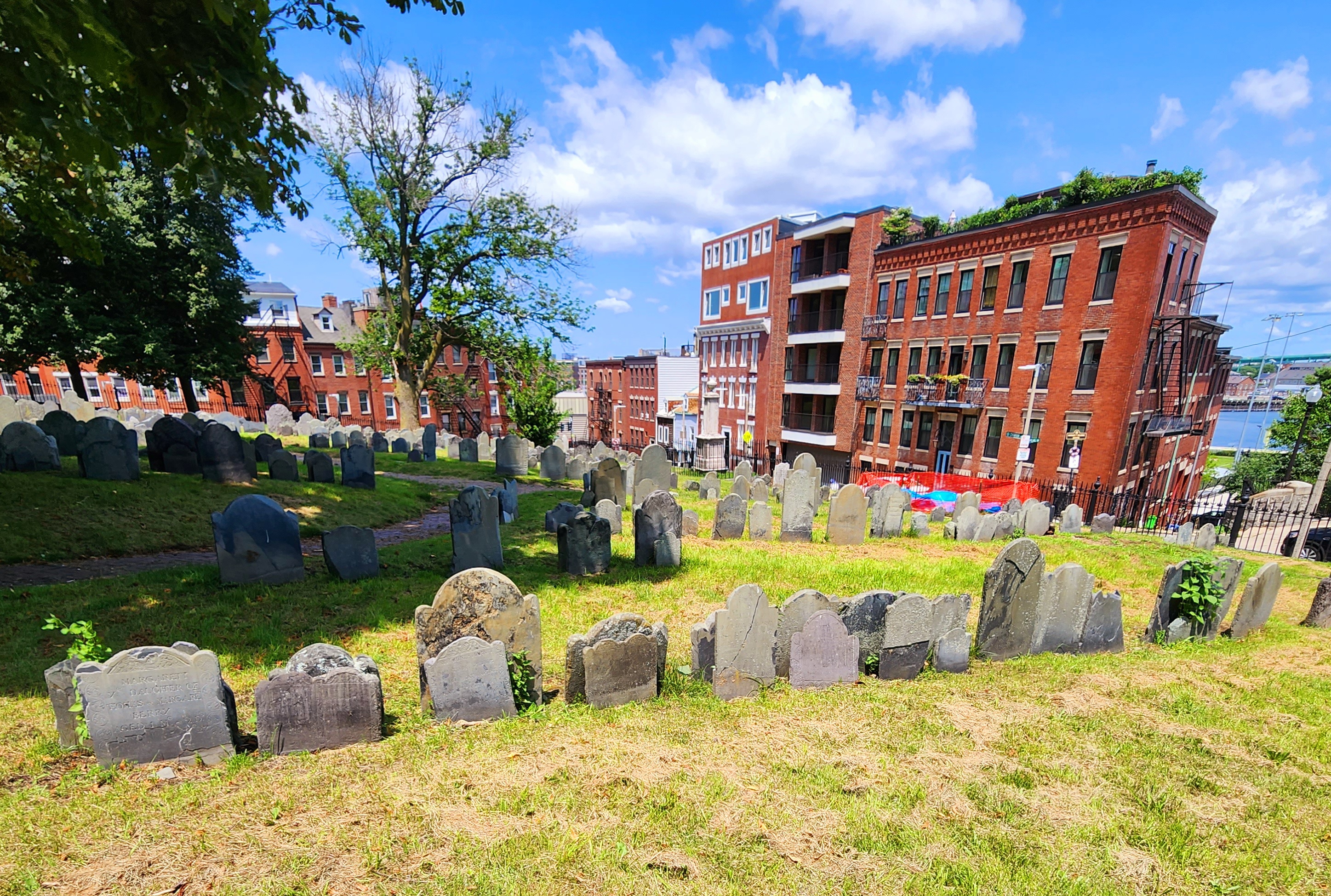
At Copp's Hill Burying Ground in Boston's North End, visitors report a spectral guardian drifting between the slate headstones, checking behind each monument. Many think it's still keeping watch over ground the British soldiers once shot at for sport.
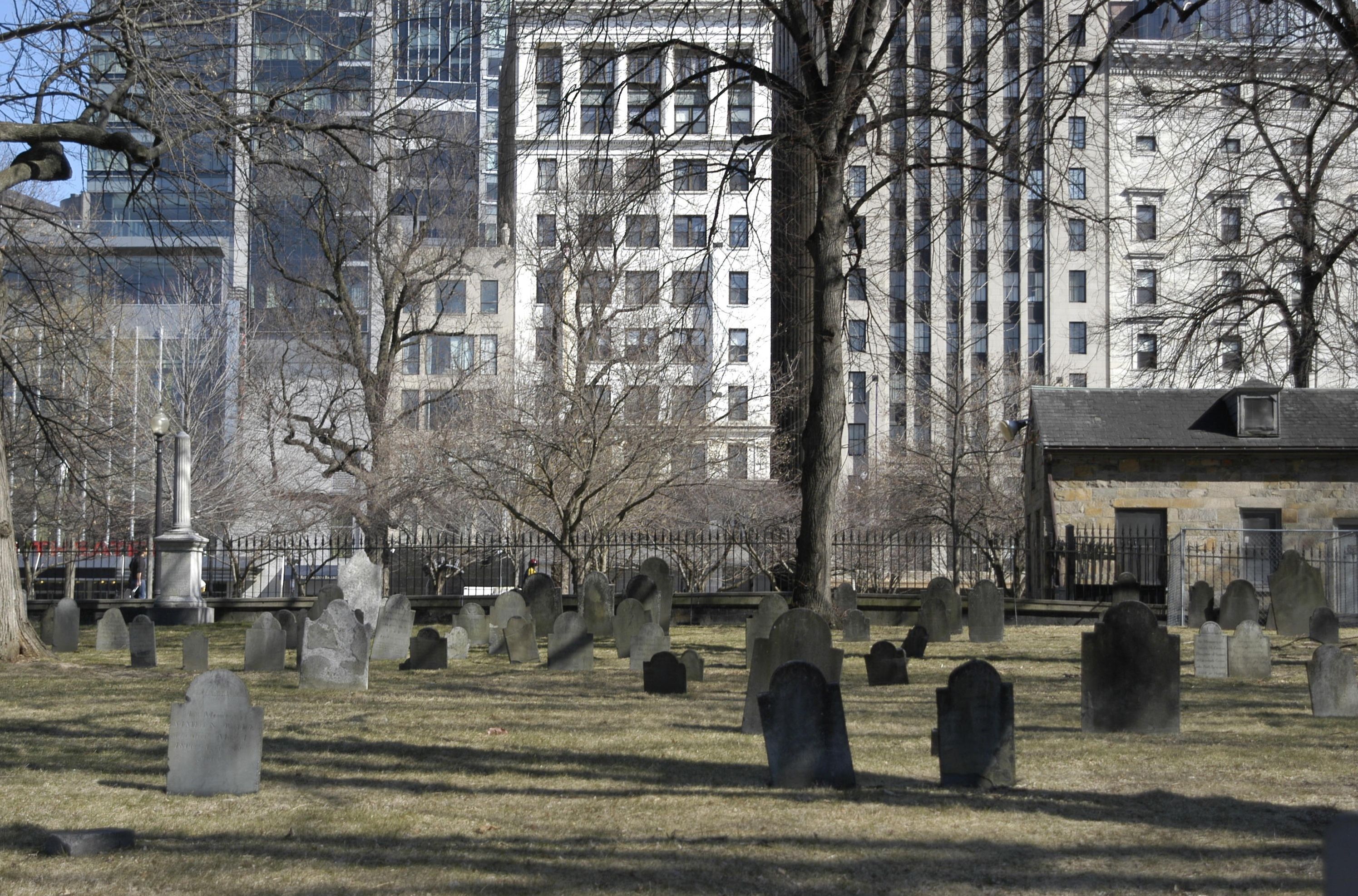
At Copp's Hill Burying Ground, the old slate-toothed cemetery in Boston's North End, visitors keep reporting a figure that drifts between the tombs. The story goes that it moves from stone to stone, checking behind each monument, as if making sure the dead are being left alone. People who tell it call the figure a guardian, and many think they know what it's guarding against.
This is ground that was disturbed. During the Revolution, British soldiers occupied the hill, and the gravestones gave them something to shoot at. They picked out Captain Daniel Malcolm's headstone in particular, because Malcolm had been a strident patriot, and they used the slate for target practice. The round scars are still in the stone. His epitaph names him "a true son of liberty, a friend to the public, an enemy to oppression." Malcolm, a merchant and a smuggler, had asked to be buried ten feet down in a stone grave so the British could never reach his body. They never got to him. They settled for his marker instead, firing musket balls into his name while he lay sealed in the rock below.
The hill itself is why the soldiers were there. It commands Boston Harbor, and on June 17, 1775, British generals stood on it and watched the Battle of Bunker Hill. Their artillery, dug in among these graves, fired across the water and burned Charlestown to the ground while the dead lay beneath the guns. The story holds that all of it — the target practice, the cannon planted among the headstones — woke something that still patrols the rows.
There is more than the war buried here. The cemetery has stood since 1659, and more than 10,000 people lie in its two acres, far more than the stones suggest. A corner along Snow Hill Street, once called New Guinea, was set aside for Boston's Black residents, free and enslaved, and most of those graves were never marked at all. Among them rests Prince Hall, who founded Black Freemasonry. Three generations of fire-and-brimstone Puritan ministers share the Mather tomb, including Cotton Mather, whose writings helped feed the Salem witch trials.
A century and a half later, H.P. Lovecraft borrowed the place for his story "Pickman's Model," where one painting "shewed a dance on Copp's Hill among the tombs." He understood what the hill already carried. The figure people report there isn't menacing. It's watchful, moving stone to stone, checking, making sure the living give the dead the respect the soldiers once denied them.