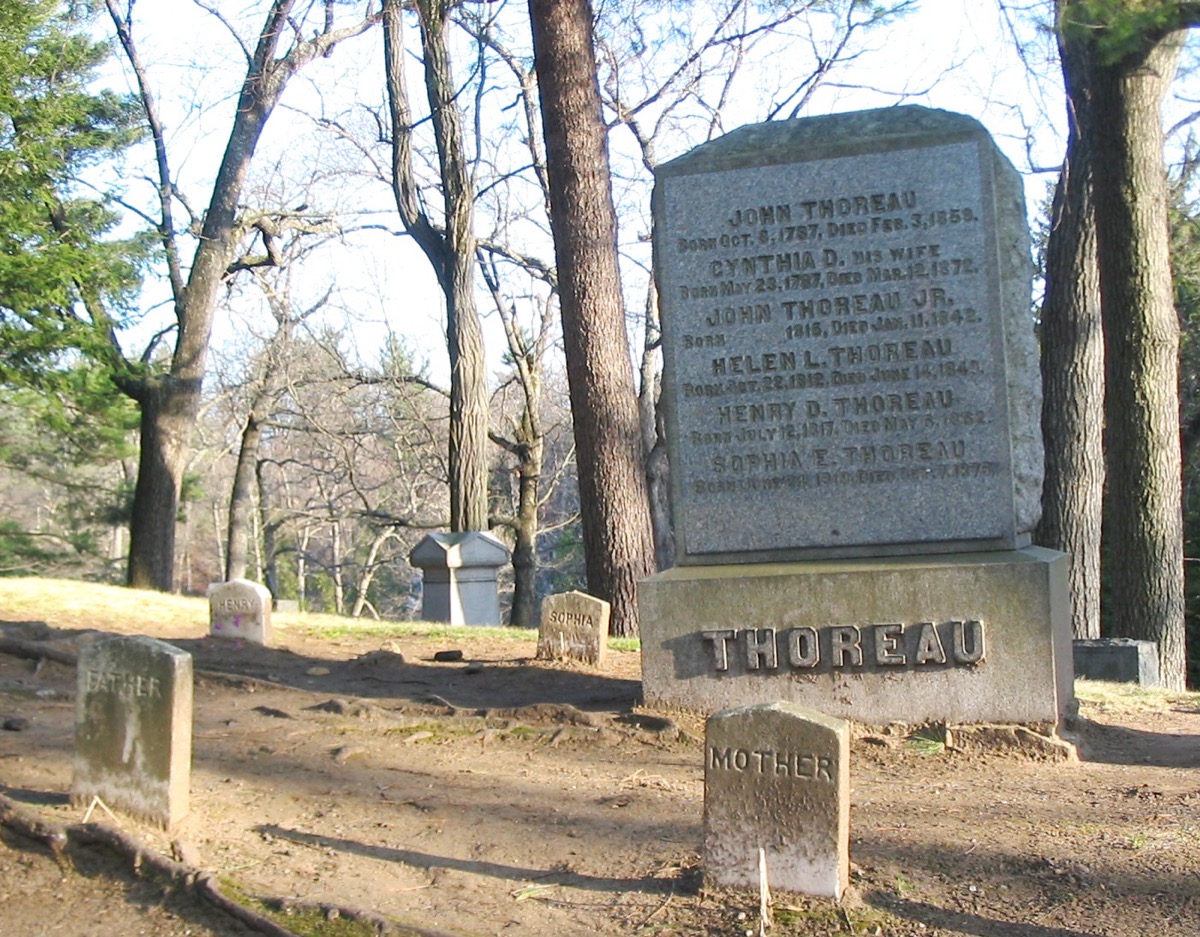
Sleepy Hollow Cemetery in Concord, Massachusetts has no documented ghost. What it has is a colder symmetry: the writers who walked this hollow as their evening parlor in life ended up buried on the same rise within 30 years.
Sleepy Hollow Cemetery in Concord, Massachusetts has no ghost on record. People have gone looking — a cemetery survey came back with "no creditable ghost stories," and a literary chronicle of the place put it flatter still: no confirmed apparitions, no restless spirits. The unsettling thing here was never an apparition. It's the symmetry.
Years before any of it was a cemetery, the wooded hollow on Deacon Reuben Brown's farm was where Concord's writers went to walk. Emerson and Thoreau took their evening rambles through it. Hawthorne and his wife Sophia picnicked among the pines and talked aloud of building a castle there someday. The name "Sleepy Hollow" was already the local one for this rise, taken from the natural setting roughly 20 years before the cemetery existed; whether it also nods to Washington Irving's 1820 tale is a debate Concord has never settled. It was their outdoor parlor, the place they treated as their own.
Then the town consecrated the hollow as a graveyard on September 29, 1855, and Emerson stood up and gave the dedication address. "When these acorns, that are falling at our feet, are oaks overshadowing our children in a remote century," he told the crowd, "this mute green bank will be full of history." William Ellery Channing read a poem written for the day.
Emerson was describing the ground he'd be buried in.
Within three decades, every one of those walkers lay within a stone's throw of the others on the rise now called Authors Ridge. Thoreau went into it first, in 1862. Hawthorne followed in 1864, carried up the hill with an apple-blossom wreath from the Old Manse and the manuscript of the romance he never finished resting on the coffin. The funeral drew a roster you couldn't assemble on purpose: Longfellow, Holmes, Lowell, Bronson Alcott, Emerson among the mourners. Emerson wrote in his journal that they buried him "in a pomp of sunshine and verdure, and gentle winds." Emerson himself came in time, and Louisa May Alcott. The people who used the hollow as their parlor in life became its permanent residents.
The graves are plain in a way that keeps the place quiet. Emerson lies under an unworked boulder of rose quartz, no carving, matching his love of plain nature. Thoreau's small stone reads only "HENRY." And at dusk, people climb the ridge to that one word and leave pencils on it — pencils, acorns, pinecones, scraps of paper with a favorite line copied out. The piles grow taller every May, the month he died. No apparition ever had to show up. The writers who loved this hollow never left it, and visitors keep coming up the hill in the dark to sit with them.