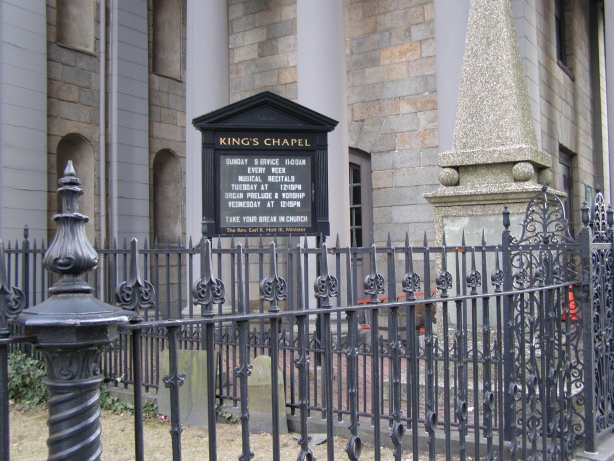
King's Chapel Burying Ground

King's Chapel Burying Ground

🪦 cemetery

Boston, Massachusetts · Est. 1630

About This Location

Boston's first cemetery, founded in 1630. The first burial was Isaac Johnson, who asked to be buried in his own pumpkin patch. Notable burials include Governor John Winthrop and possibly the infamous pirate Captain Kidd.

👻

The Ghost Story

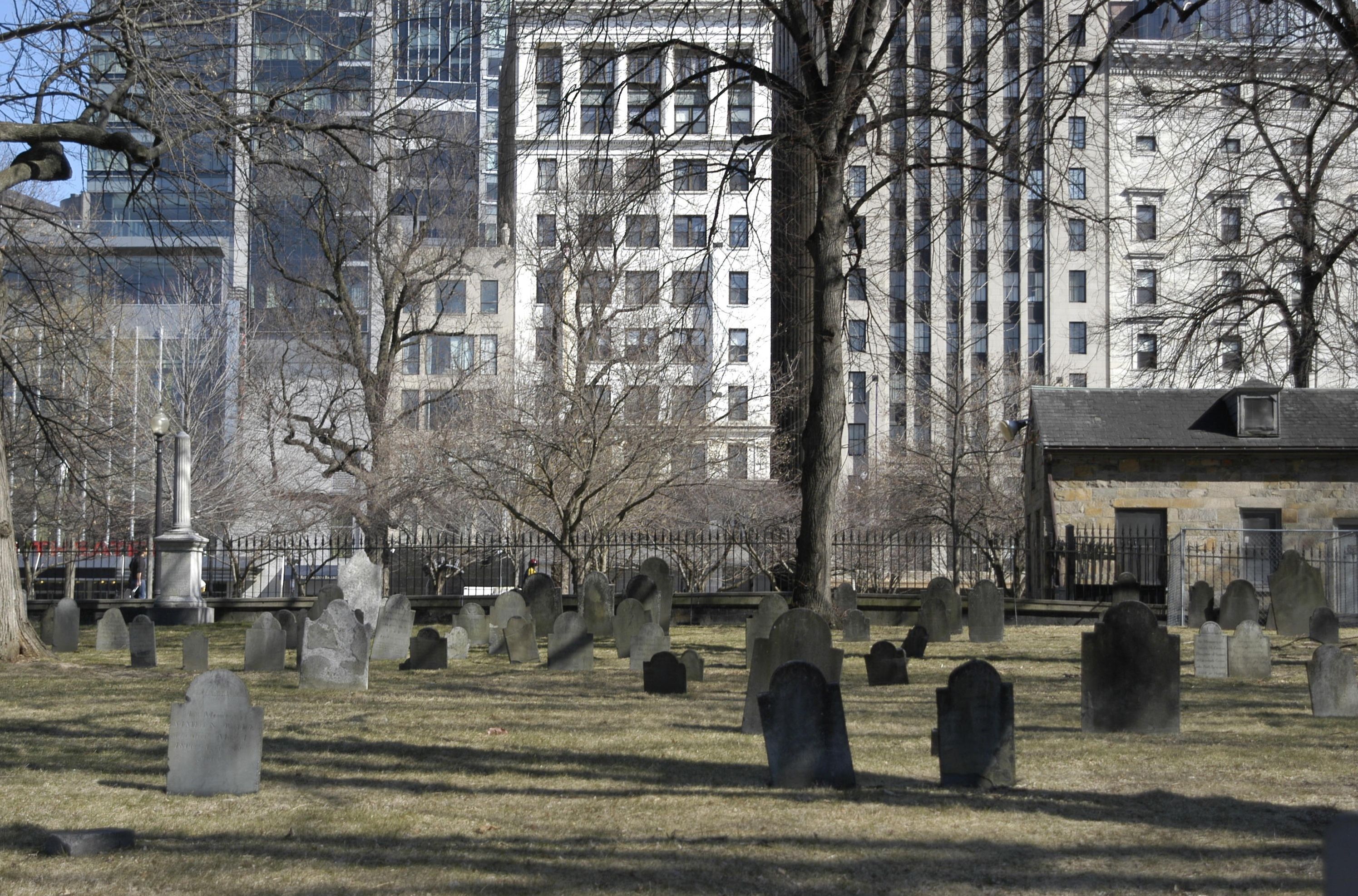
Boston's first cemetery holds its first secrets. King's Chapel Burying Ground was established in 1630, the same year the Puritans founded the city, making it the oldest graveyard in Boston. The land belonged to Isaac Johnson, who asked to be buried in his own pumpkin patch. His wish was granted, and soon other colonists joined him. For thirty years, this was the only place in Boston where the dead could rest.

Today, over 1,000 bodies lie beneath this 0.44-acre plot, though only 505 headstones and 59 footstones remain to mark them. The discrepancy is no accident—and it may be why so many spirits cannot find peace.

The roll call of the colonial dead reads like a founding document. John Winthrop, first Governor of the Massachusetts Bay Colony, lies in the family tomb near Tremont Street. Mary Chilton, the 14-year-old Pilgrim believed to be the first Englishwoman to step ashore in New England, rests here after a long life that ended in 1679. William Dawes Jr., who rode alongside Paul Revere on that famous midnight journey to Lexington, is buried within these walls. The Reverend John Cotton, one of the most powerful religious leaders of 17th-century Boston, slumbers nearby. Even Elizabeth Pain, whose grave marker inspired Nathaniel Hawthorne's description of Hester Prynne's grave in The Scarlet Letter, lies here.

But the living have not treated this ground with respect.

In 1686, Royal Governor Edmund Andros seized a portion of the cemetery to build King's Chapel—an Anglican church imposed upon Puritan land. The wooden chapel was completed in 1688, and when it needed to expand in 1710, graves were relocated to make room. A stone chapel replaced the wooden structure between 1748 and 1749, requiring yet more graves to be moved. Each time, the dead were disturbed.

The final desecration came around 1810, when a superintendent decided to make the cemetery more orderly. He arranged the headstones into neat rows—without moving the bodies beneath them. Graves were separated from their markers. Families who came to pay respects had no way of knowing if they stood over their loved ones or strangers. The dead became anonymous, lost beneath soil that no longer remembered their names.

This, many believe, is why the spirits wander.

The most terrifying ghost is the Headless Woman. According to legend, gravediggers once dug a hole too small for the woman they were meant to bury. Rather than dig deeper, they removed her head to make the body fit. Visitors report seeing her figure moving through the cemetery, searching desperately for what was taken from her. Some describe her as an African-American woman, her identity otherwise lost to history.

Then there is the Man Buried Alive. The legend holds that a man in the 19th century was so terrified of premature burial that he requested a bell be attached to a string above his grave—a common fear in an era before modern medicine could reliably distinguish death from coma. When the bell rang one night, gravediggers rushed to exhume him. They found him dead, his fingers bloody from clawing at the coffin lid, suffocated before rescue could come. Visitors claim to hear phantom bells ringing from the cemetery at night, followed by the sight of spectral figures emerging near King's Chapel.

Captain Kidd, the infamous pirate, reportedly haunts these grounds as well. Though his connection to the cemetery is disputed, many claim to have seen his ghost and heard his voice echoing among the headstones.

And then there is Reverend Increase Mather, the Puritan minister whose writings helped fuel the Salem Witch Trials. He is buried here, and visitors report his ghost taunting them—perhaps still defending the executions he encouraged, perhaps tormented by them.

Upon entering the grounds, visitors report sudden chills that cut through summer heat. Disembodied voices whisper from no apparent source. People feel themselves touched, grabbed, even pushed by invisible hands. Photographers capture orbs of light and shadowy figures that weren't visible to the naked eye. Some find that videos recorded in the cemetery mysteriously disappear from their cameras.

The cemetery is open daily from 10 a.m. to 4 p.m., free of charge. Boston's oldest dead have been waiting since 1630 for visitors to pay their respects. But respect, in King's Chapel Burying Ground, has always been in short supply—and the spirits have not forgotten.

Researched from 8 verified sources including historical records, local archives, and paranormal research organizations. Learn about our research process.

More Haunted Places in Boston

Omni Parker House Hotel

Omni Parker House Hotel

hotel

Granary Burying Ground

Granary Burying Ground

cemetery

Boston Common

Boston Common

other

Central Burying Ground

Central Burying Ground

cemetery

Copp's Hill Burying Ground

Copp's Hill Burying Ground

cemetery

Fort Warren

Fort Warren

prison

More Haunted Places in Massachusetts

🪦

Burial Hill

Plymouth

👻

Proctor's Ledge Memorial

Salem

🏚️

Sparrow House

Plymouth

🪦

Old Burying Point Cemetery

Salem

🏨

Concord's Colonial Inn

Concord

🪦

Mount Auburn Cemetery

Cambridge

View all haunted places in Massachusetts

More Haunted Cemeterys Across America

Lake Helen-Cassadaga Cemetery

Cassadaga, Florida

Lorimier Cemetery

Cape Girardeau, Missouri

Union Cemetery

Hackettstown, New Jersey

Westminster Hall and Burying Ground

Baltimore, Maryland