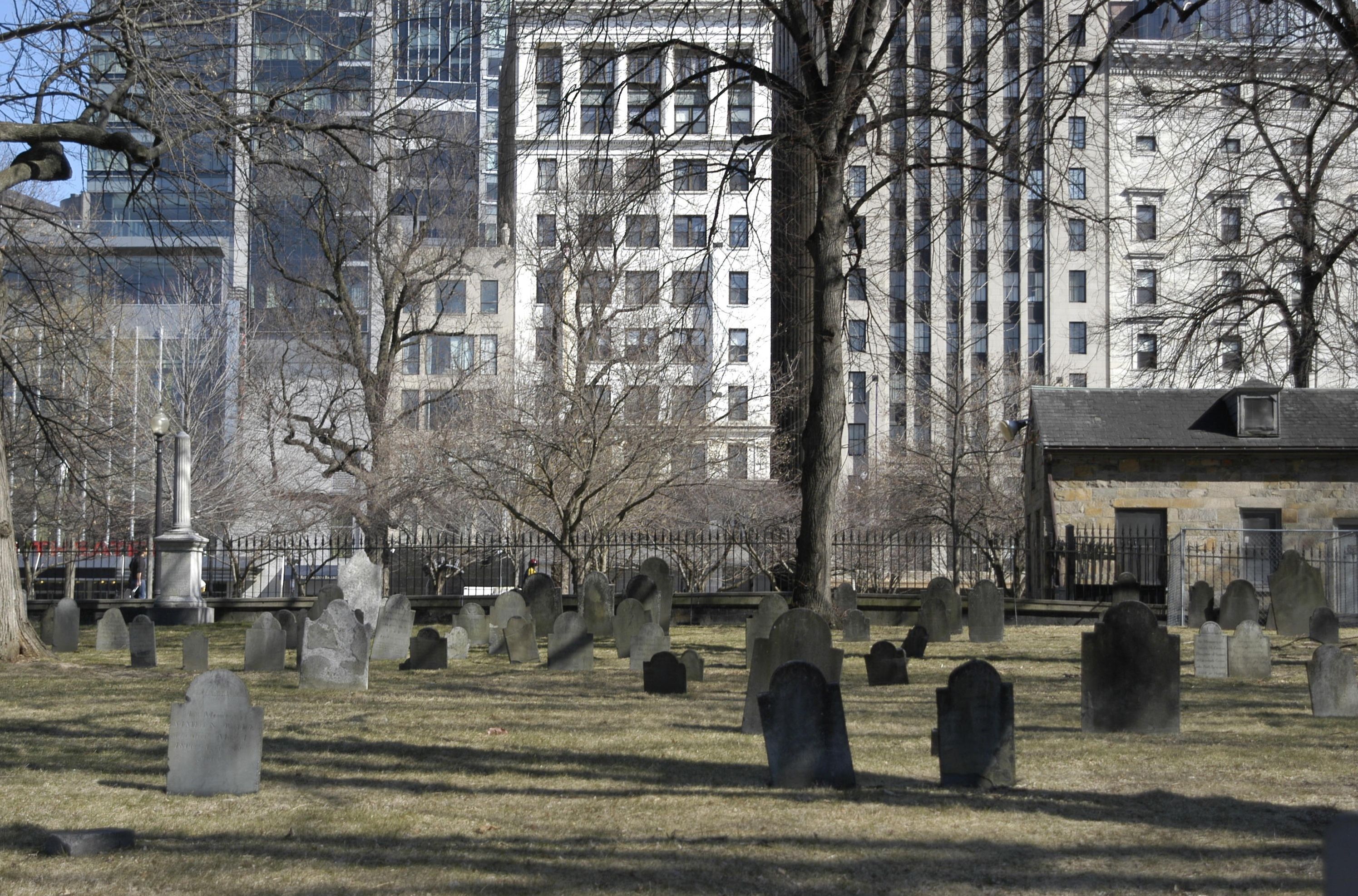
At the Central Burying Ground on Boston Common, a dentist named Matt Rutger met a silent girl in a dirty white dress one spring afternoon in the 1970s. She kept appearing in different corners. Then an unseen hand grabbed his collar and his keys floated out of his pocket.
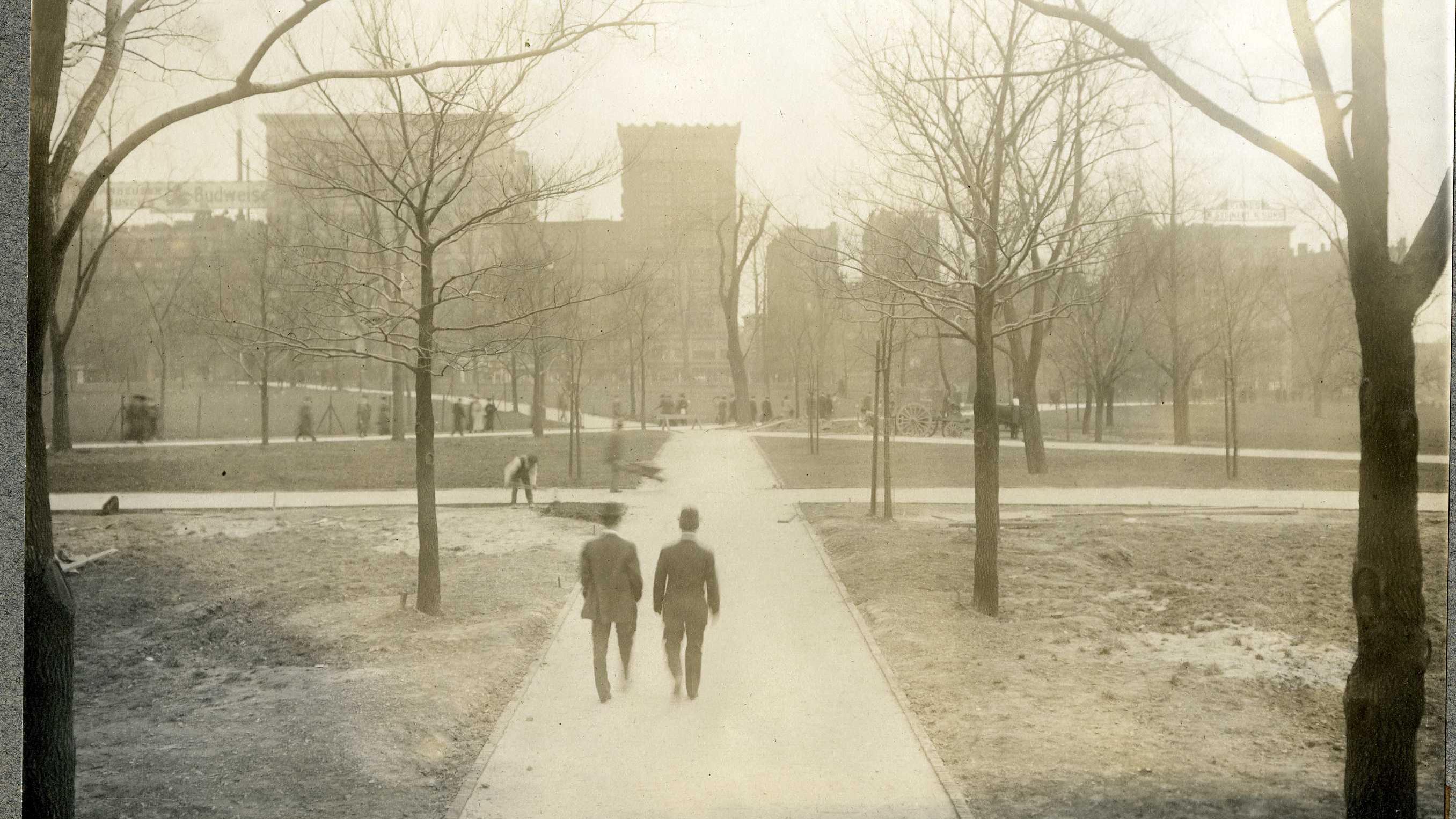
The Central Burying Ground sits on the south edge of Boston Common, along Boylston Street. One spring afternoon in the 1970s, a Boston dentist named Matt Rutger was walking it when he noticed a young girl in a dirty white dress standing in the rear corner, staring at him.
"I saw a young girl standing motionless in the rear corner of the cemetery, staring at me intently," he said. She didn't speak. She appeared in one corner, then another. Something he couldn't see tapped his shoulder and pulled his collar backward. When he reached his car, his keys lifted out of his pocket, hung in the air, and dropped to the ground, as if something didn't want him to go. His account is published in Holly Mascott Nadler's "Ghosts of Boston Town" from 2002.
The cemetery opened in 1756, the fourth and least desirable of Boston's burying grounds, the one farthest from the market. It took the people no one else wanted: the poor, the almshouse dead, immigrants, enslaved and free Black Bostonians, and "strangers" who died passing through. A few names you'd know are in there too, the portrait painter Gilbert Stuart among them, the man who made the George Washington face on the dollar bill. An estimated 5,000 people were buried here. Only 487 tombstones and 282 tombs remain.
The rest were moved, twice. In 1836, when Boylston Street was widened, a double row of tombs was dug up and the remains piled into a new row on the western edge. In 1895, crews digging the Tremont Street subway, the first underground line in the country, cut straight through more graves. "When they started digging up Tremont Street in order to build the train in 1895, they discovered bodies," says Dan Seeger, who runs a Boston ghost tour. Hundreds of them. Those remains were reburied in a mass grave in the northwest corner. A slate tablet still marks it: "Here were interred the remains of persons found under the Boylston St. Mall during the digging of the subway, 1895."
The tours say those were British soldiers, buried in a trench during the occupation, dug up and scattered by the trench for the train. The official records are more careful, and just call them human remains. Either way, the Green Line runs past them now. Seeger says operators keep reporting men in old uniforms standing on the tracks between Boylston and Arlington, in the dark, right where the digging once was.