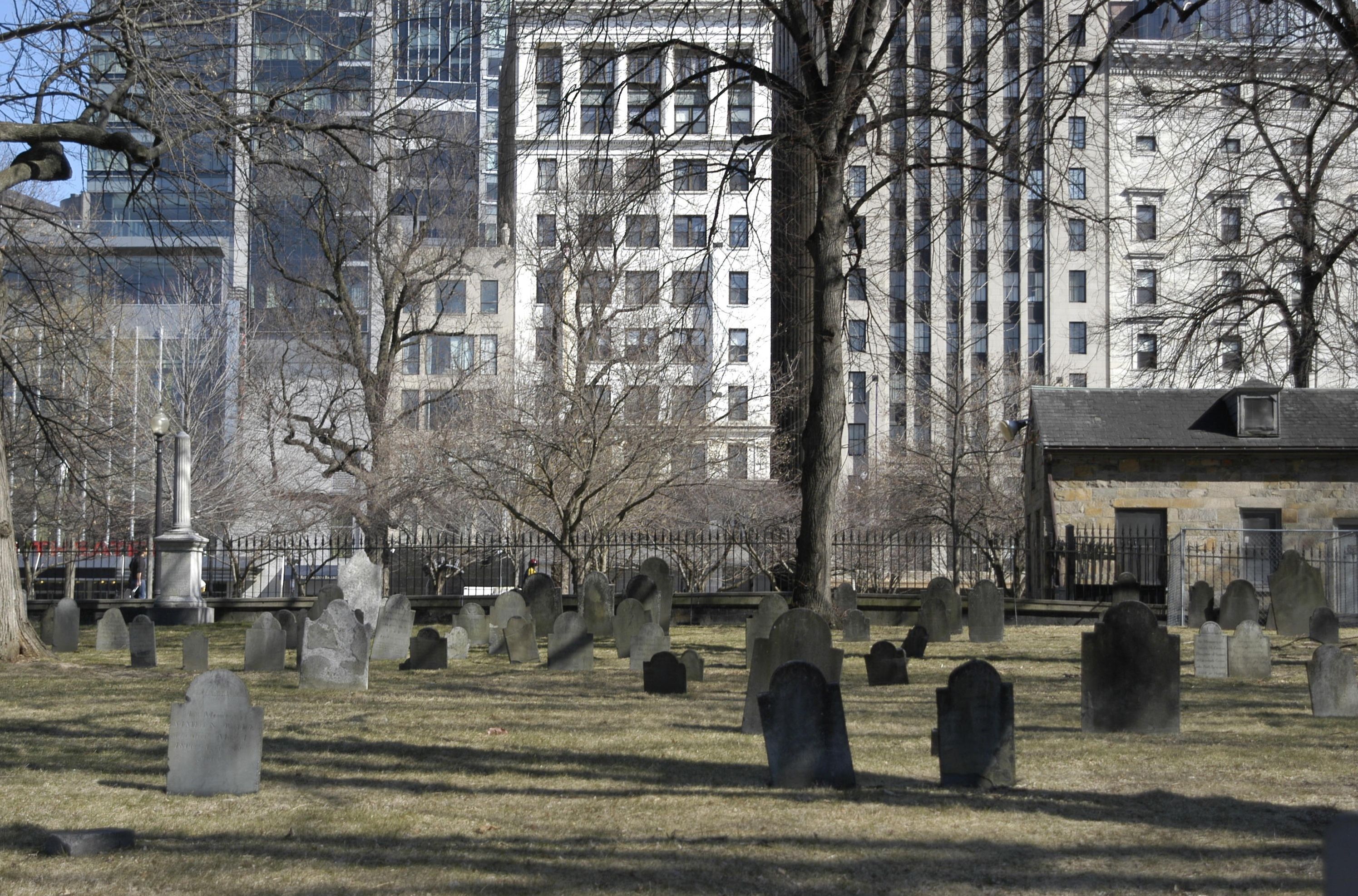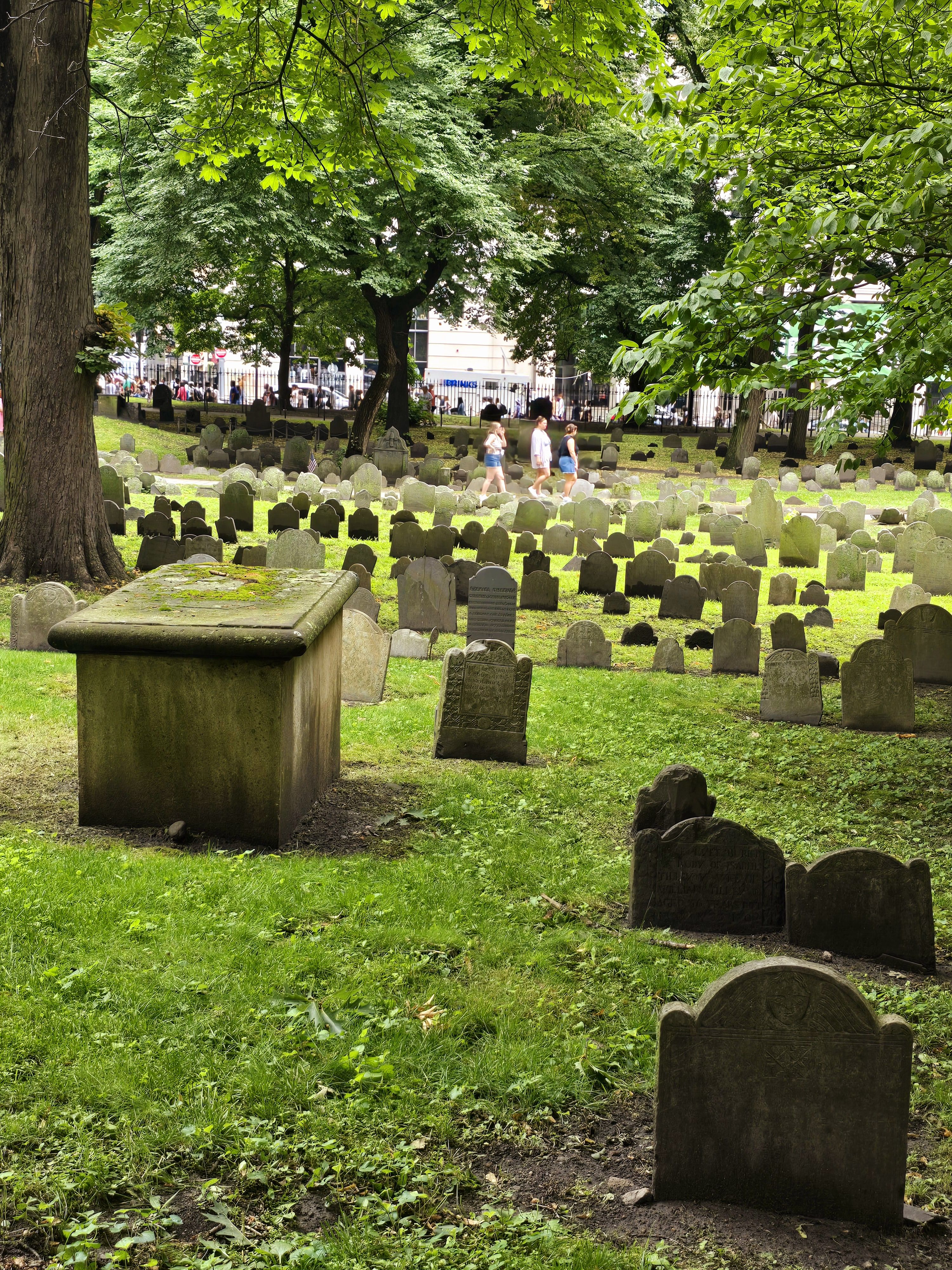
The Granary Burying Ground in Boston holds Paul Revere, three Declaration signers, and the Boston Massacre dead. Ghost tours give its restless paths to James Otis, the lawyer who wished to die by lightning in 1783 — and got his wish.
The most-told ghost at the Granary Burying Ground in Boston is James Otis Jr., a Revolutionary lawyer who got the death he asked for. He told his sister Mercy Otis Warren how he hoped to go: "My dear sister, I hope, when God Almighty in his righteous providence shall take me out of time into eternity, that it will be by a flash of lightning."
On May 23, 1783, he was standing in the doorway of a friend's house in Andover, watching a thunderstorm, when lightning struck him dead. It killed him instantly and left no visible mark on his body. They carried him back to Boston and buried him here, in the Cunningham family plot.
There was reason to think his mind was ready to go. In a 1769 Boston coffeehouse, a Loyalist customs official had cracked a blow across his head. Otis was never the same after — erratic, sunk in long depressions. The man who wished aloud for lightning had been waiting on it for fourteen years.
Ghost-tour lore makes him the burying ground's most active spirit, seen in Colonial-era clothing wandering the paths. No witness is named, no sighting dated. The lightning is on the record. The pacing figure is the story people tell.
He is far from alone underground. The Granary opened in 1660 and took its name from a grain building that once stood where Park Street Church sits now. Roughly 2,345 stones mark it, but historians think as many as 5,000 people lie below — many in unmarked graves. Paul Revere is here. So are Samuel Adams, John Hancock, and Robert Treat Paine, three signers of the Declaration. So are the five killed in the Boston Massacre, Crispus Attucks among them.
Judge Samuel Sewall lies here too, under a red sandstone stone in the northwest ground — one of the nine who sent people to die in the Salem witch trials, and the only one who ever stood up and recanted. On January 14, 1697, he stood in the Old South Meeting House while a minister read his confession of guilt aloud to the room. Some accounts put his restless ghost here, pacing that guilt. Others place the same figure a block away at King's Chapel, where he is not buried at all.
In 2009, a tourist on a self-guided walk fell straight through the ground onto a hidden stairway that led down to a crypt no one knew was there.