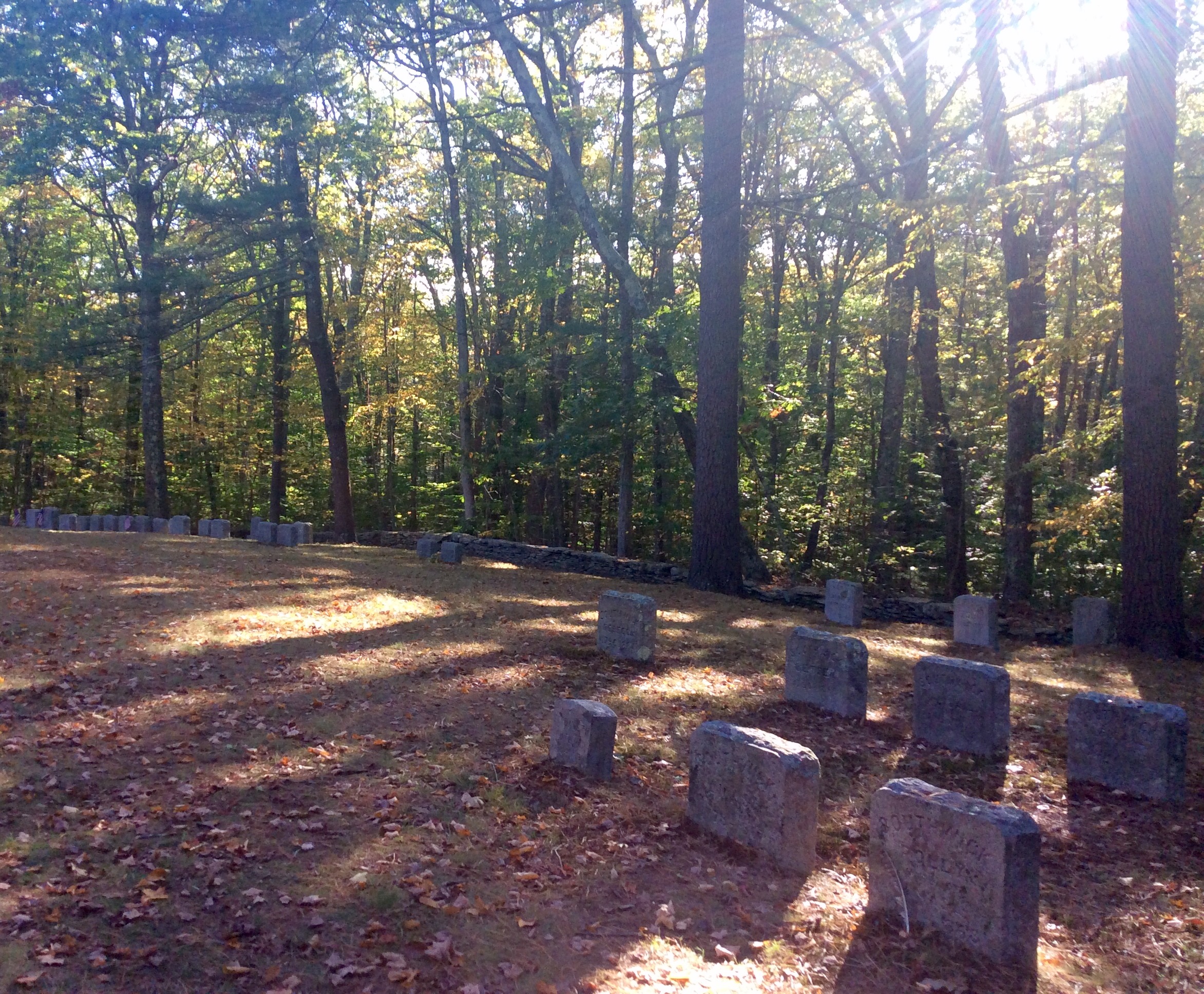
In the woods of Leicester, Massachusetts, a small Quaker burial ground is known almost everywhere as Spider Gates, the eighth gate to Hell. At midnight, visitors circle one headstone and ask the man under it to answer back.
At Spider Gates Cemetery in Leicester, Massachusetts, there is one grave people walk around at midnight. It belongs to Marmaduke Earle, who lived from 1749 to 1839, and the ritual is always told the same way. You circle his stone chanting "Marmaduke, speak to me," then press your ear to the granite and wait for him to answer. The ground around the headstone is worn bare from the feet that keep coming to try it.
The place is really called Quaker Cemetery. It was established in 1740 beside the old meeting house of the Leicester Friends, and it is still in use, still maintained by the Worcester Friends Meeting. Almost no one uses that name.
The name everyone does use came from the gates. A bequest from Dr. Pliny Earle paid for the wrought iron, and the design was meant to show the rays of the rising sun, a Quaker emblem of life and rebirth. People looked at the sunburst and saw a spider's web instead. The sun was forgotten, and a quiet burial ground became, in the retelling, the eighth gate to Hell. One of eight portals scattered across the country, the story goes, or the gate that opens if you pass through seven gates inside the grounds in the right order.
The lore grew out from there, and most of it maps onto a feature you can stand in front of. A large oak called the Hanging Tree is said to be haunted by someone who died on it, though visitors who go looking for a rope never find one. A raised spot called the Altar gets tied to rumored Satanic rites; it is likely just an old foundation. Kettle Brook, running behind the graves, is recast as the River Styx, and people leave coins on the headstones for the ferryman. One firsthand investigation of the Altar and its supposed cave turned up that foundation, some mischievous teenagers, and ordinary snow, and nothing else.
Buried under all of it are the people the legend forgot. Pliny Earle, born in Leicester, who built the first working machine in America for manufacturing the carding cards used to comb wool and cotton. Stephen C. Earle, the Worcester architect behind Bancroft Tower, the Leicester library, and Boynton Hall at WPI. Quakers, an inventor, an architect, resting in a place the retelling turned into a portal to Hell.
The gates were removed in 2022 after years of graffiti and vandalism, and the Leicester Historical Society holds them now. The sunburst that started the whole story is the one thing no longer standing at the gate.