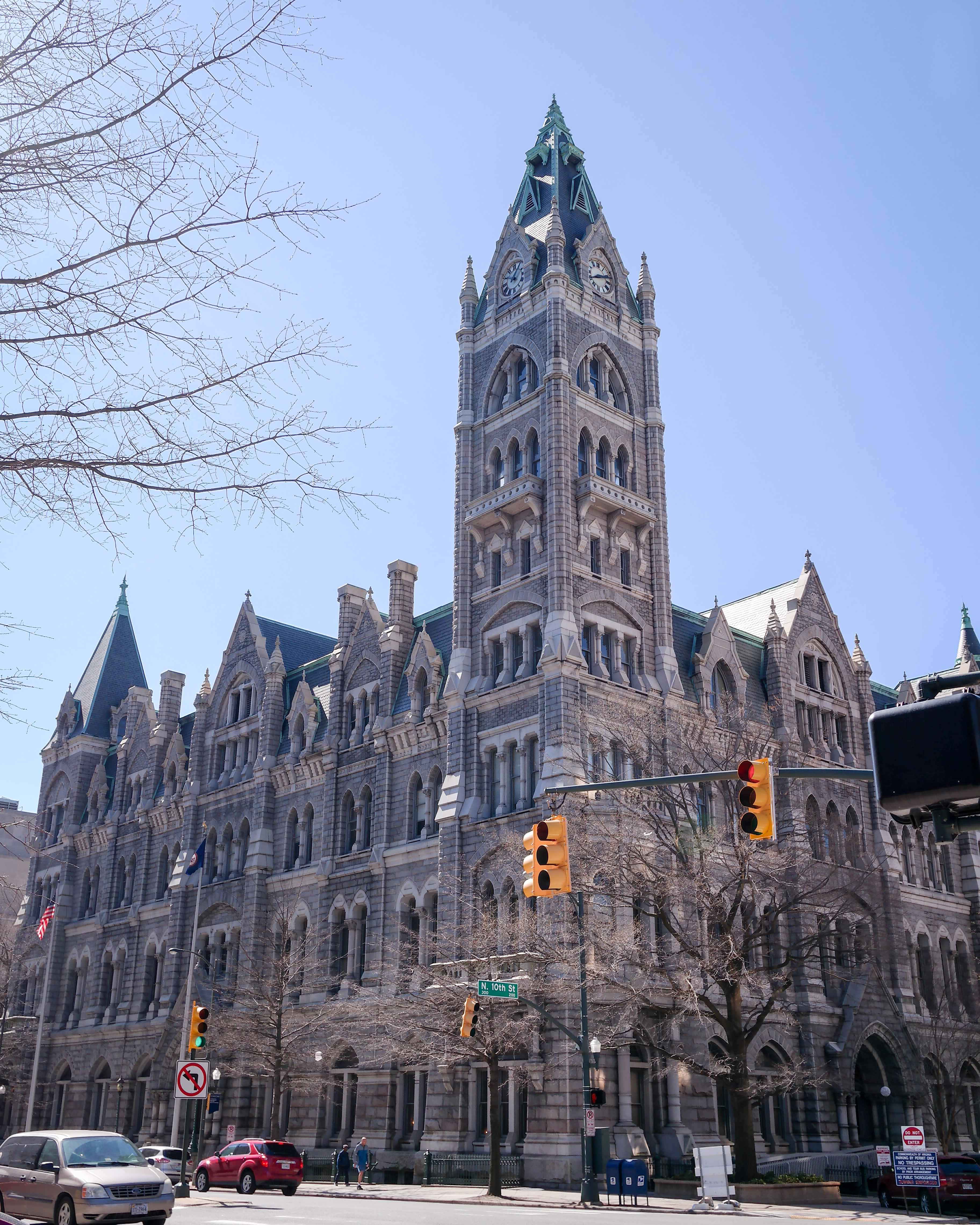
Richmond's Old City Hall: an 1894 Gothic granite pile, a 94-foot fall from the clock tower, and a bent cast-iron fence that never straightened out.
On the morning of August 23, 1894, Colonel James Monroe Winstead climbed the inside of the clock tower at 1001 East Broad Street, opened a window, and stepped out onto the granite balcony. He was 70, a banker, the president of the Piedmont and People's Bank of Greensboro, North Carolina, in Richmond on business. The new city hall had been open less than a year. He set down his shoes. He set down his hat and cane. From the corner of Tenth and Broad, a man named Willie Dunsford watched.
"Stand up on the railing of the balcony, bend over a little, and jump off headlong," Dunsford told a Richmond Dispatch reporter the next day. Winstead fell 94 feet. He landed on the decorative cast-iron fence along the Broad Street side, and the spear points beneath him bent under the impact. Newspapers described the body being "removed with great difficulty."
The fence is still there. The spear points on the Broad Street side, the ones nearest the corner of Tenth, sit visibly warped in the iron, pulled forward and slightly downward where his body came through them.
The Winstead fall is the spine of the story. Everything else, the building included, is the frame around it.
The building itself is one of the more obvious things in downtown Richmond. High Victorian Gothic, granite, a full city block at 170 by 140 feet, four corner towers, and a northwest clock tower that climbs to 195 feet. The architect was Elijah E. Myers from Detroit, who also drew the state capitols of Michigan, Texas, Colorado, and Idaho. Ground broke in 1886. Completion took until 1894. The original budget was $300,000. The final cost came in at $1,318,349.19, roughly four times what the city signed up for. Construction was supervised by City Engineer Wilfred E. Cutshaw, a former Confederate officer, and built primarily by Black laborers. Inside, Richmond ironworker Asa Snyder fabricated a four-story cast-iron atrium that Historic Richmond still calls the most splendid interior space in the city. The first floor is open to the public during business hours, and you should walk in if you're nearby.
Old City Hall served as Richmond's seat of government from 1894 through the 1970s. It was added to the Virginia Landmarks Register on November 5, 1968, the National Register of Historic Places on October 1, 1969, and named a National Historic Landmark on November 11, 1971. The city tried to demolish it in 1970. The Historic Richmond Foundation stopped that, the state bought the building for a dollar, and a full restoration ran through the early 1980s. Today it houses legislative agencies, commissions, and the Capitol Police. It has never housed a jail. There are no basement cells.
That last sentence matters because some lists describing the building's haunted reputation suggest otherwise. There's no contemporary record of chains in the basement, nothing documented anywhere about a Victorian woman drifting through hallways, no newspaper or city record naming any specific apparition. What exists is one ghost-tour site, rvaghosts.com, describing Old City Hall as a place with "a dark presence that seems to watch visitors from the shadows, leaving an eerie feeling that's hard to shake." The entire haunted attribution stops there, with no named ghost, no room number, and nobody quoted by name about a single sighting.
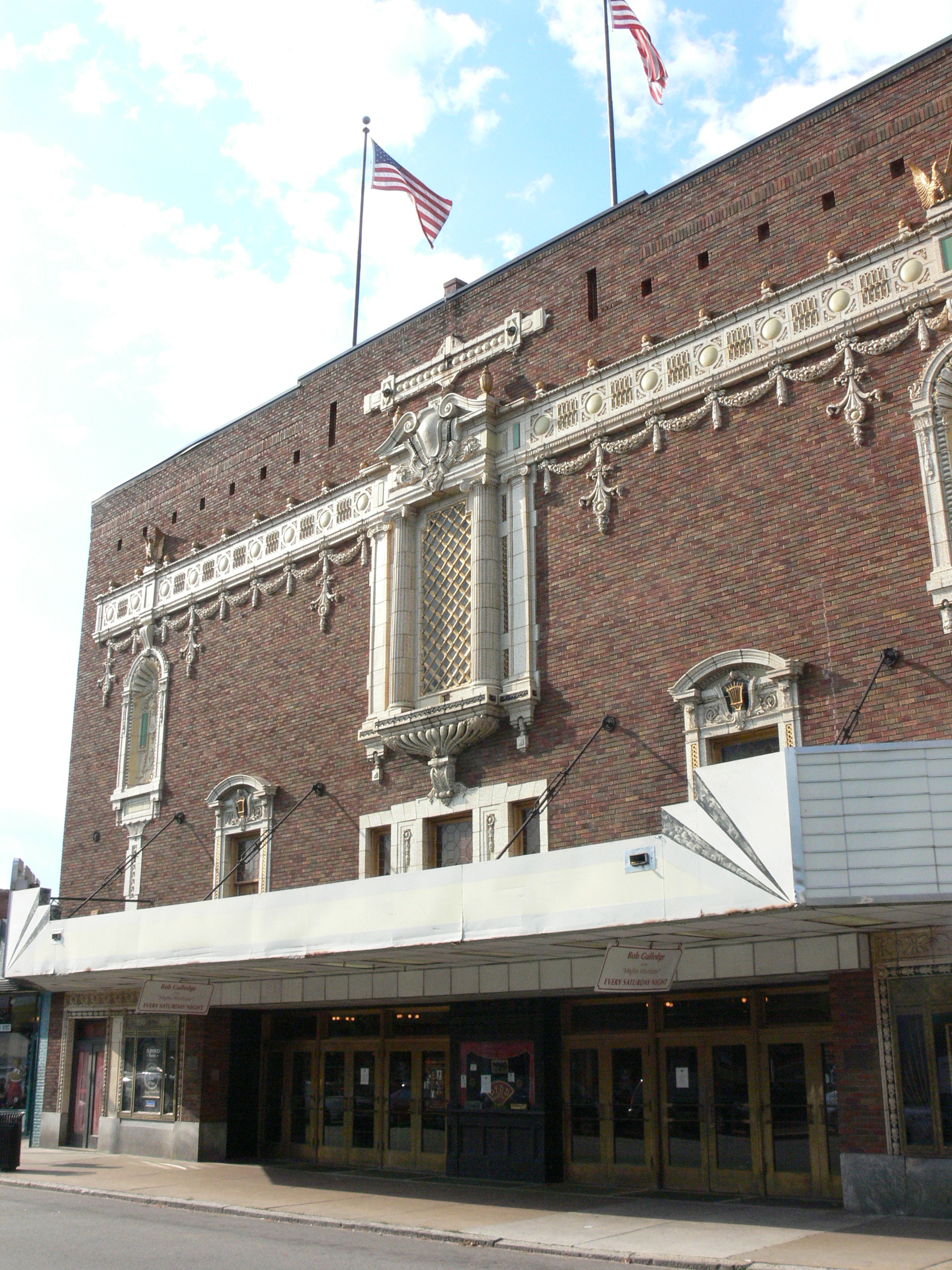
So here's the honest framing. Old City Hall lands on some haunted Richmond lists and slides off others. It doesn't show up on the Style Weekly thirteen, the WTVR roster, or most of the standard ghost-tour rotations. The Poe Museum and the Byrd Theatre dominate those. What Old City Hall has instead is the documented thing, the actual newspaper-reported event, and the physical artifact. A 70-year-old banker fell from a tower. The fence below him bent. The fence is still bent.
The mystery is whether he fell or jumped. Newspapers in 1894 split. Dunsford's eyewitness account said suicide. Winstead's friends in Greensboro refused to accept that and maintained at the funeral that his hat had blown off and he was reaching for it when he lost his balance. There was no note. The shoes near the ledge cut against the hat theory. The fact that he had taken time to remove his shoes, hat, and cane cuts against the hat theory harder. But the bank he ran was healthy. No financial misconduct was ever found, even after his death sparked a small bank run back in Greensboro. He had no obvious reason to step off a building.
Historian Selden Richardson put it cleanly in his 2023 book "Richmond Murder & Mayhem," calling it "the strange 1894 death of Greensboro, North Carolina, businessman James Winstead, involving the observation balcony on the clock tower of what we today call Old City Hall." Strange is the right word. The case never resolved. The Library of Virginia keeps scanned copies of the original newspaper coverage from The Times, the Alexandria Gazette, and the Roanoke Times. You can read them.
The observation deck was closed to the public after Winstead's death. The clock tower sits where Myers drew it in 1886, the balcony hangs out over Broad Street the way Winstead found it on August 23, 1894, and the spear points below are still warped from that morning. One documented fall, one quiet mystery, and a row of cast iron near the corner of Tenth that has held its bend for 132 years.