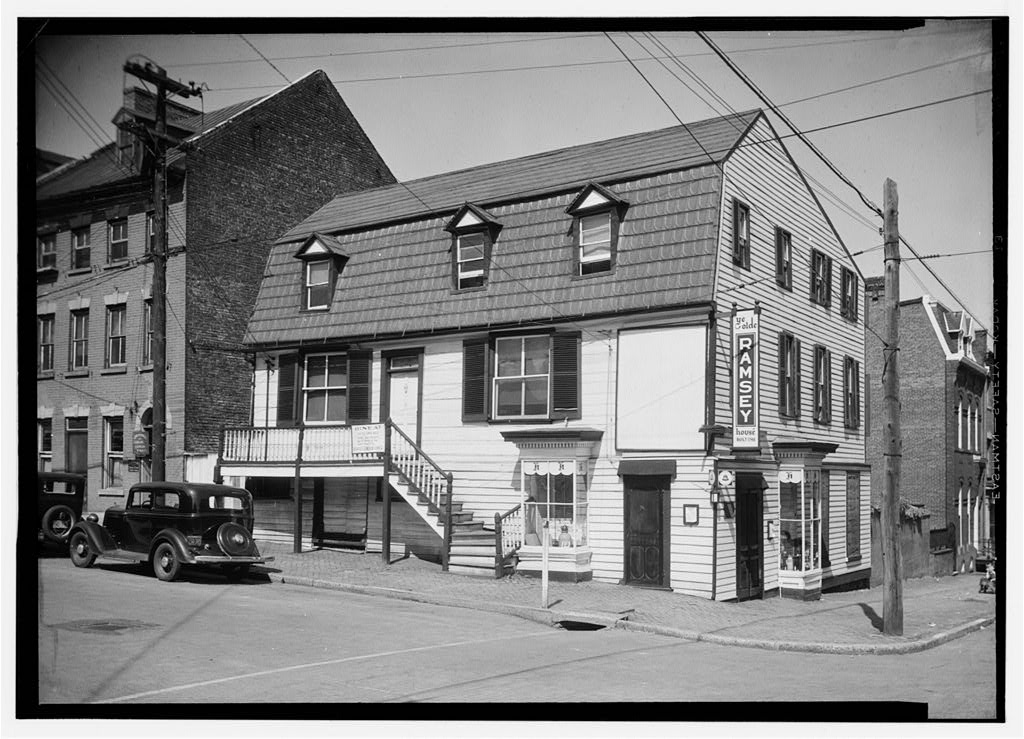
The Ramsay House in Alexandria is the city's oldest building. Its founder was Lord Mayor in 1761, and the coffee pot still brews before staff arrive.
The coffee pot turns itself on. At 221 King Street, before the morning shift unlocks the door of Alexandria's Visitor Center, the pot has already started brewing. Sometimes the coffee is gone before anyone gets to drink it. Staff have shrugged about it long enough that the local nickname stuck: the latte-loving ghost.
This is the oldest house in Alexandria. It belonged to William Ramsay, the city's first and only Lord Mayor, and Alexandria's ghost-tour scripts say he hasn't really left.
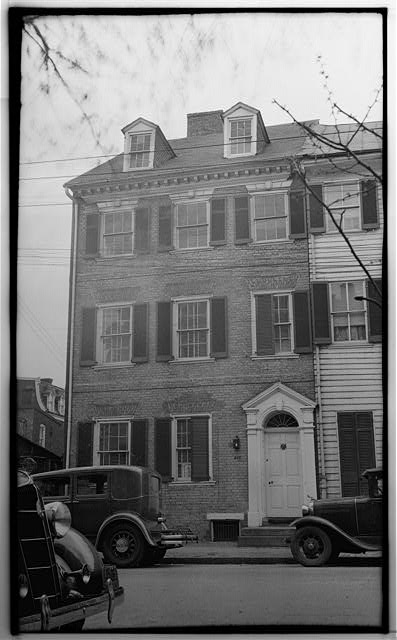
One quick housekeeping note. The family is Ramsay, with an A. Every contemporary record spells it that way: Library of Congress, the gravestones, the SAR Patriots database, the Mount Vernon files. But the building's own pre-restoration sign, photographed by the Historic American Buildings Survey, spells it "Ye Olde RAMSEY house BUILT 1749." Even Ramsay's own house got the name wrong on its front wall. We're going with Ramsay because the man signed his name that way.
The man himself is worth a minute. Born in Galloway, Scotland in 1716, Ramsay emigrated to Dumfries, Virginia in 1742 and worked as a merchant. In 1749 he co-founded Alexandria with John Carlyle and John Pagan after sailing up the Potomac to petition Virginia's House of Burgesses to charter a new tobacco port. Tradition holds that he then floated his existing cottage from Dumfries up the river and set it on this corner soon after Alexandria was established in 1749. Some sources put the transport date around 1752 instead. A few of Ramsay's own descendants insisted the house was built on site and never moved at all. Three centuries later, no record settles it. The river story is the one Alexandria tells.
On St. Andrew's Day, November 30, 1761, Alexandria's citizens voted Ramsay the city's first and only Lord Mayor. The title was honorary, handed over with a gold chain and a medal. He went on to serve as the town's postmaster from 1772 and as a trustee. He married Ann McCarty Ball, a cousin of George Washington. When Ramsay died in February 1785, Washington himself walked in the Masonic funeral procession with Alexandria Lodge No. 39, an entry Washington recorded in his diary.
Dennis Ramsay, the son, grew up inside this house and turned out to be a historical character novelists would invent. He served as a Captain in the Virginia Continental Line during the Revolution and rose to Colonel. He became Mayor of Alexandria. He was a charter member of Alexandria Lodge 39 in 1783. On April 16, 1789, as George Washington left Alexandria for his presidential inauguration, Mayor Dennis Ramsay delivered the farewell address at Wise's Tavern. By tradition, that address is where "Mr. President" was first used publicly to address Washington. Ten years later, in December 1799, Dennis walked as an Honorary Pallbearer at Washington's funeral, alongside Colonels Charles Little, Charles Simms, William Payne, George Gilpin, and Philip Marsteller.
So before any ghosts show up, this is a house where two generations of Ramsays were in the room when the country was being built.
The second act of the building is less dignified. After the Ramsays were gone it served as a tavern, a grocery, a cigar factory, and during World War II, a brothel for workers from the nearby Torpedo Factory. Then in 1942, fire tore through it. Sources call it "destructive." They don't say how it started or which rooms went up, only that by 1950 the place was partly open to the weather. I'll leave it there because the rest is guesswork.
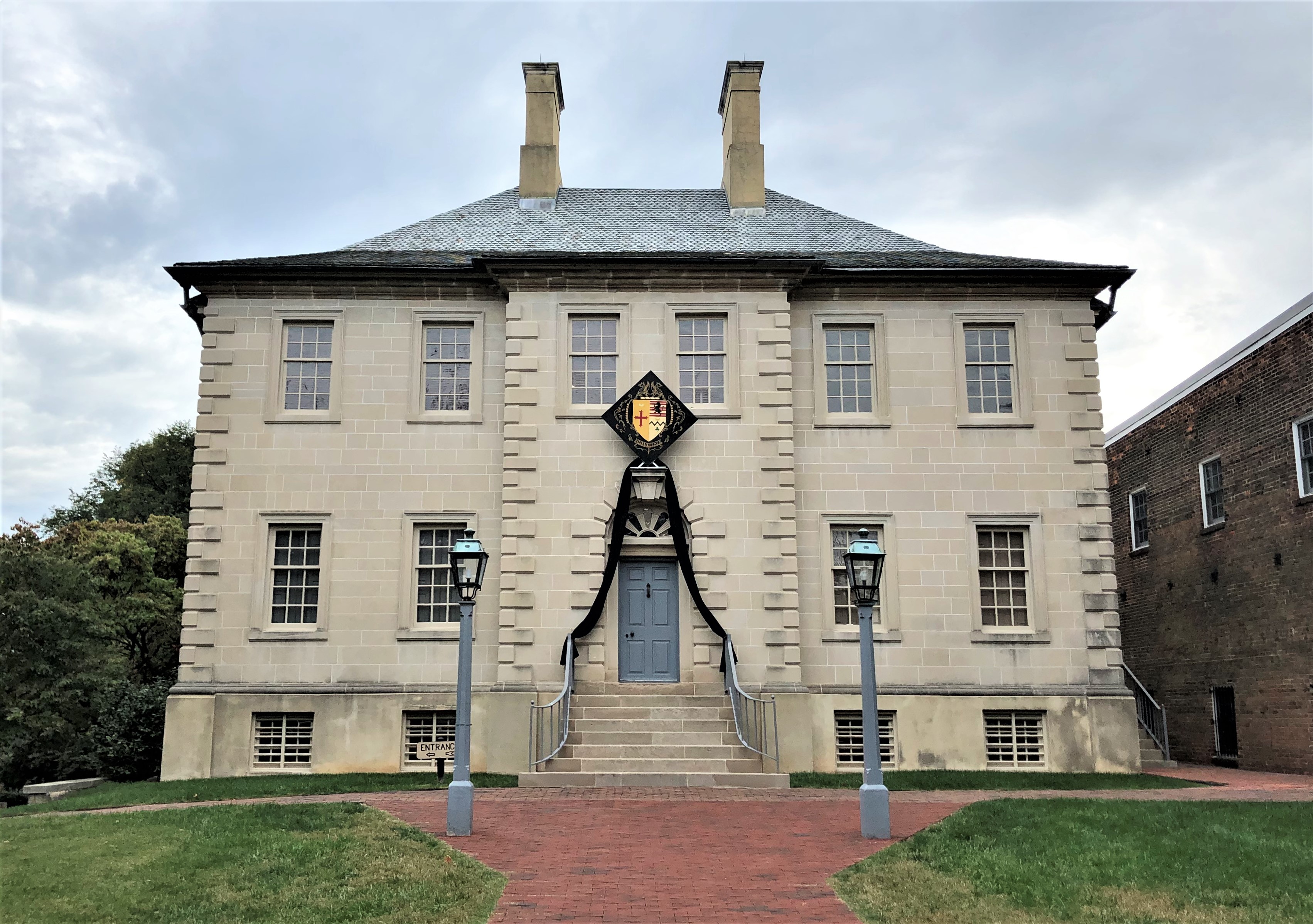
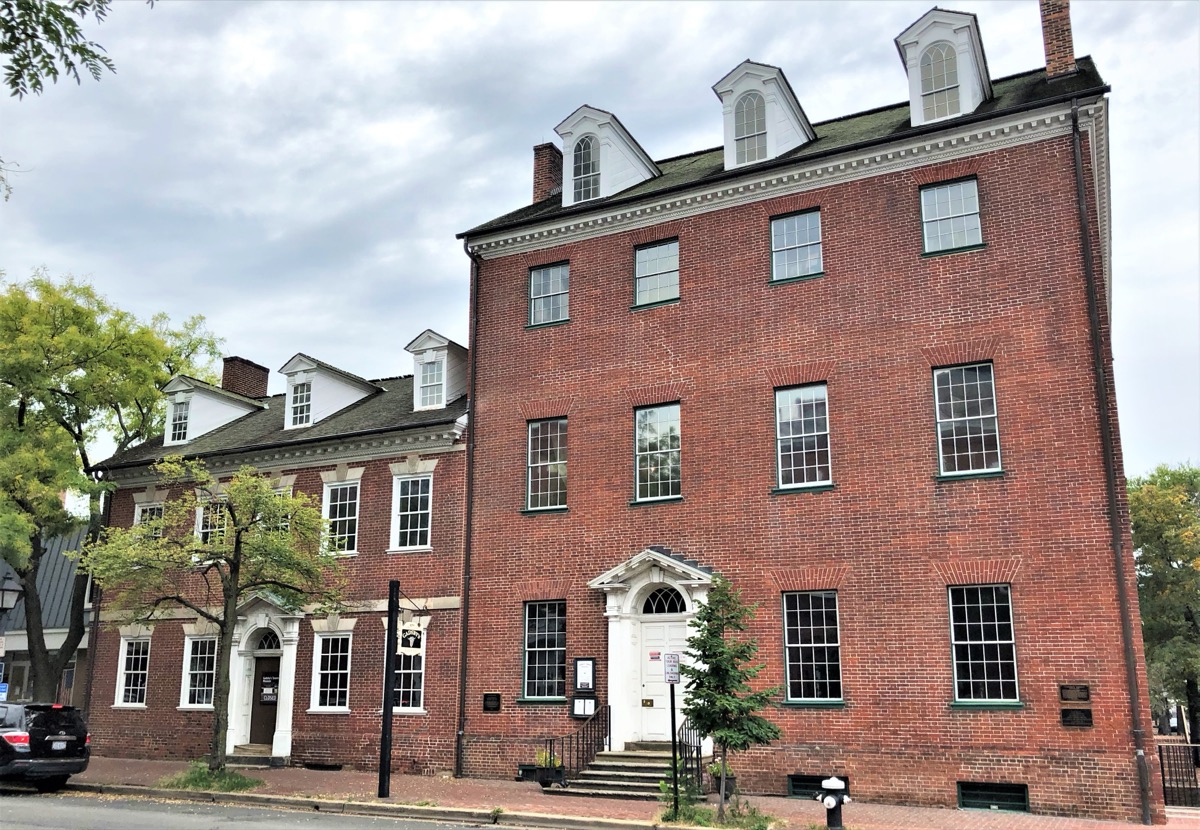
What saved the house was the city. Alexandria purchased the property in 1944 to keep it from being demolished, and the Alexandria Historical Society was authorized to restore it. The architect was Milton L. Grigg, an Alexandria native who'd worked on Colonial Williamsburg and Monticello. Grigg ran the restoration from 1946 to 1955 in Colonial Williamsburg style. Local accounts say only one original wall survived the 1942 fire, and Grigg's team built that wall into what's now the veranda along King Street. The restored building opened as Alexandria's Visitor Center in 1956 and has stayed that ever since. Gambrel roof, three dormers across the face, two stories, attic, basement, the side porch on King.
Now the haunting. The most repeated account is an apparition upstairs: a figure in 18th-century clothing standing at an upstairs window, looking out toward the Potomac. The same river Ramsay sailed up to petition for a port. Ghost tour guides and aggregator sites describe the figure as Ramsay himself. The trouble is, none of those sources name a staff member who's seen it. The accounts are paraphrased through ghost tour scripts and ghost-blog aggregators. No on-the-record witness anywhere I could find. I'd take that one as folklore that suits the place.
The coffee pot is similar. The story is that the pot turns on before the morning shift gets there and that fresh coffee sometimes vanishes before anyone arrives to drink it. The verified sources don't put a name beside that account. It's a soft, domestic, almost polite haunting, which I find more believable than the chains-and-moaning version, but I can't tell you who's actually seen it.
Other visitors and staff report figures in 18th-century clothing inside the building, most often in the basement. One ghost-lore aggregator put the local lore plainly: "If you're lucky, you may even see ghosts wearing 18th century clothing, though witnesses say they tend to stay in the basement."
A May 2004 Washington Post feature mentioned a paranormal investigation at the house by the D.C. Metro Area Ghost Watchers, founded by Library of Congress docent Albert "Al" Tyas. No findings from that night are in the public record I could pull. The visit happened. What they got, nobody's saying.
Go for the building, not the ghosts. The history at 221 King is doing the heavy lifting, and it's substantial enough that the soft, unsourced upstairs-window stuff doesn't need to land for the place to earn the visit. A Scottish merchant who barged a cottage up a river, a Lord Mayor with a gold chain, a son who coined a presidential title and walked behind Washington's casket, a fire, a brothel, a near-demolition, and one original wall incorporated into a veranda. The ghost industry layers on easily because the bones are already this strange.
Look up at the building before you go in. The HABS-era photographs in the Library of Congress show what used to hang on the front wall: "Ye Olde RAMSEY house BUILT 1749."