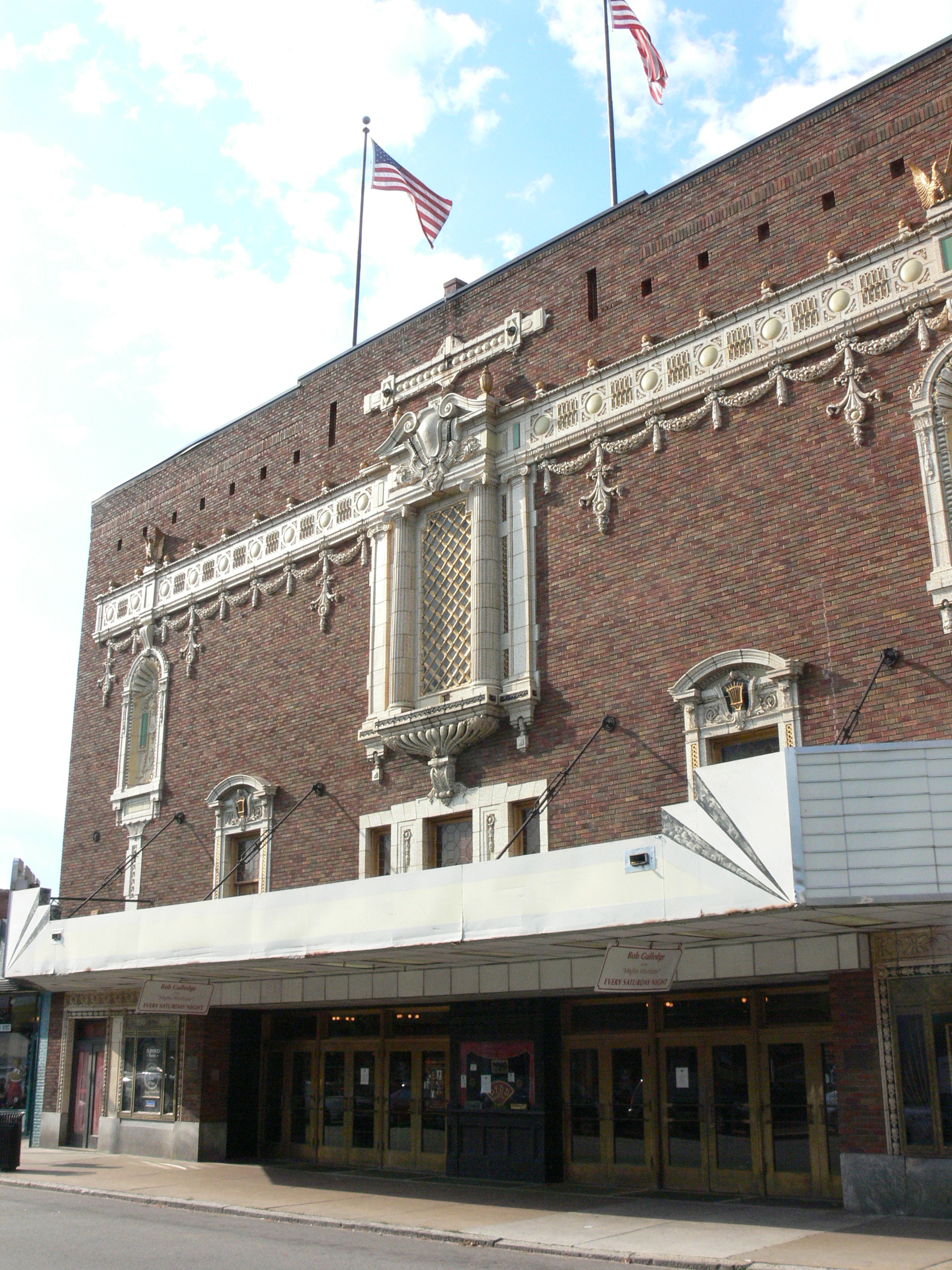
Robert Coulter ran the Byrd Theatre for 43 years and never really left. Staff still see him watching films from the inaccessible upper balcony.
Robert Coulter had one tic everyone remembered: he walked through the Byrd Theatre flicking off any light he thought didn't need to be on. He managed the place from its Christmas Eve 1928 opening until he retired in 1971, a forty-three year run, and even after he retired he came in every single day until he died in 1978 at age 76. Then he kept showing up.
Staff say he sits in the upper balcony now, in the seats nobody can reach. Former Byrd manager Todd Schall-Vess put it plainly to Style Weekly: "He's seen in a number of places but mostly spotted in the balcony." Dennis Estlock of Commonwealth Researchers of the Paranormal got more specific. "We saw a dark figure sitting in a seat up in the balcony," he said, "and the staff said that was where Coulter was commonly seen sitting."
There's no contemporary obituary online to nail down Coulter's full biography, and the haunting-focused sources are the ones carrying the 1978 death date. But every account that bothers to mention him says the same thing: he loved this building, and the building seems to know it.
The CBS story is the one that sticks. House organist Bob Gulledge tells it, recounted in Richmond Ghosts: a CBS crew was shooting at the Byrd in the late 1990s, telling the story of Coulter's compulsive light-switching habit on camera, when every light in the theatre went out at once. No primary news clip exists. Gulledge has been the house organist at the Byrd since 1996 and has no reason to make it up, but the sourcing is one organist's recollection, not a tape.
Same deal with the "Gone with the Wind" story. Per one investigation account in Richmond Ghosts, when researchers tried to contact Coulter, he answered that the last film he saw at the Byrd was "Gone with the Wind" and that he hated it. No recording exists. The staff like the story.
What the current operations manager will tell you is more concrete. Samuel Hatcher has been backstage alone and heard doors slam behind him. "I was backstage, and the door swung open and slammed shut, and I thought it was my coworker," he told Our Community Now. "I walked back up to the front, and my coworker was standing in the front of the theatre. So, I had been alone back there." He's also caught the alley back doors opening on security video with no wind, and watched film flutter in the projection booth like someone walked by. "Stuff like that," he said, "you cannot really explain."
The Byrd doesn't pretend it isn't haunted. "We kind of lean into it in a sense," Hatcher said. "We love when people dress up and we love when our patrons have that experience." The theatre rents itself out to paranormal teams for overnight investigations. Grave Concerns Paranormal ran one on November 4, 2011. Steve Dills of Transcend Paranormal investigated too and came away with mixed results. "We found some stuff here but didn't get as much as I expected," he said. "One EVP we captured was a little girl talking in the woman's bathroom, and we got an EVP of an older gentleman saying the name of one of the team."
That little girl is the Byrd's second ghost. They call her the Laughing Girl, and she lives in the women's restroom. There's no documented tragedy on the premises that would explain why a child's ghost would haunt the place, no death record, no fire, nothing. She just shows up on audio and gets reported by visitors. The backstory people tell is a guess: maybe a kid whose happiest memories were here. That's a theory, not a fact. The honest answer is nobody knows who she is.
A word on the building itself, because this is one of America's surviving movie palaces and it earns the reputation. Fred A. Bishop designed it in the French Empire style. Walter Coulter (no documented relation to Robert) and Charles Somma built it, for roughly $900,000 in 1928 dollars, which is about $12.4 million in 2014 terms. The Brunet Studios of New York did the interior. There are eleven Czechoslovak crystal chandeliers inside, including a centerpiece with about 500 colored bulbs and 5,000-plus crystals. Italian and Turkish marble. Hand-sewn velvet drapes. Oil-on-canvas murals of Greek mythology on the ceiling. Original ticket prices: 25 cents matinee, 50 cents evening. The first film shown, on Christmas Eve 1928, was "Waterfront," a First National picture with Dorothy Mackaill and Jack Mulhall.
The Wurlitzer is the other reason to come. Opus 1948, four manuals, seventeen ranks of pipes, plus a trumpet, a saxophone, a xylophone, sleigh bells, a car horn, and a bird whistle. It's one of fewer than forty surviving Wurlitzer theatre organs still installed where it was built, out of more than 2,000 the company made between 1914 and 1942. The console rides up out of the orchestra pit on a lift before screenings. Bob Gulledge plays it. He studied under Eddie Weaver, who held the bench from 1961 to 1981, and Gulledge has held it himself since 1996.
The Byrd's own history page calls the building a National Historic Landmark. That's wrong. The Virginia Department of Historic Resources is authoritative on this, and the DHR record is clear: the Byrd was added to the Virginia Landmarks Register on June 21, 1977, and to the National Register of Historic Places on September 24, 1979, NRHP Reference Number 79003289. NRHP and NHL are different designations. The Byrd is one, not the other. It's a small thing, and the building is no less beautiful for it.
The Byrd Theatre Foundation, a nonprofit, bought the place from the Samuel Warren family in 2007 and still runs it as a single-screen second-run cinema. Seats 1,392 total. 916 on the orchestra level, 476 in the balcony. Bob Gulledge is the thirteenth organist in the line. Robert Coulter, as far as anyone can tell, is sitting in the back of that balcony watching the show.