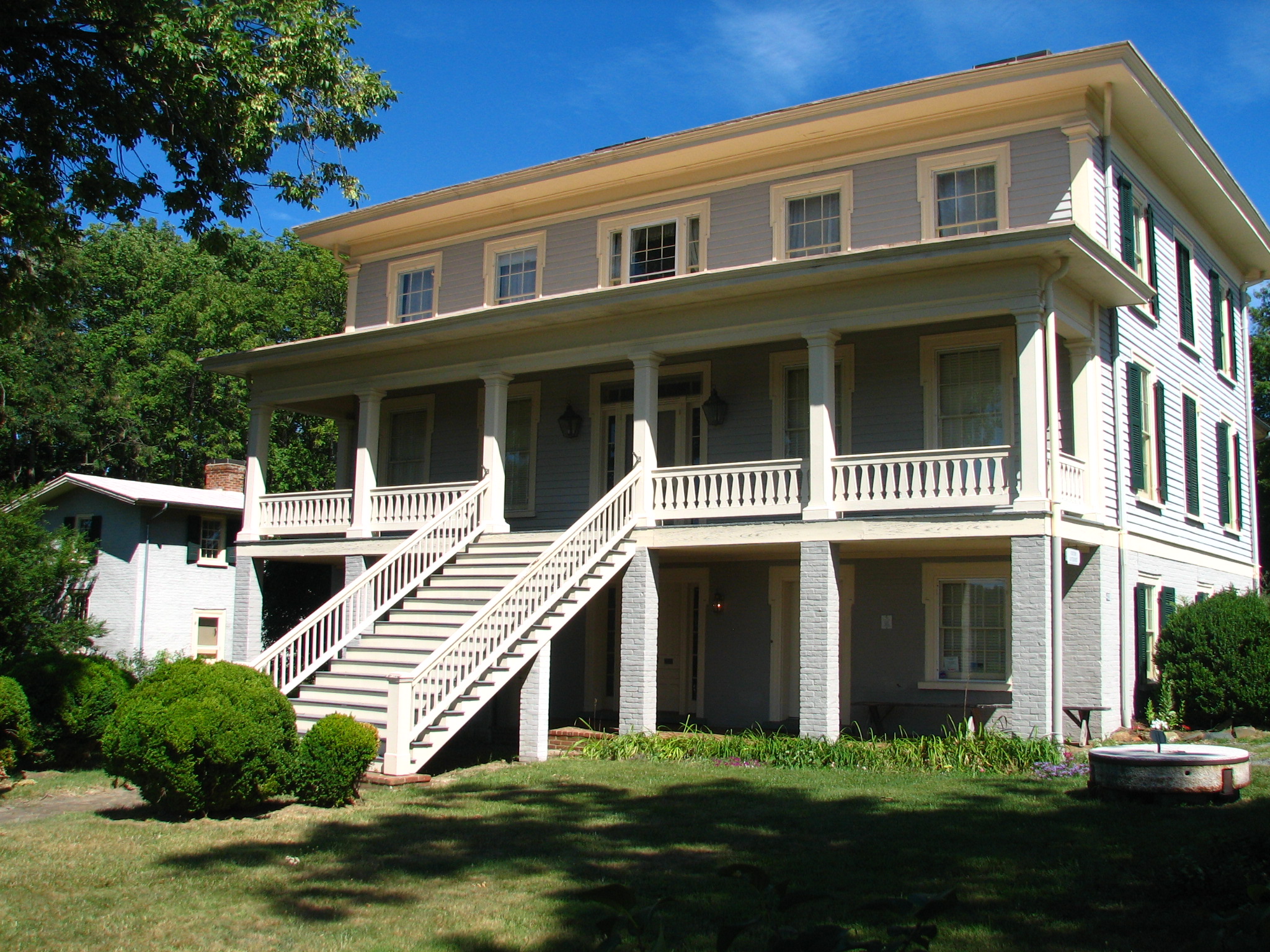
The Exchange Hotel in Gordonsville took in 70,000 wounded soldiers, became a Freedmen's Bureau school, and now runs Friday-night ghost hunts.
"Anna the cook has been seen and recorded," Christopher Stephens told C-VILLE Weekly in 2011. "When she was asked, 'What are you cooking Anna?' her response was, 'I cook fried chicken.'"
Stephens is the vice president of Historic Gordonsville, Inc., which owns the Exchange Hotel and runs paranormal investigations there on Friday nights, 7 p.m. to 11 p.m. He's also been pushed down the stairs by something that isn't there. Patti, the museum's president, has been pinned against a wall twice. They blame a Confederate major.
You can book one of those Friday investigations at 400 S. Main Street. The building is open. The museum owns its haunting, and that's part of why it reads differently than most.
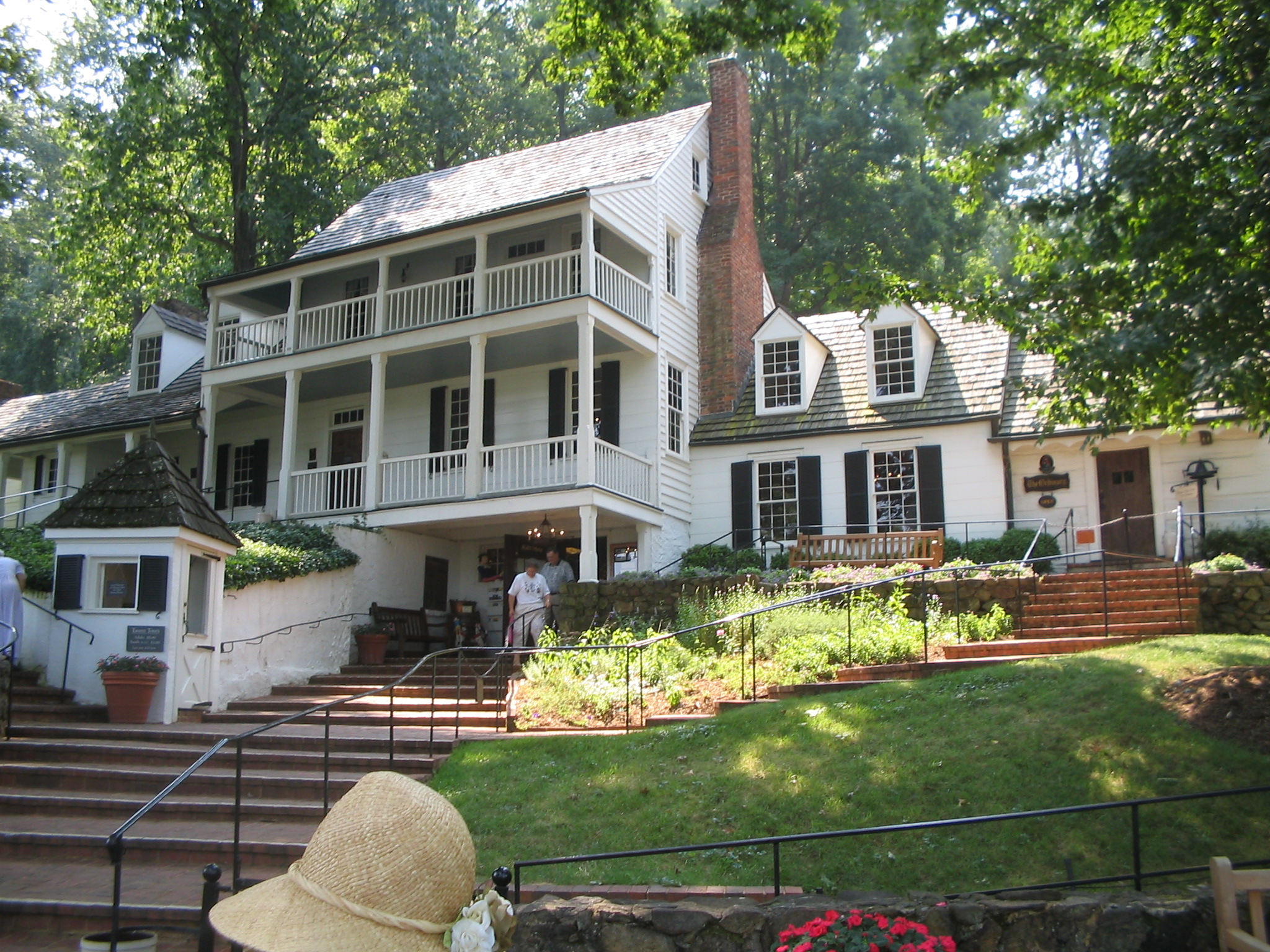
The Exchange Hotel opened in 1860, designed by Benjamin F. Faulconer for Richard F. Omohundro, a Greek Revival galleried railroad hotel built right at the junction of the Virginia Central Railroad and the Orange & Alexandria. That junction is the whole reason it exists, and it's also the reason the building got pulled into the war. Passengers used to switch trains here. In March 1862, the Confederacy switched the building's use instead, and it became the Gordonsville Receiving Hospital.
What that meant in practice: trains rolled in from Cedar Mountain, Chancellorsville, Trevilian Station, Mine Run, Brandy Station, and the Wilderness, and wounded men came off the cars onto the platform and into the hotel. The Virginia Department of Historic Resources records more than 23,000 sick and wounded admitted in less than a year. By the end of the war, more than 70,000 soldiers had been treated and just over 700 were buried on the grounds, including 26 Union dead. Of the 53 Confederate receiving hospitals operating during the war, the other 52 were burned. The Exchange Hotel is the only one left standing in Virginia.
After Appomattox, the building did something most Confederate-hospital sites didn't do. From 1865 to 1868 it became a Freedmen's Bureau hospital, school, and court. The Bureau issued rations from inside the building, gave medical care to freedmen and to white refugees, supervised labor contracts, and held court for minor cases. In 1867 alone, 250 newly freed Black students were registered to learn to read and write on the first floor. The third floor of the museum now holds a permanent Freedmen's Bureau exhibit, and on June 15, 2002, the site was dedicated as an African American Memorial Site with a plaque honoring Gordonsville's Legendary Chicken Vendors, the Black women who carried trays of fried chicken on their heads to sell to passengers stopping at the depot. That trade is why Gordonsville got called the Fried Chicken Capital of the World. The plaque is at the Exchange Hotel because the Exchange Hotel is where the trains stopped.
The building went back to being a hotel after the war and stayed one until it declined in the 1940s. Historic Gordonsville, Inc. acquired it in 1971 and restored it. It went on the Virginia Landmarks Register on July 17, 1973, and the National Register of Historic Places on August 14, 1973. In 1997, A&E and the History Channel ranked it #15 on a list of the 100 most haunted places in America.
Which brings us back to Anna.
Anna is a Black cook described in unattributed diary entries quoted by C-VILLE as "moderate complexion, 4'11 with an irascible nature and ungovernable temper." The diary author and date aren't named in the article, and her surname and freedom status aren't known. What is known is that the summer kitchen sits as a separate outbuilding behind the main hotel, and Anna is most often reported moving between the two: across the path, into the kitchen, back toward the main house. Her quoted answer about the fried chicken sits inside the building's whole history at once. The cook in the summer kitchen, the women with trays on their heads at the depot, the Memorial Site plaque outside, the kitchen door swinging on the path.
Major Quartermaster Richards is the floor above Anna's kitchen. Museum staff describe him as physically aggressive. "He has pinned Patti, our president, twice against the wall and pushed me down the stairs," Stephens said. The story museum staff tell about him is a murder-suicide, his wife found with a surgeon, buried in the woods, then his own death by hanging. No primary newspaper or census source has been located to confirm any of that. The aggression on the stairs is what people report. The biography behind it is museum oral tradition.
There's a child the staff call Emma, about nine years old, documented through small barefoot water tracks left on floors and a photo taken at a second-floor window. "We had no idea there were little children in the museum until last Christmas," Stephens said. Two female nurses, said to have died by suicide while living in boarding houses on the grounds during the war, get reported as figures in black climbing the stairs and moving room to room. A young man is also counted among the named spirits, said to have died by suicide at the hospital, though the accounts conflict on his age, his race, his method, and which building he died in. C-VILLE describes a 14-year-old who jumped from a second-floor window with a rope around his neck in late fall 1862. Southern Spirit Guide describes a young African-American man who hanged himself in the kitchen. No primary record names him.
What the museum can document is the volume of investigation. Over 250 investigators have visited across 45 weekends. They've collected more than 1,000 EVPs and hundreds of photographs and videos. The Shenandoah Valley Paranormal Society, Research Investigators of the Paranormal out of Richmond, Black Raven Paranormal, and the Tennessee Wraith Chasers from Destination America have all worked the site. The investigations the museum runs itself are the same Friday nights, same hours, anyone can book.
So go for the medical horror if you want it. Trains pulling in from the Wilderness, men carried up that exterior open-air staircase to the second floor, 700 buried out back. Go for Anna in the summer kitchen and the question about fried chicken and the plaque outside that ties the answer to the women on the depot platform. Go for the third-floor Freedmen's Bureau exhibit, which is the part of the building's life that gets skipped almost everywhere else and is the part this museum chose to make permanent. Or go on a Friday night for the EVPs and the staircase.
The plaque outside reads "Legendary Chicken Vendors."