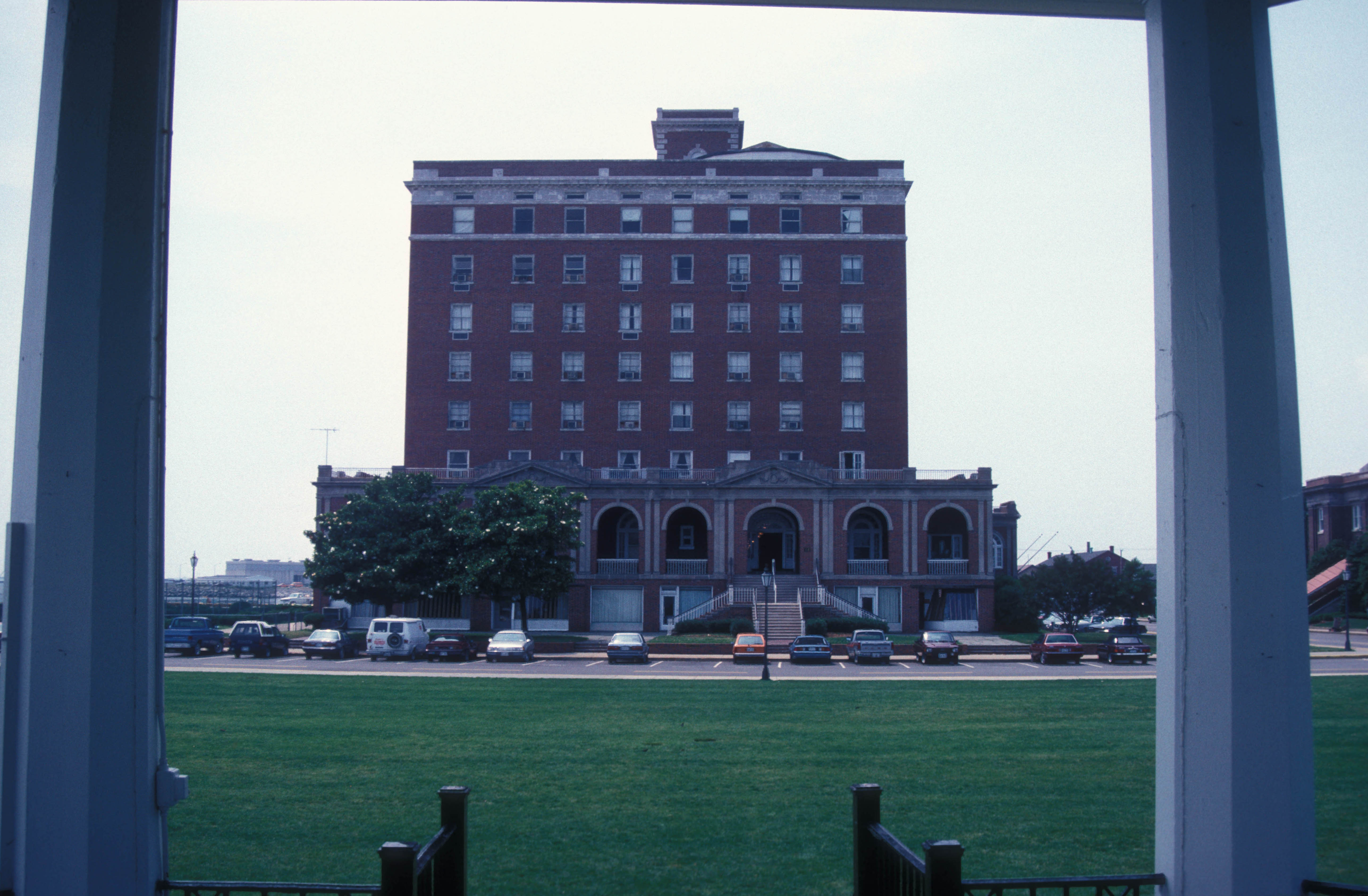
Esmeralda has waited on the Chamberlin's eighth floor since the 1920s, which is odd, because the building she haunts opened in 1928.
Esmeralda has haunted the eighth floor of the Chamberlin since the 1920s. The building she haunts opened in 1928. That gap is the whole story of this place in one sentence: the ghost is older than the architecture. She doesn't haunt the hotel. She haunts the address.
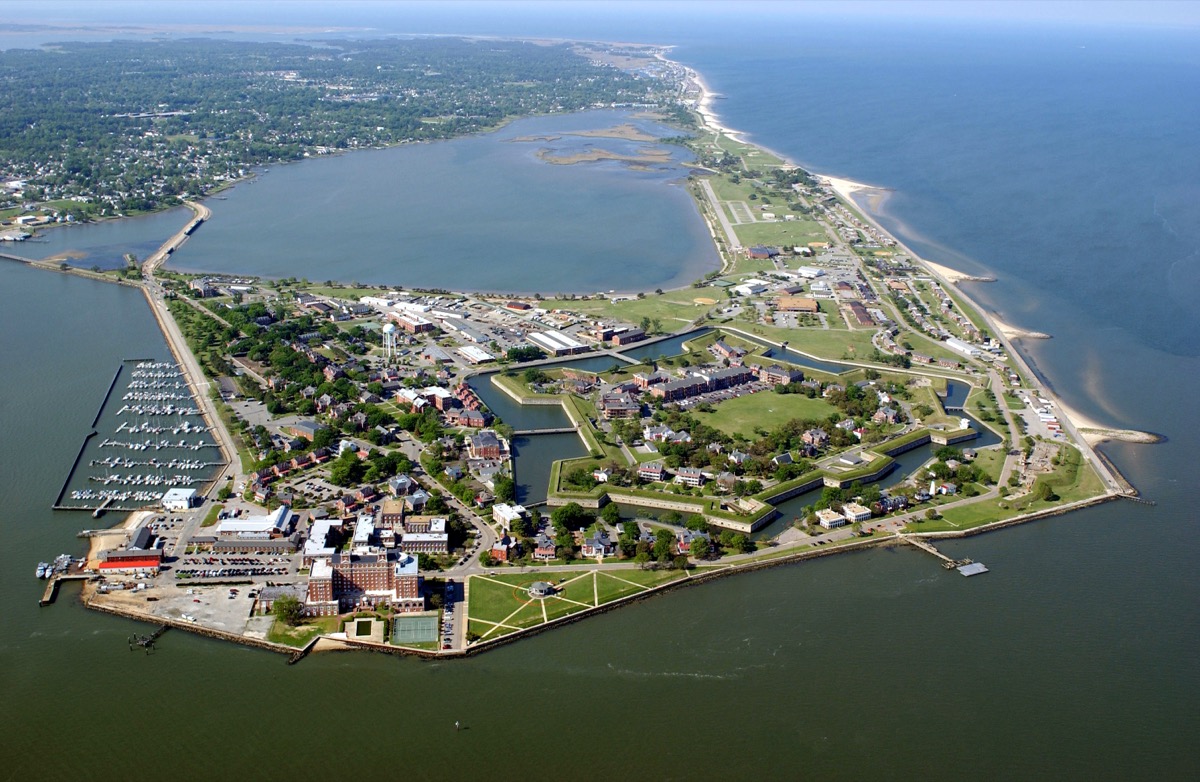
The address is 2 Fenwick Road, on a five-acre wedge of Old Point Comfort inside Fort Monroe in Hampton. Captain John Smith named the point in 1607, which makes it one of the oldest English-given place names in the Americas. Four hotels have stood on this ground. The Hygeia opened in 1822 and hosted Andrew Jackson, John Tyler, Henry Clay, and Edgar Allan Poe before the Secretary of War demolished it in 1862 to clear Fort Monroe's line of fire. A second Hygeia followed after the Civil War, large enough for a thousand guests. The first Chamberlin opened in 1896, six stories of Queen Anne brick designed by Smithmeyer & Pelz, the same firm that designed the Library of Congress. It burned to the ground on the afternoon of March 7, 1920, with 400 guests inside dressing for dinner.
The current Chamberlin is the fourth hotel on the spot. Nine stories, 212,000 square feet, Beaux-Arts brick with Georgian and English Colonial flourishes. Marcellus E. Wright Sr. of Richmond designed it with Warren & Wetmore consulting, and it opened in 1928 as the Chamberlin-Vanderbilt. It is now on the National Register, listed March 21, 2007.
Esmeralda is the ghost people come for. The story is that she was a sea captain's daughter who waited on the eighth-floor Roof Garden for a father whose ship never came back. She has been seen on that floor since the 1920s. Jane Polonsky, a paranormal researcher cited in the U.S. Army's Fort Monroe writeup, has explained that Esmeralda is sighted on the eighth floor, waiting for her father to come home. The Roof Garden ballroom has a grand piano, and visitors report it playing on its own. A gift-shop clerk once told the story this way: "She's still waiting for him. She knocks things off shelves every once in a while, and sometimes she plays the piano."
The seventh floor has its own ghost: a teenage girl said to have died in the 1920 fire at the previous building. The lore explanation is she moved with the address rather than the structure. Ghost-story logic. Take it or leave it. She died in one building and haunts another, and somehow that feels right for this place.
Then there's the figure on the veranda. Top hat, dark coat, standing alone. Visitors identify him as Edgar Allan Poe. Poe served as Sergeant Major at Fort Monroe in 1828 and 1829, and the U.S. Army's writeup says he read poems at a Point Comfort hotel about a month before his death in 1849. Whether that hotel was an early Chamberlin or another building is debated even in the U.S. Army's own piece. Polonsky's line is careful and good: "People like to say that's Edgar Allan Poe." Attribution without commitment, which is exactly the right register for a top-hatted silhouette on a hotel veranda.
Some of the lore is thinner. A Confederate-uniformed apparition is sometimes reported in the lobby, said to stare past visitors toward Fort Monroe rather than at them. That one shows up in haunted-site listings but no well-documented source traces it. One former staff member's account describes a 10 PM walkthrough of the Roof Garden where running footsteps came up behind him and knocked him flat on his back. There are stories about an officer in Room 300 with a briefcase that shifts between pieces of furniture, and a child in the 1970s who said she played with a girl on the seventh floor. All of these are single-source. Fine to repeat at a bar. Not the foundation of anything.
Fort Monroe history surrounds the hotel and gets tangled up with the ghost stories in confusing ways. Robert E. Lee was stationed here as a young engineer lieutenant in 1831. Jefferson Davis was imprisoned here in 1865. Both predate the 1928 building by decades, so neither was ever a guest. The 1896 Chamberlin filled with visitors for the 1907 Jamestown Exposition at Hampton Roads, and on February 22, 1909 crowds gathered at the hotel to watch the Great White Fleet's return review steam through the harbor.
What is confirmed is the strangest detail in the file. In 1942 the U.S. Army removed the Chamberlin's twin Neo-Georgian rooftop cupolas because the silhouette was visible from beyond the Virginia Capes and could help a German warship sight Fort Monroe. They replaced the cupolas with anti-aircraft batteries. Imagine that as a renovation note. Decorative roof elements: removed. Reason: enemy ships could see them. Replacement: guns.
The Chamberlin survived as a hotel into the new century and then didn't. Post-9/11 security restrictions at Fort Monroe dropped patronage by roughly 70%. The hotel went bankrupt and closed in 2003. It sat empty for five years. In 2008 it reopened, this time as a 133-suite independent senior living community for residents 55 and over, after a $54 million restoration led by Wendy Drucker of Drucker & Falk, with Commonwealth Architects of Richmond, Robert Burns leading preservation. It now operates under Harmony Senior Services.
The restoration is why the place is worth defending. Plenty of grand old hotels get hollowed out into condos and lose the thing that made them grand. The Chamberlin kept its bones. Wendy Drucker put it this way: "When I think about it, almost everybody involved with this building has some personal connection." Personal connection beats line-item on a balance sheet every time.
The ghost stories outlasted the closure, the empty years, the renovation, the conversion to senior living. A visitor account in a haunted-sites archive reads: "I remember being one of very few children when we would visit, but I always remember hearing children running in the hallways and laughing." The piano on the eighth floor plays sometimes, according to people who work there. Esmeralda is still on the Roof Garden. Her father shipped out sometime in the 1920s, by her count, and she's been watching the harbor for him ever since.