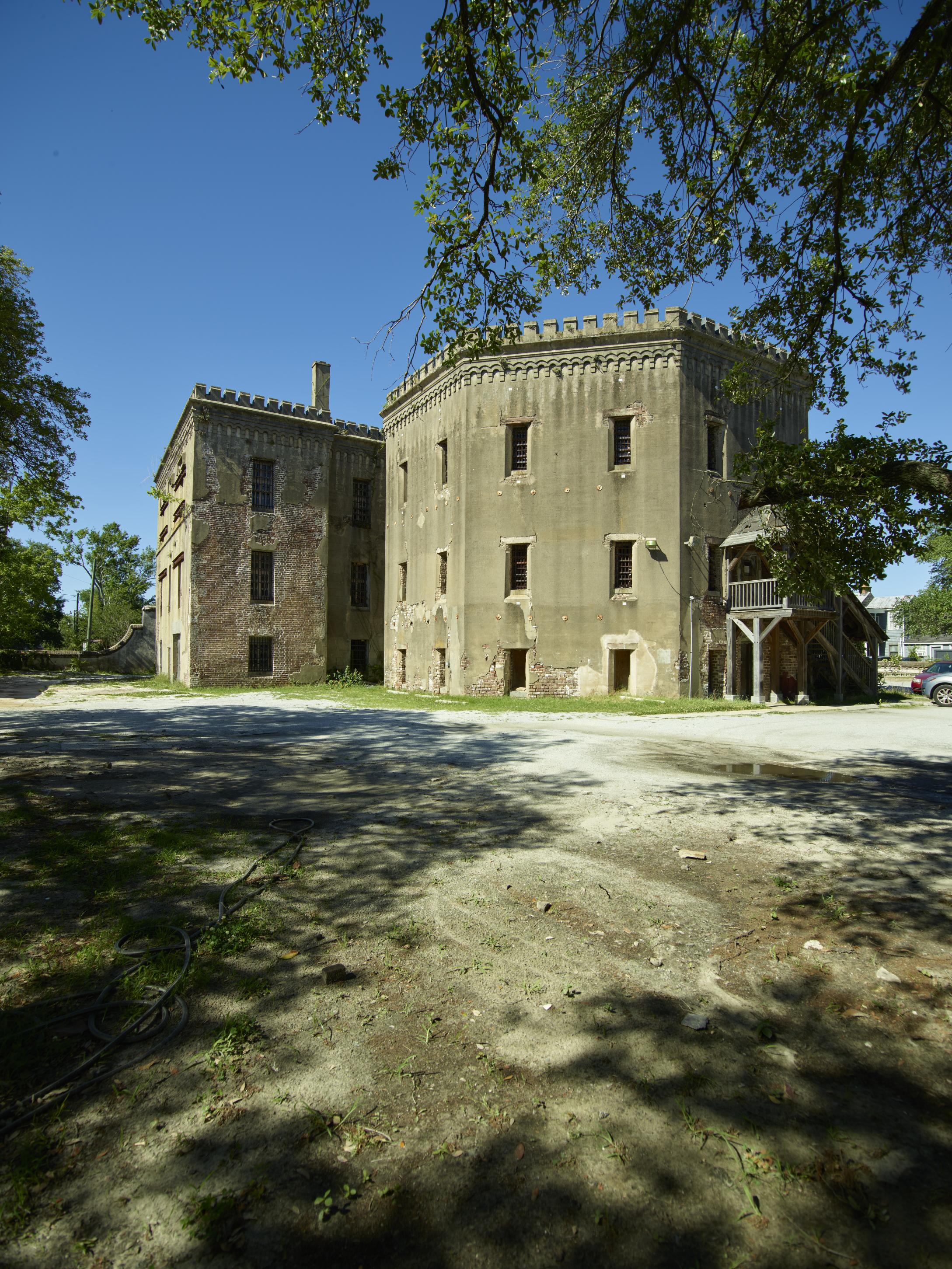
At the Old Charleston Jail, guides keep reporting a woman in white said to be Lavinia Fisher, hanged in a wedding dress in 1820. A detective went looking and found the legend invented. The real history of this 137-year prison is worse than her ghost.
On the upper floors of the Old Charleston Jail in Charleston, South Carolina, tour guides and visitors keep reporting a woman in white. They tell you she's Lavinia Fisher, often called America's first female serial killer, hanged in her wedding dress.
Almost none of that holds up.
A former Charleston-area homicide detective named Bruce Orr spent a whole book chasing the story and found it invented. "There are no accounts of trap doors, poisoned tea or a cellar full of skeletons," he wrote. Lavinia and her husband John ran the Six Mile House out on the Charleston Neck, and they were convicted of highway robbery, a hanging offense at the time, not murder. They went to the gallows in February 1820. The wedding dress is legend too. Historian Nic Butler figures Lavinia wore a plain white prisoner's shift, the standard garb at the jail.
The woman in white isn't the only figure guides point out. Some describe an old guard with a rifle; a Bulldog Tours guide names a man called Thomas said to climb the spiral staircase. But Lavinia is the one people drive in for, and the grim thing is that the real history underneath her is worse than the story.
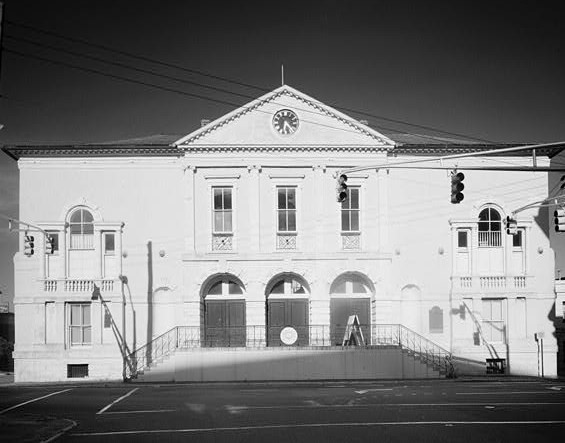
The jail held prisoners for 137 years, from 1802 until it closed in 1939. An 1886 earthquake tore off its tower and top floor, and they were never rebuilt; the building has looked decapitated ever since. Inmates weren't kept in tidy separate cells but in large group rooms, men and women together, with vermin, infection, and the most dangerous inmates chained to the floor. Pirates waited here to hang. So did four men convicted of backing Denmark Vesey's 1822 slave revolt. Captured soldiers of the 54th Massachusetts, the Black regiment cut down at Fort Wagner, were locked in beside Confederate and Union prisoners dying of disease.
And next door stood the Sugar House, a workhouse where enslaved people picked up for "wandering" the city were forced to walk a treadmill that ground corn for the jail's meals. By local accounts, the machinery maimed the workers so often that body parts sometimes turned up in the ground corn.
The Sugar House is gone. The jail still stands, scrubbed by a $15 million renovation into an event venue where Bulldog Tours walks visitors through the old cellblocks. The ghost they come for has a name and a wedding dress she probably never wore. The people who actually died here were never counted.