In the summer of 1932, the singing ghost of Old Joliet Prison in Joliet, Illinois drew crowds of 5,000 a night to the convict cemetery. They came to hear a man sing in the dark between 11:30 and midnight. Nobody ever proved who he was.
On the night of July 14, 1932, a family in Joliet, Illinois heard a man singing in the dark. The Dudeks' backyard on Juniper Street ran right up against the convict cemetery of the Joliet prison, and the voice was coming from somewhere among the graves.
Word spread. Within days, people were driving in from Joliet, Lockport, and Crest Hill to stand in the cemetery between 11:30 and midnight and listen. At its peak, the crowd reached an estimated 5,000 a night. They called it the singing ghost.
Prison authorities had an answer ready. A trusty named William Lalon Chrysler, they said, sang to himself while tending the quarry sump pumps after dark. But the explanation had holes, and author Dylan Clearfield laid them out: Chrysler was three weeks from release, couldn't move around unguarded, was never once found singing during the nightly searches, and the limestone quarry walls would trap sound, not carry it across a neighborhood. The case was never really closed.
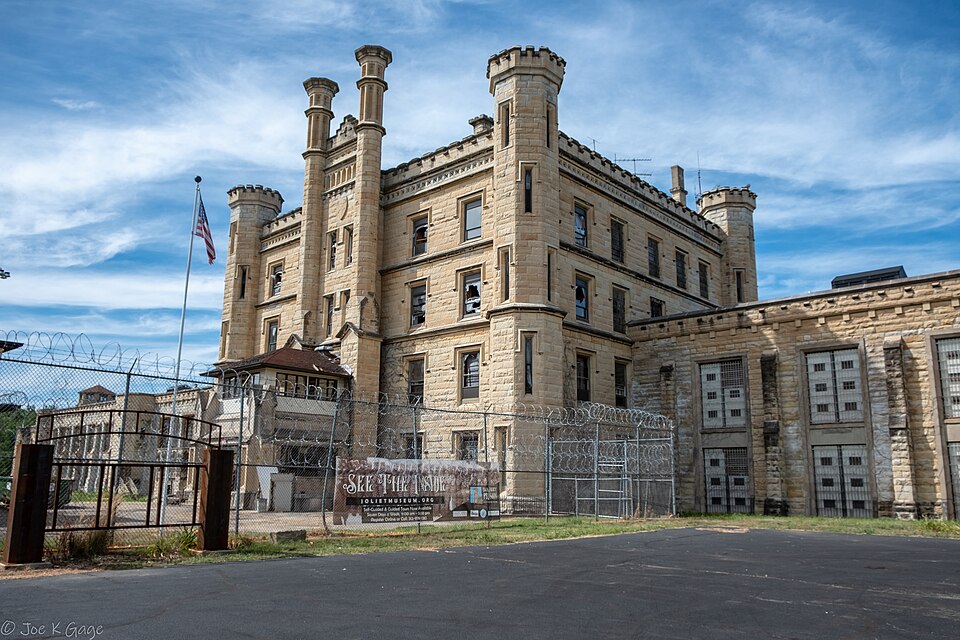
The prison itself opened in 1858, when the first inmates arrived to quarry the golden Joliet limestone and build the walls around themselves. Architect W.W. Boyington, the man behind the Chicago Water Tower, drew it up as a medieval fortress — turrets, battlements, crenellated towers. It held nearly 2,000 men by 1878 and ran almost 150 years before closing in 2002.
The singing isn't the only ghost. In 1915, the warden's wife, Odette Allen, was found bludgeoned and burned in her bedroom while her husband was away. An inmate house servant called "Chicken Joe" Campbell was convicted of the murder, though Ida B. Wells publicly doubted his case. Today a guide named Larry Arroyo links the "woman in white" reported in the yard to Odette. "There's someone behind me," he said of one night on the grounds, "like an intimidating presence."
The curator doesn't buy any of it. He's stood there alone in the dead of night, phone flashlight on, and felt nothing. He'd rather you remember the men who lived and died behind the limestone.