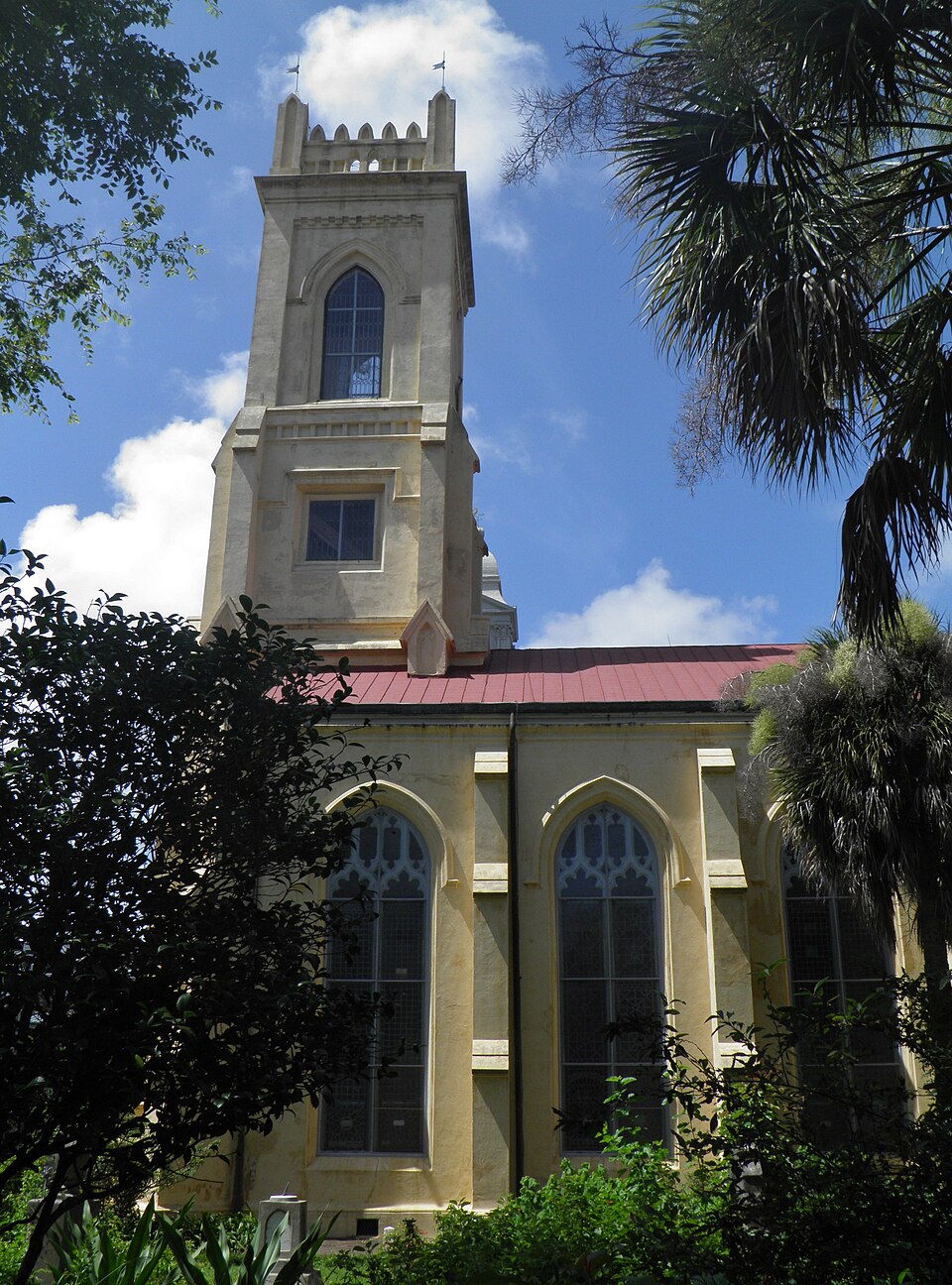
Ghost-tour guests at Charleston's wild, overgrown Unitarian churchyard keep seeing a woman in a white dress among the graves — the ghost of a Poe love story the guides swear by. Historians have proven the romance was a hoax. She keeps turning up in the graveyard anyway.
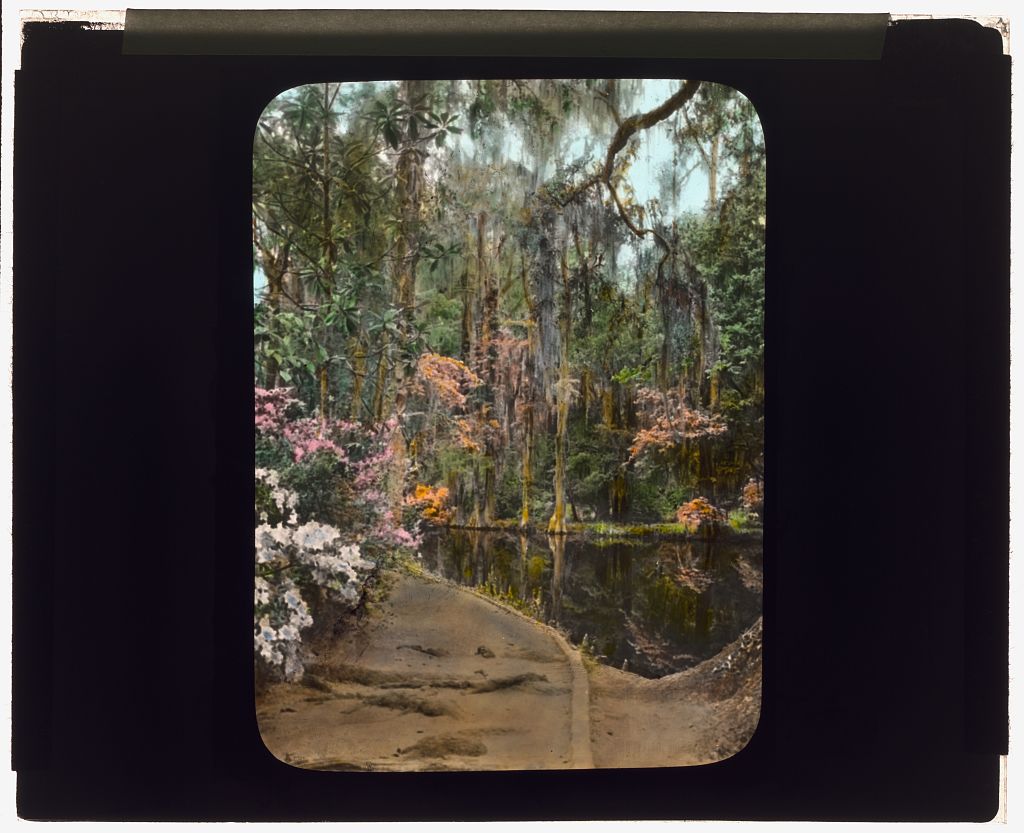
At the old Unitarian churchyard in Charleston, South Carolina, guests on the ghost tours keep seeing the same woman. She stands among the graves in a white dress — some describe a wedding gown — calm, watching, in a burial ground so overgrown that wildflowers and tree roots have half-swallowed the headstones. A guide named Randy Neale told a local TV crew that guests have reported her standing behind him while he talks, and that it's happened, in his words, "several dozen times."
Ask the guides who she is, and they'll tell you a love story.
The way they tell it, she's Anna Ravenel, a Charleston girl who fell for a young soldier named Edward Allen. Her father forbade the match and had him transferred away. She died soon after, of yellow fever or a broken heart, and her father, so the story goes, dug six identical unmarked graves and buried her in one of them, so the soldier could never find her to mourn. And the soldier, the guides say, was Edgar Allan Poe, writing under a false name.
Poe really was here. In 1827 he enlisted in the Army as "Edgar A. Perry" and spent a year across the harbor at Fort Moultrie, on Sullivan's Island. He hid the whole enlistment for the rest of his life, inventing tales of adventures in Greece and Russia to cover the missing years.
Everything else is invented too.
There was no Anna Ravenel. Scholars who went looking for her found no birth, no death, no grave. A writer debunking the tale put it plainly: she "isn't buried in this graveyard or anywhere else, because she didn't exist." The romance appears to have been manufactured as a hoax in the 1960s by a professor and a student, amused by tourists coming to visit a grave that held no one. Poe wrote "Annabel Lee" in 1849, two decades after he left the Lowcountry and the year he died; it was never a Charleston tribute. One College of Charleston professor dismissed the whole thing in a word: "moonshine."
So the story is a fiction, and the woman in white keeps turning up anyway.
The guides can't even agree who she is. When it isn't Anna Ravenel, she's Lavinia Fisher, the Charleston woman hanged in 1820 and remembered as a murderess, or Mary Whitridge, buried beside the empty grave meant for a husband who died at sea and was laid to rest in Baltimore. Three names, one apparition, and a graveyard that scholars have emptied of its most famous ghost while her visitors keep quietly filling it back in.