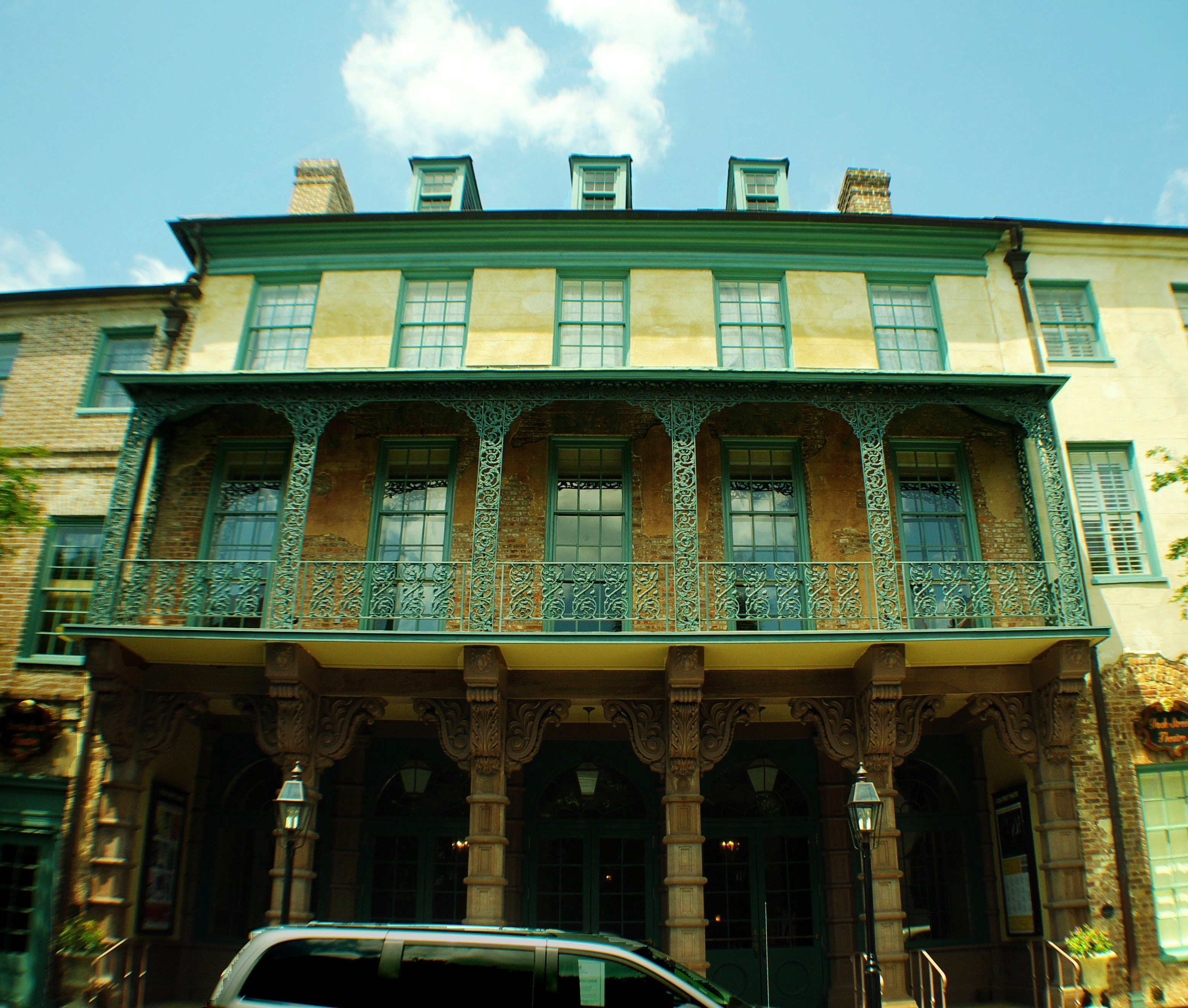
A red-haired woman in a tattered red dress drifts the second-floor halls of Charleston's Dock Street Theatre — and she's cut off below the knees. When the theater was rebuilt in the 1930s, the crews raised the floor about a foot. Nettie never noticed. She still walks the level that's gone.
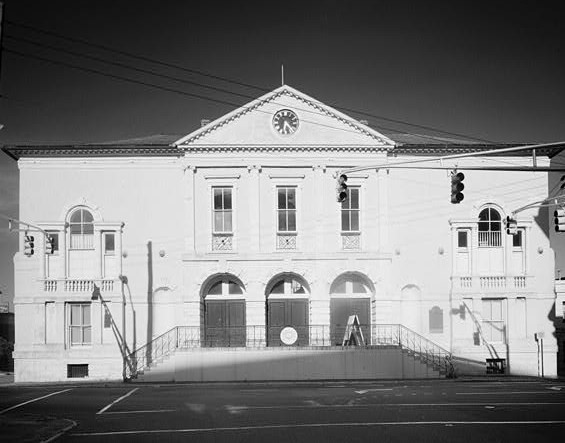
The staff at the Dock Street Theatre in Charleston, South Carolina, keep seeing a woman who ends at the knees. She has red hair and a tattered red dress, and she drifts the second-floor hallways the way you'd expect a ghost to — except from the knees down there's nothing. She's walking, they say, on a floor that isn't there anymore.
It was there once. When the Works Progress Administration rebuilt the derelict Planters' Hotel into a theater in the 1930s, the crews raised the second floor by about a foot. The building reopened in 1937. The woman never got the memo. She still moves at the height the old floor sat, which sinks her to the knees in the boards that replaced it.
They call her Nettie. The story goes she reached Charleston in the early 1840s, worked a while as a church clerk, then turned to selling herself at the Planters' Hotel, where she bought the most expensive dress she could afford to draw clients — a red one. How she died is the part every guide tells. Caught in a storm on the second-floor balcony, she screamed down at a priest passing below, and lightning killed her where she stood. "You can't save me," the legend has her shout, a moment before it struck.
Nothing backs it up. No census, no church ledger, no newspaper ties a real Nettie to the hotel — she's a name the tours carry, and nothing older than that. What is documented is the building she won't leave. The Planters' declined into a cheap tenement by the 1880s, took heavy damage in the 1886 earthquake, and sat abandoned for years before the WPA gutted it and lifted its floors.
She isn't the only one the actors report. A man in a top hat and frock coat, roughly five foot seven, is said to cross the stage during rehearsals. He'd be Junius Brutus Booth, father of John Wilkes, who performed in Charleston dozens of times and once flew into a rage in a room at the Planters', nearly killing a companion. His ghost, the actors say, has come close enough that they felt breath on the backs of their necks and turned to find no one there.
The place has been three theaters, torn down and raised and rebuilt across two centuries. The woman inside it never noticed. She walks the halls she walked in the 1840s, at the height they sat then, on a floor that went out with the rubble almost a hundred years ago, sunk to her knees in the new one and drifting on.