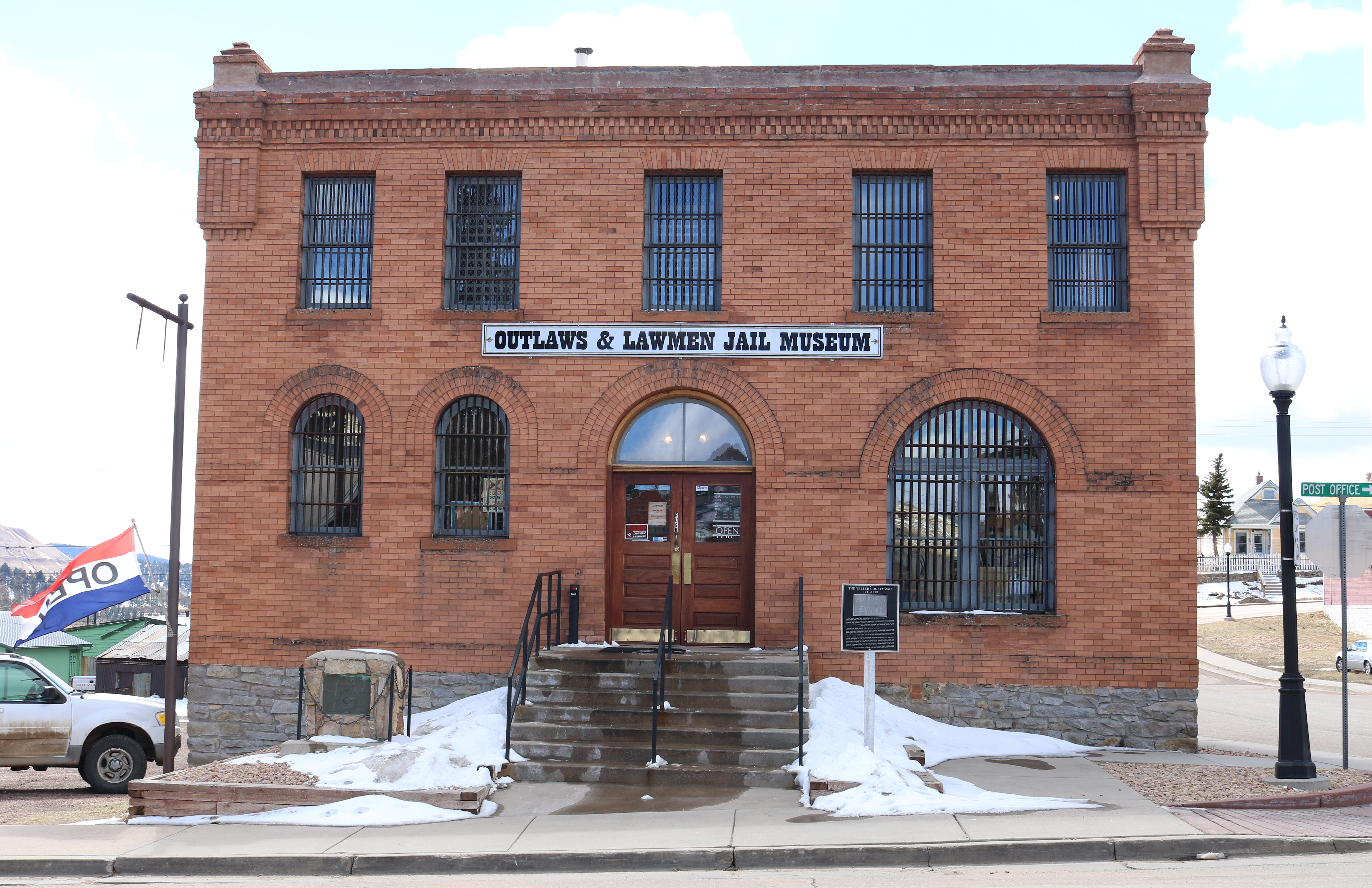
The Outlaws and Lawmen Jail Museum in Cripple Creek, Colorado is built around a steel cellblock with a catwalk railed by a single bar. The jail's one documented death happened right there, and that spot is where people report heavy breathing and cold air with no one around.
At the Outlaws and Lawmen Jail Museum in Cripple Creek, Colorado, the most reported spot in the building is a stretch of upper catwalk where one bar of railing is all that stands between the walkway and the drop. The jail's single documented death happened right there. A prisoner went over the rail, and no one ever settled whether he jumped or was pushed. People who walk that catwalk today report heavy breathing and a sudden band of cold air with no one standing near them.
The building itself is strange before you get to any of that. It opened in 1901 as the Teller County Jail, after fire destroyed the brick jail before it, and the gold-rush town wanted something that would hold. So they dropped a two-story steel cellblock inside a red-brick shell, a jail within a building. Fourteen cells, each 6.5 feet by 9 feet. Up to six men shared one of them, with a single chamber pot, sleeping in hammocks until World War II, when double bunks went in.
It held that way for roughly ninety years, closing in the early 1990s. Why it closed depends on who tells it. One version says the place was simply inhumane, six men to a cell that small. Another says it failed modern state rules because it had no exercise yard. The marker out front reads 1901 to 1992.
Not everyone who passed through was a hardened criminal. The booking room still has its 1902 furniture and the height markers on the wall where arrestees stood for mug shots. Children were held here too, a four-year-old boy among them, an eighteen-month-old kept with her mother.
The City of Cripple Creek bought and restored the jail, and it reopened as a museum in 2007. The cell walls still carry inmate graffiti, scratched dates, names. And on the catwalk, the breathing keeps coming back to the one spot where a man went over a rail nobody bothered to build higher.