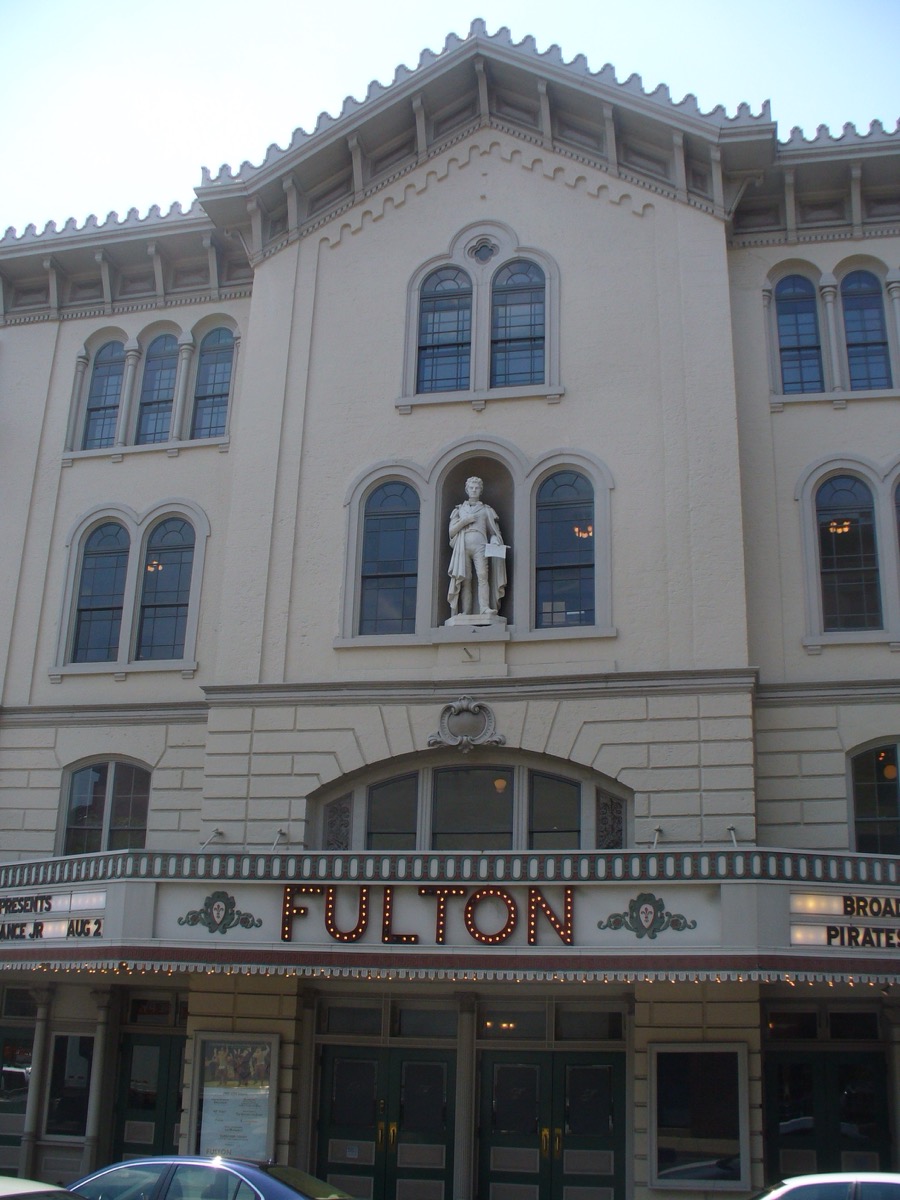
The Fulton Theatre in Lancaster, Pennsylvania stages Broadway-scale shows year-round. The back wall is the courtyard wall of a colonial jail, where in 1763 a vigilante mob murdered the last 14 Conestoga sheltering inside. Staff report several ghosts above it.
In 1995, a construction worker at the Fulton Theatre in Lancaster, Pennsylvania met a man on a stairwell who shouldn't have been there. The figure wore a cream three-piece suit, brown shoes, and a straw boater hat. He asked the worker for a cigarette, and then he vanished. The worker fled the building. Staff call him the Whistler, and he's only one of the names they've put to the place.
There's Marie, a woman in a turn-of-the-century white dress, seen near a former wooden spiral staircase that led down to the Green Room, and sometimes in the wings of the stage. A stagehand once asked her name. She answered "Marie," and that was all. There's the Grandfather, an elderly man spotted watching a performance from the gallery; afterward an actress confirmed both her grandfathers were dead and had never seen her perform. And actors report whistling and clapping from an empty backstage, enough that it has made them miss lines. That one carries its own weight, because whistling backstage is a theater superstition for bad luck.
The Fulton was built in 1852, designed by architect Samuel Sloan and named for steamboat pioneer Robert Fulton, whose statue stands in a niche on the facade. It became a National Historic Landmark in 1964. It served as an armory and a hospital during the Civil War, and the National Park Service later recognized it as an Underground Railroad site. It runs as a working professional theater now, Broadway-scale productions year-round. None of that is why people come looking for ghosts.
It was built on the foundation of Lancaster's old jail. On December 27, 1763, two days after Christmas, a frontier vigilante mob called the Paxton Boys broke past the sheriff and murdered the last 14 Conestoga men, women, and children who had been placed in that jail for their own protection. The killings happened on the footprint the theater now sits on. One of the dead, a little girl named on the theater's memorial plaque, is counted today among its ghosts.
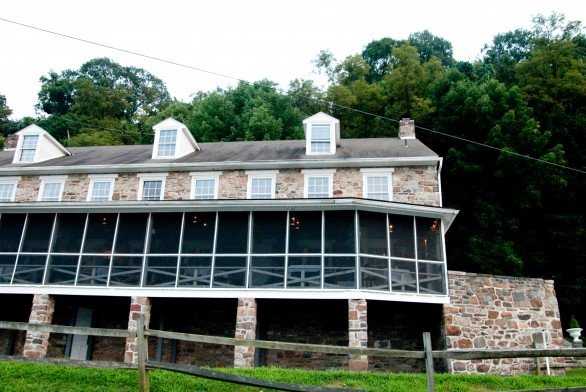
The original courtyard wall of that jail is still standing. It's the back wall of the theater now, and the old workhouse foundation stones remain set into the rear of the building. The grand productions play out overhead, night after night. The oldest story in the place is in the stone underneath them, where it has been since long before anyone built a stage on top.