TLDR
Staff at this 1885 Queen Anne theater hear someone warming up with vocal scales backstage after lockup, performers refuse to use one particular dressing room, and lights turn themselves back on overnight. The Gotham Paranormal Research Society investigated in 2019 and captured EVP recordings and EMF readings they called significant.
The Full Story
After everyone has gone home and the last crew member has locked up for the night, someone backstage starts warming up. Staff at Tarrytown Music Hall have heard it more than once: vocal scales, methodical and clear, drifting from the wings. No one is there. The voice keeps practicing anyway.
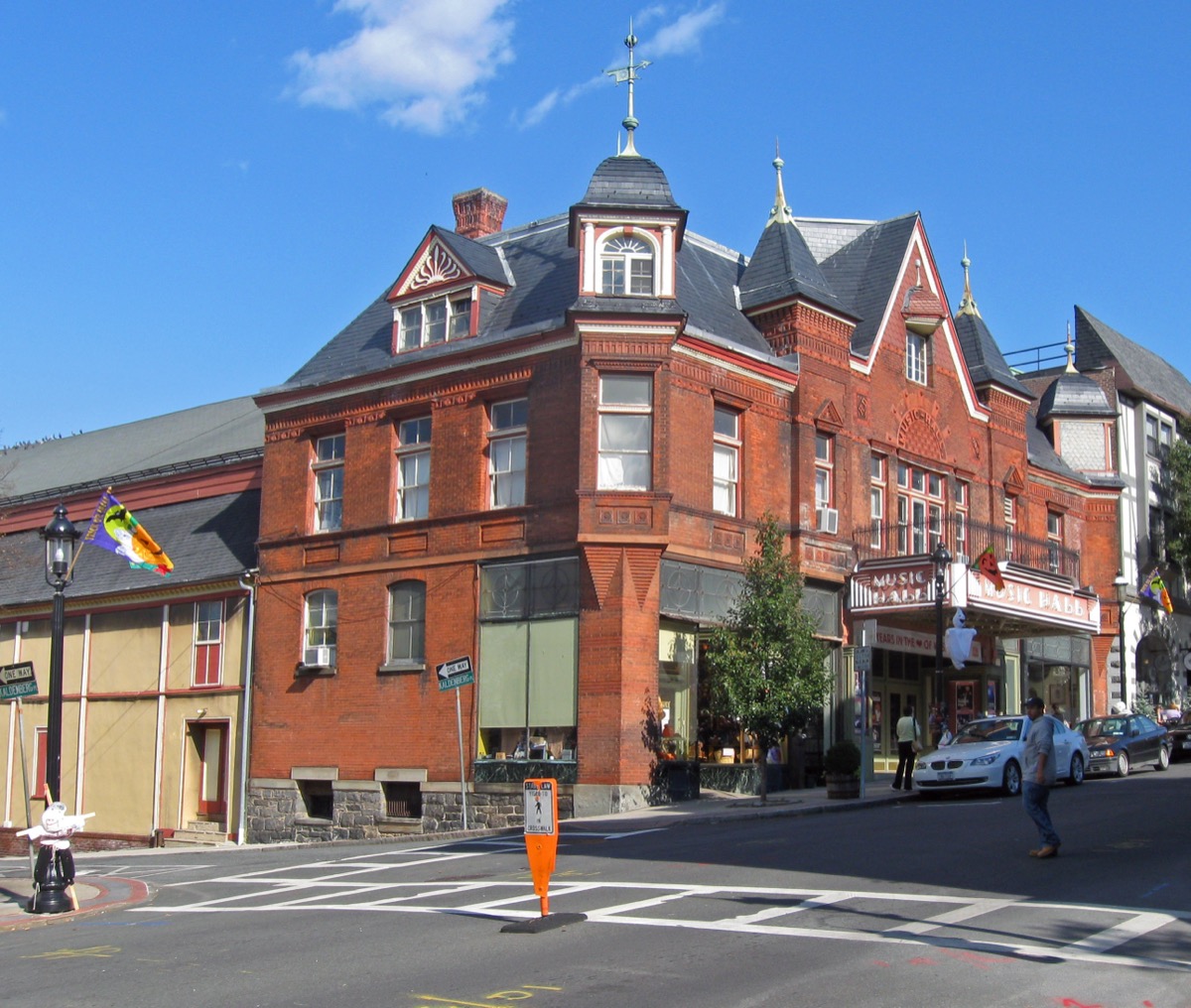
The building has had 141 years to collect company. William L. Wallace, a local chocolate manufacturer, spent $50,000 (roughly $1.79 million today) to build it in 1885. Architect Philip Edmunds designed it in Queen Anne style, though a contemporary listing in the New York Real Estate Record and Guide credits Theodore De Lemos and August Cordes, who later designed Grand Central Palace and the Macy's building at Herald Square. The opening night on December 12, 1885 featured selections from The Mikado. It's the oldest theater in Westchester County, the fifth oldest in New York State, and older than Carnegie Hall. Only six percent of American theaters still standing were built before 1900. This is one of them.
The phantom singer is the signature haunting, but performers have flagged something else: one particular dressing room where artists refuse to stay. The theater won't say which one, but the requests to switch happen often enough that management doesn't push back. "We have great respect and reverence for our spirits," the Music Hall states, "and invite you to join us as we learn and discover more about them." That's a diplomatic way of saying they believe the place is haunted and they're fine with it.
There's also a stagehand. Staff and visitors describe the presence of a worker from the 1880s, still moving through the backstage area, still whistling. Given the original construction crew and the theater's early years hosting roller skating contests, horse shows, and flower exhibitions for the Rockefeller, Gould, and Vanderbilt families (John D. Rockefeller personally loaned palm trees from his Kykuit estate for the 1902 flower show), the candidate pool for a spectral stagehand is wide.
Lights are the third recurring issue. Staff lock up, shut everything off, leave. They come back to find fixtures lit that they're certain were switched off. In a building where gas chandeliers were swapped for electric lighting in 1910 and infrastructure has been layered over itself for more than a century, electrical quirks are expected. But the pattern keeps repeating in ways that don't line up with wiring problems.
In 2019, the Gotham Paranormal Research Society investigated the Music Hall at the theater's invitation. Gotham is a TAPS (The Atlantic Paranormal Society) family member and the only TAPS-affiliated team serving the New York City metro area. They visited multiple times and collected EVP audio files and electromagnetic field readings they described as significant. The investigation was prompted by years of accumulated reports from staff, crew, and visitors. The specifics of the EVP recordings haven't been made public, but the findings were substantial enough that the theater now hosts regular paranormal investigations alongside its ghost tours.
Those tours are led by Jonathan Kruk, a master storyteller known for his solo performances of The Legend of Sleepy Hollow and A Christmas Carol. He's appeared on The Today Show, Travel Channel, and CBS Sunday Morning. The 45-minute tours run from the balcony to backstage, through the hidden spaces of a building that has survived wars, pandemics (including 1918 and 2020), a near-demolition, and 141 years of continuous drama.
The near-demolition part deserves a paragraph of its own. By 1976, the single-screen movie house had deteriorated badly and the village of Tarrytown planned to tear it down and build a parking lot. On Valentine's Day 1980, Dr. Berthold Ringeisen and his wife Helen, a concert pianist, bought the building through their nonprofit, the Friends of the Mozartina Musical Arts Conservatory. A local banker named Stephen Byelick financed the deal using the Ringeisens' home, business, and savings as collateral. The purchase went through weeks before scheduled demolition. The couple ran the theater as volunteers for 23 years while working their day jobs.
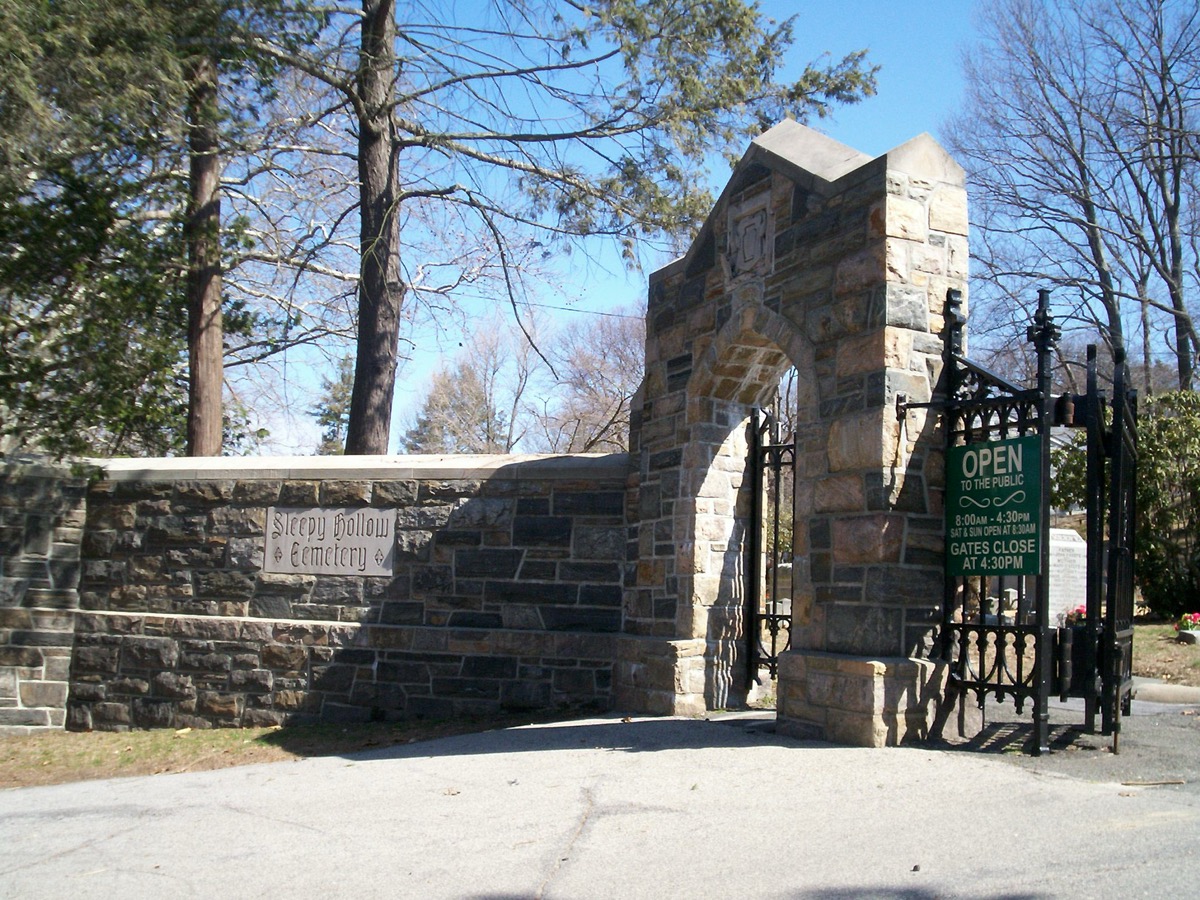
The theater sits at 13 Main Street in Tarrytown, a village that shares a border and a train station with Sleepy Hollow. Washington Irving set the Headless Horseman's ride through these same Hudson Valley hills in 1820, sixty-five years before the first brick went up. But the Music Hall ghosts aren't literary. They don't gallop or carry pumpkins. They warm up for a show, avoid a dressing room, flip light switches, and haul scenery. They're theater people, doing theater things, in a building that has hosted Dvorak, Mae West, Theodore Roosevelt, Miles Davis, B.B. King, and Whitney Houston (The Preacher's Wife used the side door as the entrance to a jazz club called Jazzies in the 1996 film). The place draws 100,000 visitors a year and generates $6.8 million in local economic activity. It is, by any measure, a working theater. Some of the workers just happen to be dead.
Researched from 9 verified sources. How we research.