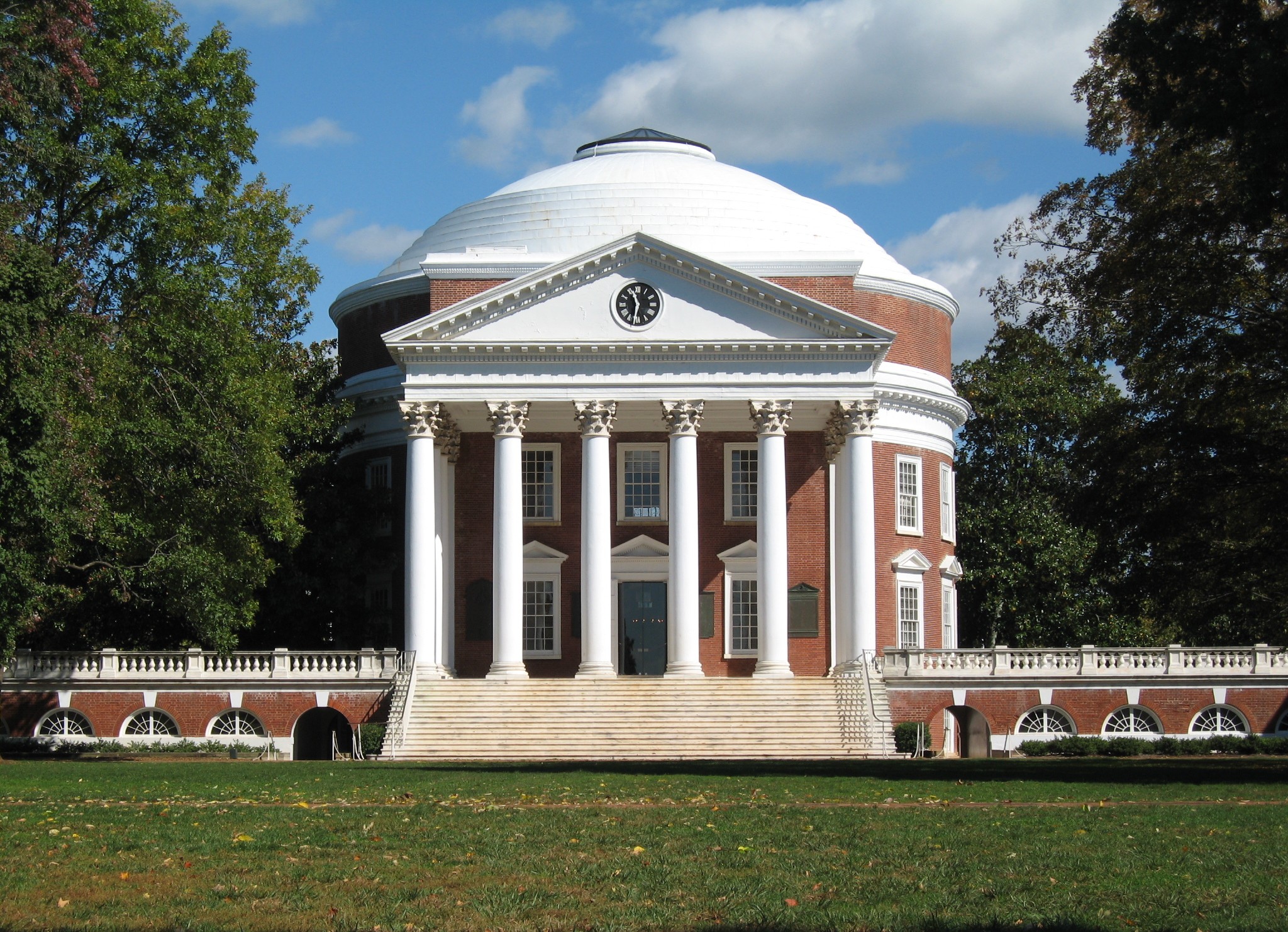
Edgar Allan Poe's Room 13, the 1895 Rotunda fire, an Anatomical Theatre with a charnel basement. The University of Virginia is older than most ghosts.
In 2015, library worker Will Wyatt was opening Alderman Library before sunrise when a short older woman with long fluffy white hair stepped out of the stacks and said, "It's very quiet up here. This would be a great place to murder somebody." He laughed nervously and kept turning on lights. She was never seen again. The floor was staff-only, key-card access. Wyatt, now public services manager for UVA's main library, decided he'd met a ghost.
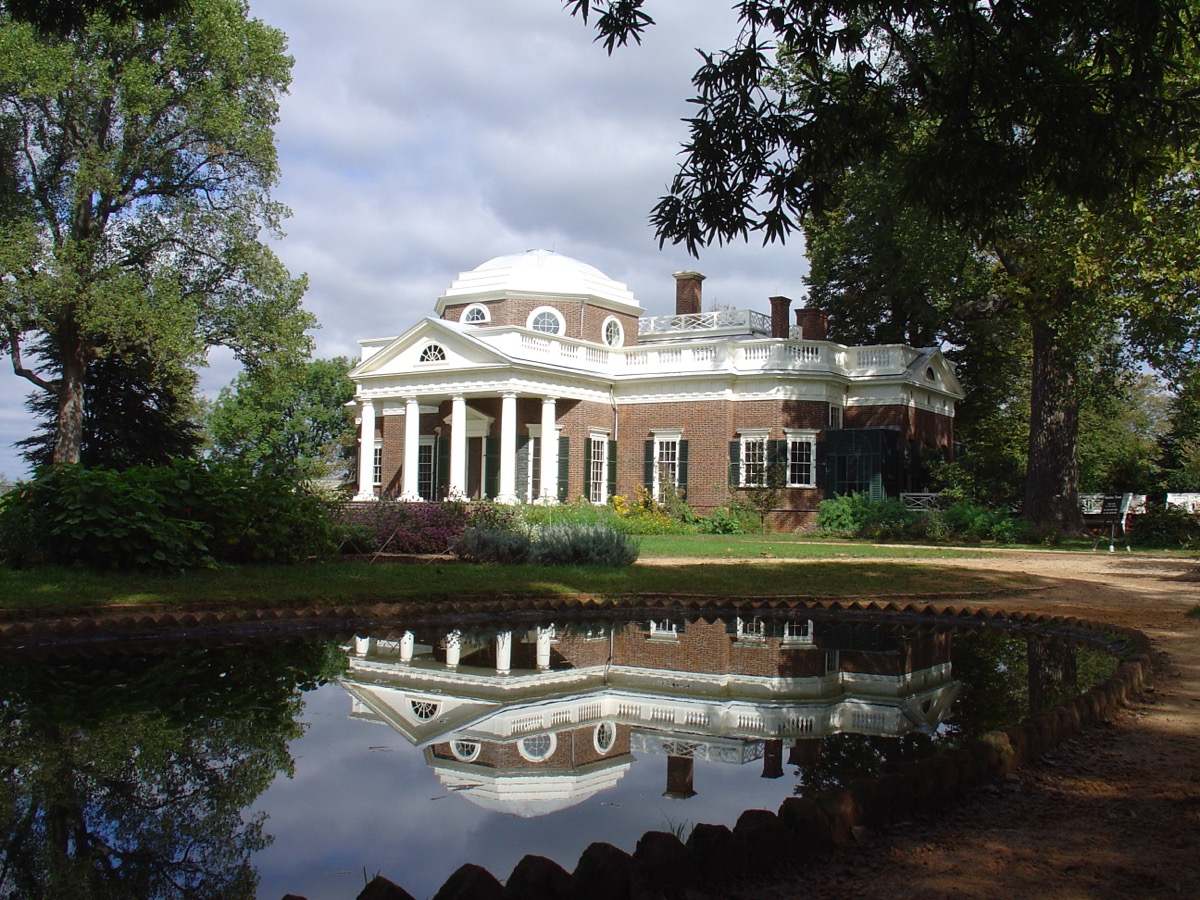
That story isn't a one-off. The University of Virginia is a UNESCO World Heritage Site, jointly designated with Monticello in 1987, the only American university with the honor. Jefferson opened it on March 7, 1825, with the Rotunda modeled on the Pantheon anchoring the north end of the Lawn. Two centuries of medical students, body snatchers, fires, and one famously broke poet later, the ghost stories aren't bolted on. They're stitched into the founding documents.
Start with Poe. He enrolled February 14, 1826, the 136th of 177 students that year, and lived in Room 13 on the West Range. He took top honors in French and Latin, studied under Professors Long and Blaetterman, and ran up over $2,000 in gambling debts that his foster father John Allan refused to cover. He left on December 15, 1826, and never came back. Ten months. The Raven Society, founded in 1904 by William McCully James, has kept the room as a kind of shrine since the Board of Visitors handed them the keys in February 1908. Initiates declaim Poe inside it and sign a book with a quill. A settee from the Allan home in Richmond sits in the room.
There's a windowpane on display in the Rotunda that tradition says Poe etched with a verse: "O Thou timid one, let not thy Form rest in slumber within these Unhallowed walls, For herein lies The ghost of an awful crime." It's a great line. Did Poe actually scratch it into the glass? Probably not. Encyclopedia Strange calls the inscription likely a fabrication, and even the Raven Society's own materials hedge with "allegedly." The pane is displayed regardless. The story has outlived its proof, which is the most Poe thing about it.
Then there's the Rotunda fire. October 27, 1895. Faulty wiring in the Annex caught, and Professor William Echols, trying to halt the spread, lit dynamite to blow a firebreak. The dynamite went off. It made everything worse. The janitor Henry Martin rang the Rotunda bell to summon the Charlottesville Fire Department. The building burned. McKim, Mead & White rebuilt it under Stanford White's direction and rededicated it in 1898. Visitors occasionally report hearing Jefferson's footsteps on the steps, a generic founder-haunting every Jefferson site eventually accumulates. Take it as atmosphere.
The dark history is the Anatomical Theatre. Jefferson designed it. The Board of Visitors approved the plan on March 4, 1825, construction started by May, and it opened in 1827. Forty-four feet square, two stories plus basement. The basement was a charnel, where cadavers were stored and prepared. The octagonal surgical theater on the top floor had skylights. The middle floor housed a museum of medical specimens. In 1832 the Board appropriated $100 a year for "subjects for the Anatomical class," and the medical school needed 25 to 30 cadavers per ten-month session. Virginia did not legalize cadaver procurement until 1884. The math is grim. Professor John Staige Davis coordinated a statewide network of physicians who procured bodies illegally. An enslaved man called "Anatomical Lewis" served as custodian from 1839 to 1857, maintaining the dissection spaces and procuring bodies from African American communities. There was a separate boiling and dissecting building called Stiff Hall, authorized in 1833.
In 1834, according to UVA Magazine's reading of student Charles Ellis's diary, medical student A.F.E. Robertson was shot in the back by farmer James Oldham while exhuming a recently deceased enslaved person on Oldham's land. Robertson survived. He graduated UVA medical school in 1835. Oldham was never prosecuted. The newspaper or court record hasn't been traced; the diary is the source. The Anatomical Theatre was demolished in 1939. A 1977 archaeological dig outside the charnel area found human bone and ash, and a 1997 dig along McCormick Road turned up bone fragments believed to be discarded dissected remains.
The cemetery on Grounds was started by an epidemic. Henry William Tucker, brother of Professor George Tucker, was the first burial, a victim of the 1828 typhoid outbreak. Student John Temple died July 19, 1828. Henry Townsend Conway and Laban J. Hoyle died that same summer. The cemetery's north side was where enslaved servants were buried, and body snatchers targeted it disproportionately. Families held mock daylight funerals, burying logs and rocks wrapped in shrouds for the official ceremony, then returning at night to inter the actual body. That's not a ghost story. That's just what people had to do.
The pavilions and halls carry their own folklore. Pavilion X belonged to history professor Edward Younger, who taught at UVA from 1946 to 1974. His mother-in-law slept in a first-floor back room and woke screaming when she saw a man from an older century staring down at her. UVA Magazine doesn't pin the era any tighter than that. Other visitors reported the same figure. Pavilion VI, often called the Romance Pavilion, has a long-told story about a widow propping up her dead husband's corpse in a rocking chair and changing his clothes daily. UVA's institutional historian Sandy Gilliam called the romance version "pure rubbish" in 2014. The "Romance" nickname comes from the Romance languages taught there, not from a corpse. Ghost tours still tell the story. The gap between what gets sold at the door and what the archive supports is wider here than the brochures suggest.
Old Cabell Hall has Mean Jean, a former housekeeper found dead in her uniform while waiting for her ride to work. Joel Jacobus, director of music production since 2004, says, "There is a fairly strong belief that Jean came into work anyway that day, and students would get pushed from behind and occasionally hit. They would feel like they were being shoved, and they'd turn around and there was nobody there." Doors slam. Lights go out. A strong perfume scent drifts into the workrooms with no source. The basement utility room is called The Cave, and staff have been locked inside.
Then there's the Garnett Room in Alderman Library. Dr. Bennett Wood Green, born 1835, graduated UVA medical school in 1855, served as a Confederate naval surgeon, spent fourteen years in self-imposed exile in Córdoba, Argentina after the war, came home, and died in 1913. He bequeathed his medical book collection to UVA. UVA Magazine traces a ghost story to him in the Rotunda back when it served as the library. When the books moved to Alderman in 1938, the story goes that he followed across McCormick Road. Wyatt was working in that room when the woman with the white hair gave him her line about a good place to murder somebody.
A small bronze plaque is said to sit above the door of Room 13. The Latin reads, roughly: a small room for a giant poet.