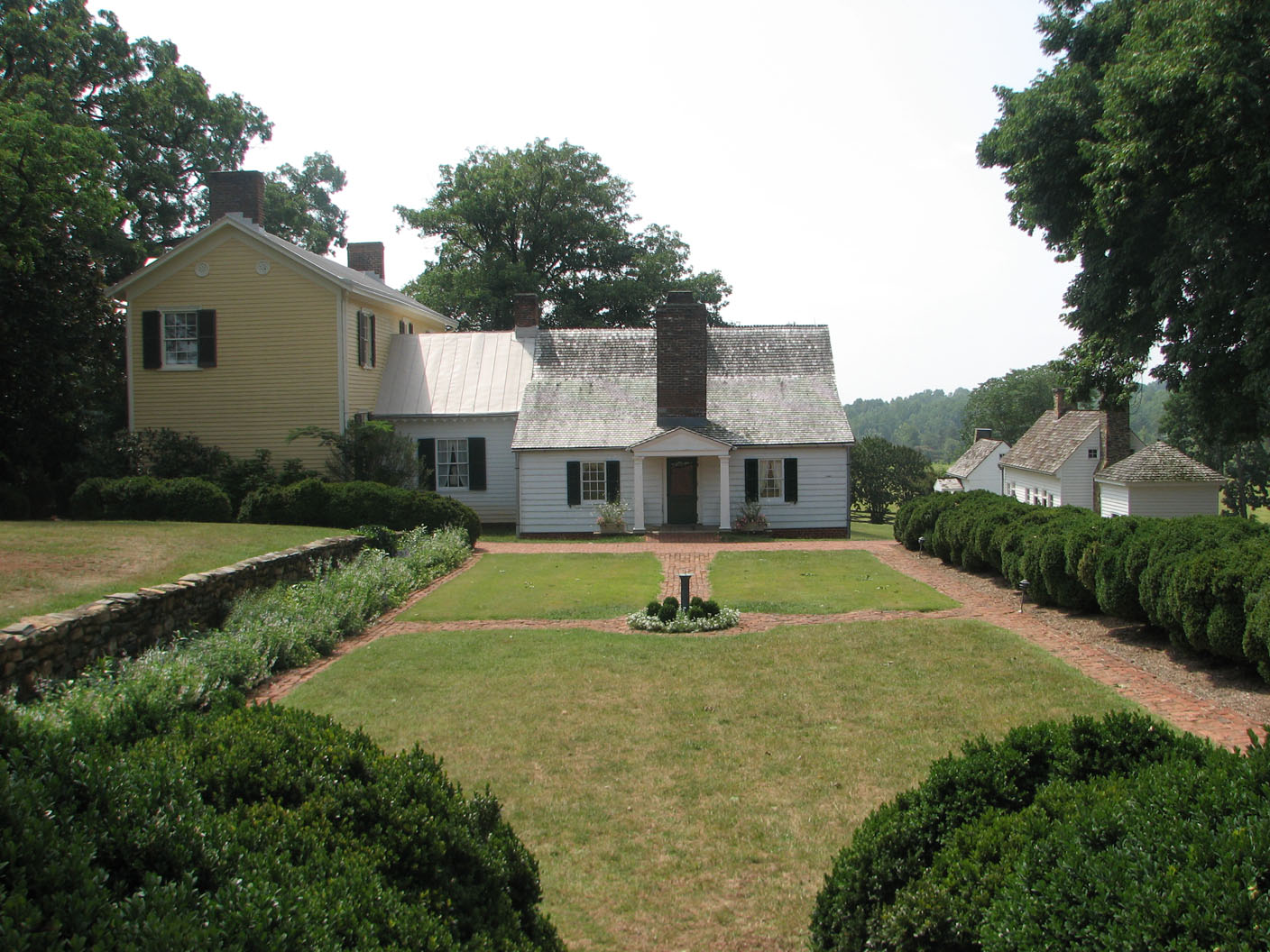
For two centuries, visitors at Highland were shown the wrong house. In 2016, tree-ring dating proved James Monroe's actual home lay lost under the lawn.
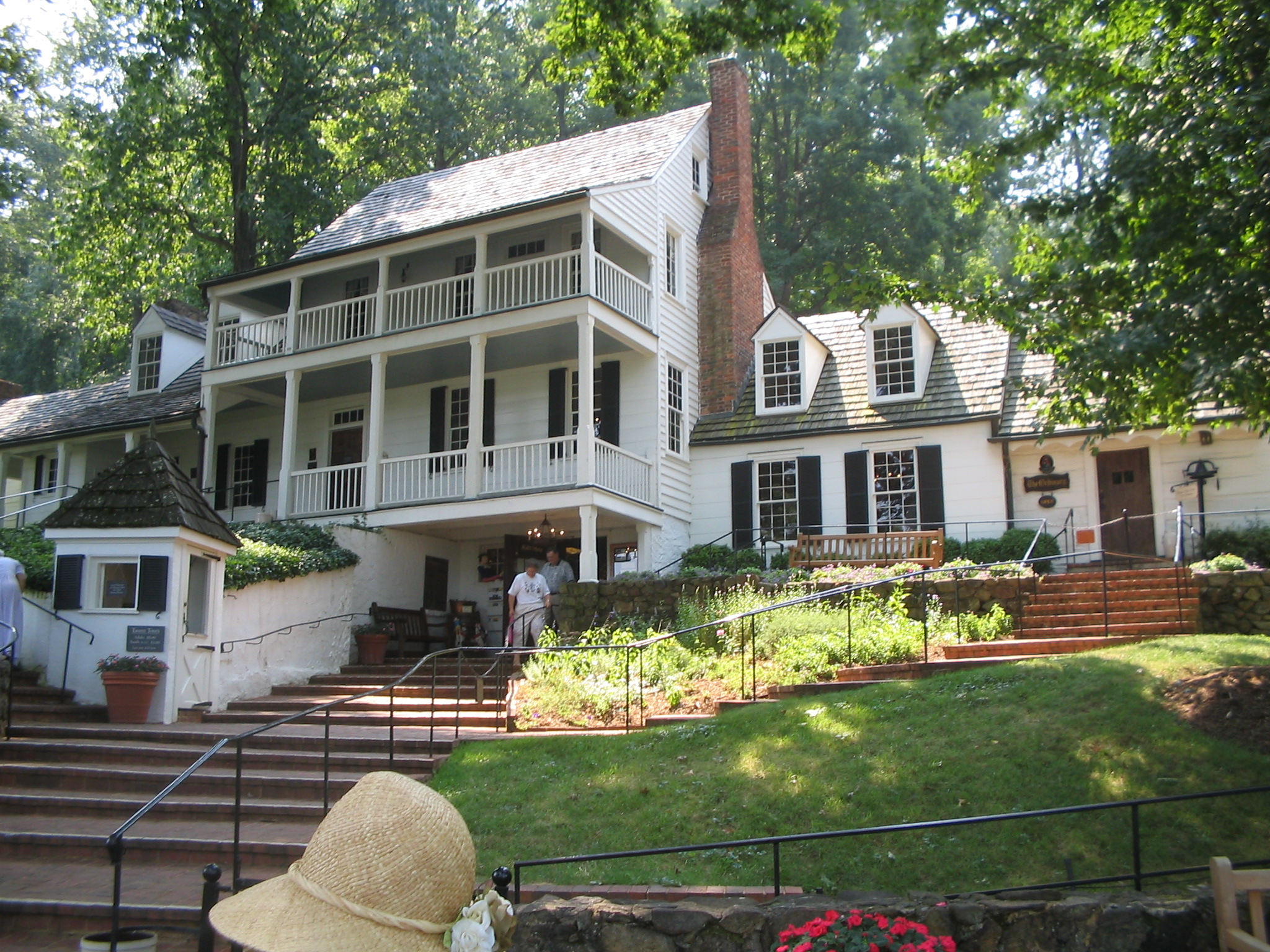
For nearly two centuries, the small white building tourists were shown at Highland was not James Monroe's house. It was a guesthouse. Monroe's actual home, the one he lived in from 1799 to 1823, had burned down around late 1829 and been so thoroughly forgotten that its foundation sat undisturbed a few feet under the front lawn. In 2016, architectural historian Carl Lounsbury of William & Mary looked at the nails and bricks in the standing structure and noticed the construction techniques were too late for 1799. Dendrochronology on the beams dated the wood to 1815-1818. Dr. Benjamin Ford of Rivanna Archaeological Services then dug into the lawn out front and found stone foundation walls, a brick chimney base, and fragments of furniture and ceramics from the house Monroe knew.
The first ghost at Highland is not a figure in a hallway. It's the absence of an entire building, hiding in plain sight, while the wrong building wore its name.
The second ghost is older and quieter.
In May 1799, the same year Monroe moved his family into the new wooden house with brick-filled walls he described as "one story high 40 feet long by 30 feet wide," his son James Spence Monroe was born. The child lived sixteen months. He died on September 28, 1800, after several days of illness. Monroe wrote to James Madison that the boy "departed this life after several days sickness" at ten o'clock at night, that the event "has overwhelmed us with grief," and that it "has roused me beyond what I thought was possible." Where exactly James Spence died is not pinned down in the primary record. He's buried in Richmond. Older retellings have Monroe riding hard from Richmond to reach Highland and holding the child through his last hours, sometimes with Elizabeth pregnant beside them, sometimes pointing at Elizabeth's later epilepsy as the wound that never closed. None of that traces back to a source. The letters give grief and a date. The entire haunting, in the documents, is right there.
The grief is enough.
According to a 2023 American Historical Association essay by Mariaelena DiBenigno, who served as Highland's Mellon Postdoctoral Research Fellow, a handwritten poem titled "The Ghost of Ash Lawn" hangs near the staff office. The verses go: "'Tis said that when the twilight falls, / And birds have gone to nest, / There hovers at Ash Lawn, / A gentle spirit of unrest. / And through the hall, in breathless haste, / An eerie presence moves, / There gently rocks, a chair, or crib, / As though a child to soothe." A rocking chair that sways without anyone in it is the bit of folklore everyone repeats. Plenty of guides on plenty of shifts have never seen it move. The story stays small. No ghost-hunter team has set up at Highland. No EVP recording exists. Nobody has built a paranormal franchise on the place. It's a poem, a piece of furniture, and a child who died in 1800.
What the AHA essay does, and what Highland's interpretive staff have leaned into, is treat the ghostliness as a charged metaphor for what plantations actually hold. The 1810 Census recorded 49 enslaved people at Highland. Thirty to forty worked the property at any given time during Monroe's years. The 1818 guesthouse, the building everyone mistook for Monroe's home, was built by two enslaved craftsmen: Peter Mallory, a carpenter Monroe purchased in late 1817 from Judge Francis Taliaferro Brooke, and George Williams, normally based at Monroe's Oak Hill property in Loudoun County and brought to Highland for the summer of 1818. They built the house future generations would mistake for the founder's. On Monday, July 3, 1826, a different enslaved man also named George and his wife Phebe escaped together, "supposed to be making for the county of Loudon." Highland's own biographies page is direct: their fate after that day is not known. In 1828, two years after losing the property to debt, Monroe sold seventeen people he held in slavery to Joseph White's Casa Bianca plantation in Florida.
This is the haunting Highland staff want visitors to interrogate. The rocking chair is the easy story. The harder story is the people the chair was built around.
The property changed hands and changed names. Monroe sold the core 907 acres on January 1, 1826, to Edward Goodwyn to settle crushing debts. Goodwyn called it North Blenheim. Around late 1829, the main house burned; a January 4, 1830 letter from Goodwyn thanks a neighbor for "kind, and very friendly attentions, to me, under the heavy loss... sustained, by fire." Alexander Garrett, the owner from 1837, renamed it Ash Lawn. John E. Massey bought it in 1867 and built a yellow colonial-revival farmhouse in 1873, attached to an 1850s addition on the standing guesthouse. That yellow farmhouse, not Monroe's house, is the larger building visitors see today. In December 1974, the philanthropist Jay Winston Johns left Highland to William & Mary, which has stewarded it since. In 2016, the same year the dendrochronology landed, the site dropped "Ash Lawn-Highland" and restored Monroe's own name for the place. Executive director Sara Bon-Harper called it "an important step in rediscovering Monroe's legacy."
The rediscovery kept going after the foundations came up. A descendant of a family enslaved by Monroe contacted Highland after reading about the dig. That call led to others. In 2018, ten descendants formed the Highland Council of Descendant Advisors, which now collaborates with staff on how the place is interpreted.
Two miles from Monticello, on 535 acres of Albemarle County, Highland is a haunted place by an unusual definition: most of what's missing here is missing because somebody chose to forget it, and most of what's here now is here because somebody chose to remember. The poem near the staff office is one line in that argument. The dirt out front is another.