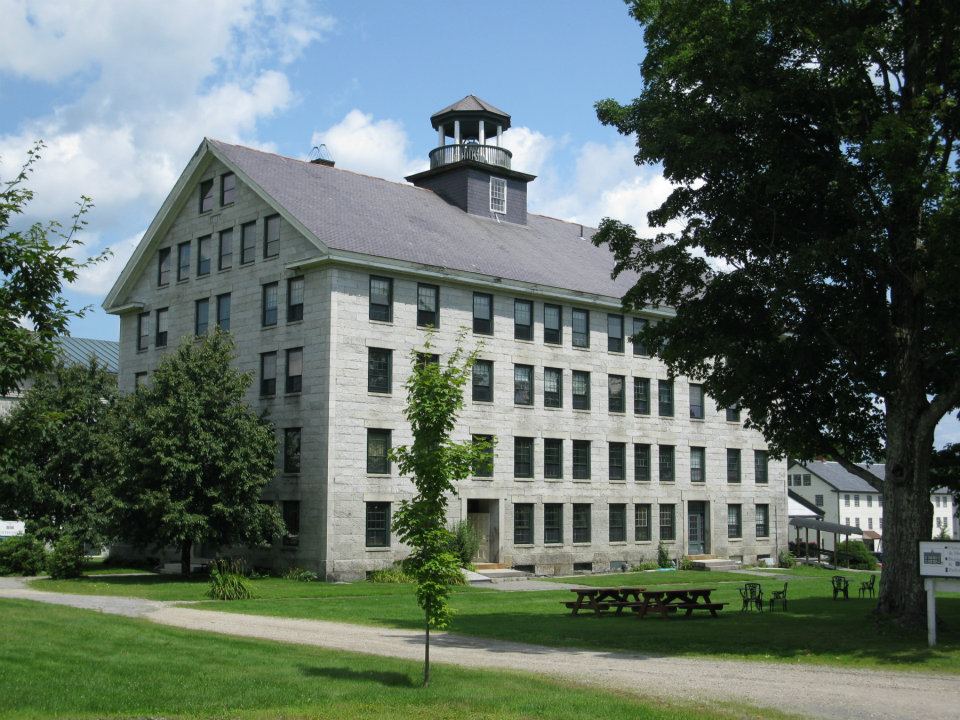
Mary Lyon Hall, a 1916 dormitory at Plymouth State University in New Hampshire, has a basement ghost: a student who died in the steam tunnel under the building. Two generations of students keep telling her story. No record of her ever existed.
The story at Mary Lyon Hall, a dormitory at Plymouth State University in Plymouth, New Hampshire, lives in the basement and in the steam tunnel that runs out from under it. A student named Mary Lyon, the telling goes, died down there, and her spirit never left. Students who go into the basement say it makes them feel watched. They report cold rooms, lights flickering on and off, strange noises from below.
The tunnel is real. It still carries utilities, and it physically connects Mary Lyon Hall to Blair Hall next door. In the legend, the two buildings hold the two lovers: Mary's spirit in the Mary Lyon basement, the boy she was sneaking off to meet trapped over in Blair.
How they died depends on who's telling it. The earliest print version, from a 2013 student-paper piece in The Clock, says the tunnel collapsed one night and killed them both. A retelling the next year drops the collapse entirely and says a boy met two girls in the tunnel, murdered both of them, then killed himself, and that if you listen you can hear them screaming. The story keeps changing shape as it gets handed down.
Named students have gone on the record about the basements. "I have heard weird noises coming from behind the door to the tunnel," a Blair Hall resident named Tristan Mayes told The Clock in 2014. "There is definitely something off with that tunnel door and the basement, like it's trying to hide something." A Mary Lyon resident, Adam Beauparlant, described a room that stayed cold even with the heat on, and lights flickering, and people going down into the tunnel and hearing things.
Here is the part that doesn't close. The building was named in 1916 after Mary Lyon, the woman who founded Mount Holyoke. She died in Massachusetts in 1849 and never set foot in New Hampshire. The ghost is a second, different Mary Lyon, a student nobody can find. No newspaper, no death date, no university archive records a girl by that name dying in the tunnel, or a tunnel collapse, or a murder under the building.
The campus paranormal club lists Mary Lyon as one of its investigation sites. Its officers say their strongest experiences happened in other buildings. The students keep the ghost alive anyway, each one adding a layer, while the girl at the center of it keeps not turning up.