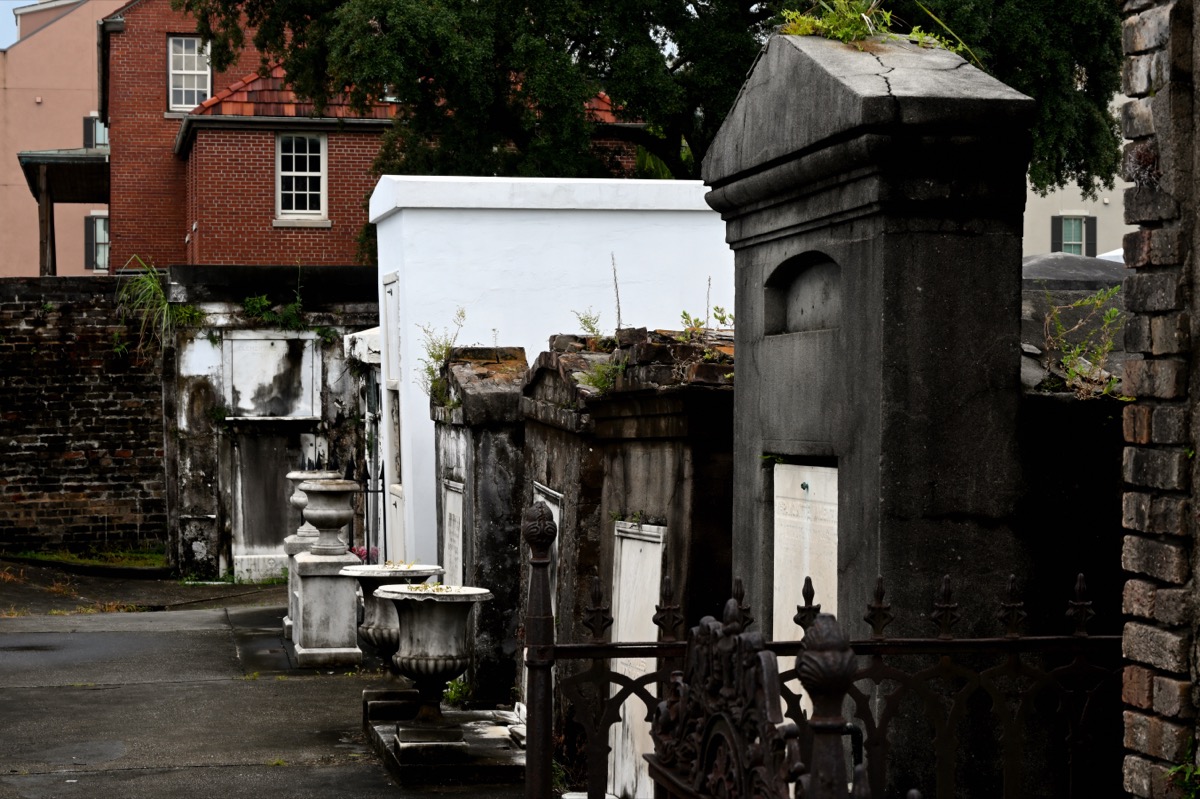
In St. Louis Cemetery No. 1 in New Orleans, one whitewashed tomb is covered in thousands of small Xs. They belong to people making wishes to Marie Laveau, the Voodoo priestess buried inside. The Archdiocese locked the gates to stop it. The Xs came back anyway.
The most-visited grave in Louisiana sits on the central aisle of St. Louis Cemetery No. 1 in New Orleans, and it is scratched with thousands of small Xs. They were left by people making wishes. The whitewashed tomb belongs to Marie Laveau, the 19th-century Voodoo priestess, and the ritual is precise: draw three Xs on the plaster, turn around three times, knock, and call out what you want. If she grants it, you come back, circle your Xs, and leave an offering. People have left cooked food, flowers, and pineapples.
Laveau was a Louisiana Creole herbalist and midwife, born in 1801, who became the most famous Voodoo practitioner in the city. She died in 1881 and is said to lie in the Glapion family tomb with her husband and children, though some historians dispute whether her remains are really there. Tour guides say she never quite left. Oral tradition, as Wikipedia puts it, "states that she was seen by some people in town after her supposed demise" — a figure in a red-and-white turban, walking the aisles.
She is not the only one walking. Henry Vignes was a 19th-century sailor who left his family's burial papers with a boarding-house owner, and while he was away at sea the man sold the tomb out from under him. Vignes died and was buried among the destitute, in an unmarked grave. His tall, blue-eyed ghost is said to wander the cemetery still, asking strangers if they know where his tomb is. One night, investigators left a recorder running here. When they played it back, a man's voice said, "I need to rest!"
The cemetery itself is the oldest in New Orleans, established by Spanish royal decree in 1789. The water table sits so high here that the dead are buried above ground, in tombs packed onto a single city block. Homer Plessy is here. So is the chess champion Paul Morphy. In 2010 Nicolas Cage bought a nine-foot pyramid for his own future resting place, inscribed "Omnia Ab Uno" — everything from one.
But the Xs are what got the place locked. On Christmas Eve 2013, a vandal coated Laveau's entire tomb in pink latex paint overnight. The paint sealed the historic bricks so they couldn't breathe. Restoration cost roughly $10,000 and took three months. In March 2015 the Archdiocese closed the whole cemetery to anyone not on a registered tour or related to the dead.
The gates are locked now. The wish-makers still find their way to the tomb. The Xs keep coming back.