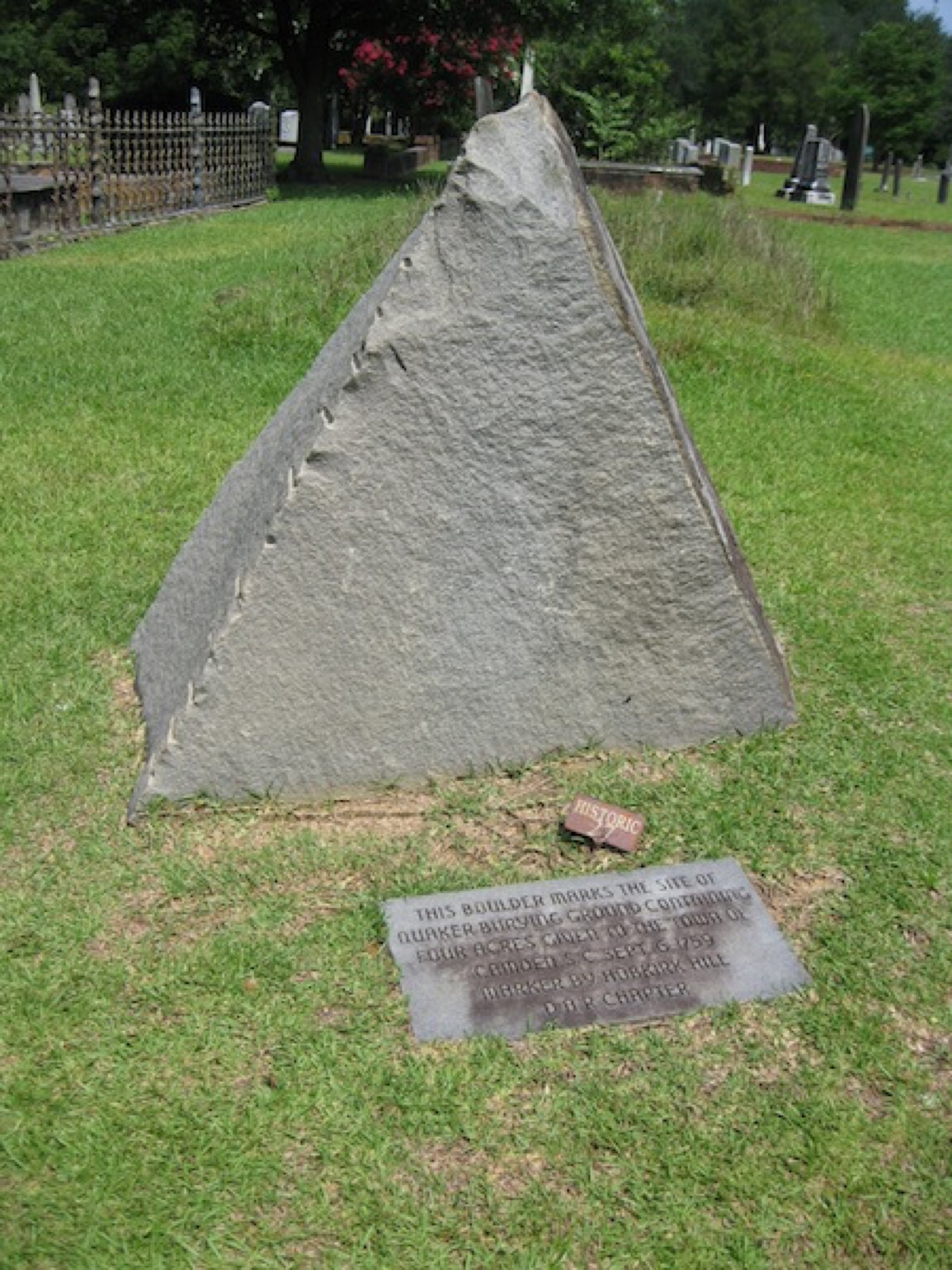
One grave at the Old Quaker Cemetery in Camden, South Carolina sits apart near the gate, marked HERE LIES THE BODY OF AGNES OF GLASGOW. A Scottish stowaway who died searching for a lost love, she was laid to rest by a Catawba chief already dead 17 years.
People who visit the Old Quaker Cemetery in Camden, South Carolina come back describing the same few things at one particular grave. A soft weeping. A breeze that seems to come from no direction. The feeling of someone standing just behind them. The marker there isn't a headstone but a green metal plate, and it reads HERE LIES THE BODY OF AGNES OF GLASGOW. The town says Agnes is still out on the streets after dark, looking for a man she never found. Along the path to her, people report flickering lights and moving shadows. "Many claim to feel a presence nearby," one local trail guide writes, "some say it's Agnes herself, watching over her final resting place."
She was Scottish, born in Glasgow around 1760. During the Revolution she fell for a British officer named Lt. Angus McPherson, and when his regiment sailed for America she stowed away on a ship to Charleston to follow him. Word reached her that his unit was near Camden and that he'd been wounded, so she set out inland through the backcountry to reach him. She fell ill somewhere along the way and died around 1780, never having found him.
Her grave sits apart from all the others, close to the gate, in a corner that was once a separate Presbyterian churchyard. The legend explains why she's off on her own — a Catawba chief named King Hagler had befriended Agnes, and when she died a stranger in a strange country, he buried her himself, quietly, under cover of darkness. It's the tender center of the whole story, repeated on the marker, on the October ghost tour, and in nearly every printed account of her.
Except King Hagler was already dead. A Shawnee raiding party ambushed and killed him on August 30, 1763, 17 years before Agnes is supposed to have died. The chief who buried her by moonlight had been lying in his own grave for close to two decades. The most beloved detail in Camden's most famous ghost story could not have happened, and the mistake rides along on the marker and the legend both, carved in and uncorrected.
There's a larger hole underneath all of it. No newspaper, no deed, no record anywhere outside the cemetery confirms that Agnes of Glasgow ever lived. Her name, her dates, her whole existence rest on that green plate and the story people keep telling. And she lies among some of the most thoroughly documented dead in South Carolina — three Confederate generals, a state governor, the soldier they called the Angel of Marye's Heights, a brother-in-law of Abraham Lincoln. Every one of them recorded, dated, accounted for. The one grave people drive out to find belongs to a 20-year-old stowaway who may never have been here at all.