The New Orleans Pharmacy Museum on Chartres Street trips its burglar alarm in the dead of night, police find the door still bolted, and the locked second-floor cases come up rearranged. Staff blame a long-dead owner, Dr. Dupas.
The New Orleans Pharmacy Museum sits at 514 Chartres Street in the French Quarter, in a Creole townhouse built in the 1820s, and some nights its burglar alarm goes off with no one inside. Police drive over, find the front door still bolted, and go through the rooms anyway. Up on the second floor, the locked display cases have been rearranged, the contents shuffled like someone has been browsing them. The staff stopped being surprised a long time ago.
They blame Dr. Dupas, the pharmacy's second owner, who bought the shop in the mid-1850s. People describe him the same way across decades of accounts: a short, stocky man in his sixties, mustache, brown suit, brown top hat, a white lab coat over all of it. He's seen most often on the curving staircase that climbs from the back of the shop to the second floor. By the local lore, he turned those upper rooms into a private experiment ward, and that floor is where the trouble tends to happen. He opens cabinets, throws books, lifts bottles to examine them. Pregnant visitors have reported climbing the stairs and going suddenly nauseous, gripped with cramps.
The experiment story is the part nobody can prove. Ghost tours tell it as fact; the more careful sources won't. Ghost City Tours says plainly, "We have not been able to verify the part of the story that talks about Dr. Dupas using slaves during experiments." Wikipedia goes further, calling it an unproven rumor whose details "do not fit with feasible facts." What the record does hold is colder and quieter: sale documents show Dupas himself enslaved two people, an unnamed man and woman. Accounts can't even settle his first name, James in some tellings, Joseph in others, and they split on how he died in 1867, some saying syphilis, Wikipedia saying acute diarrhea at 60.
He isn't the only one reported in the building. Two children, a boy and a girl, turn up in the courtyard and inside; ghost sources name them Delphine and Jules, children of the first pharmacist said to have died young while the family lived above the shop. The children come across as curious. Dupas does not.
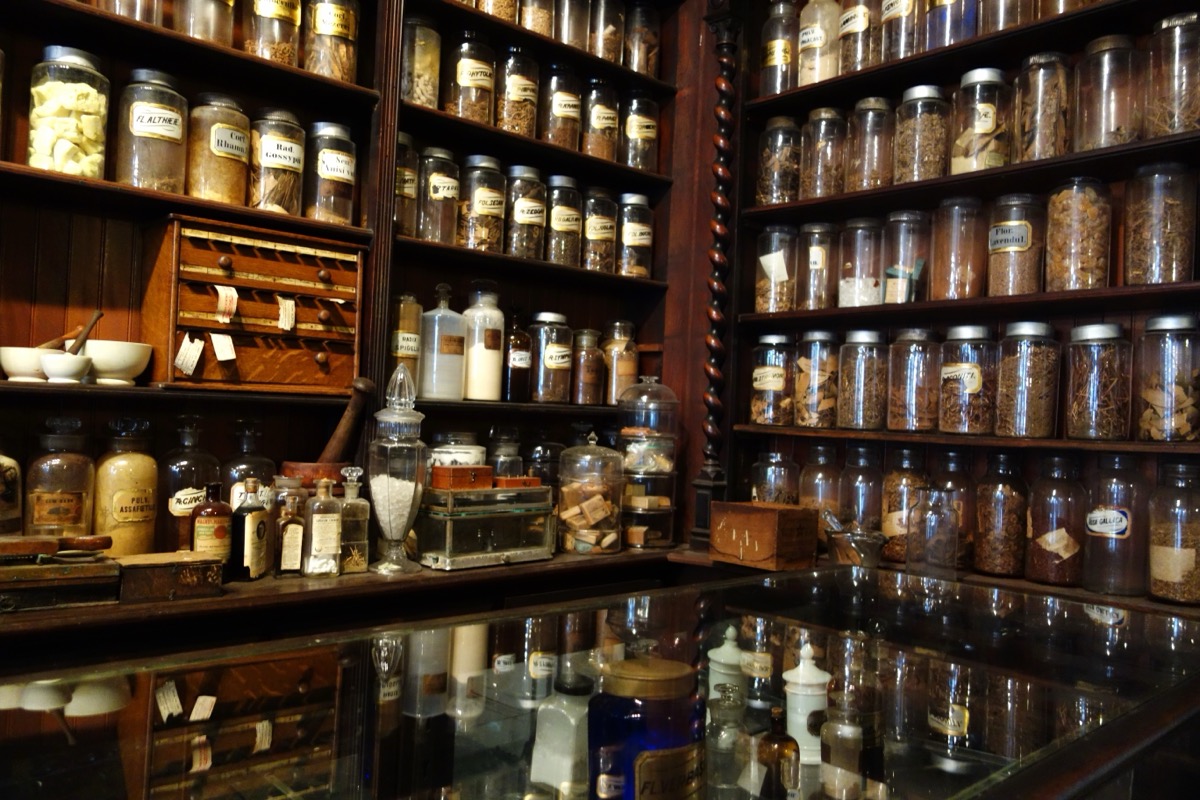
The building is a real museum, founded in 1950, holding the largest collection of pharmaceutical memorabilia in the country. Its first owner, Louis Dufilho Jr., became America's first licensed pharmacist in 1816, after a three-hour oral exam at the Cabildo. Inside there's an 1855 marble soda fountain, colored show globes in the windows, gris-gris potions shelved among the patent medicines, a jar of live leeches by the door.
The museum's own history page tells all of that. It never once mentions Dupas.