Two grassy mounds sit in the middle of the LSU campus in Baton Rouge, ringed by parking and Tiger Stadium. Students say drums come up from them when the campus goes quiet, and shadows cross the crests after dark. The ground is thousands of years old.
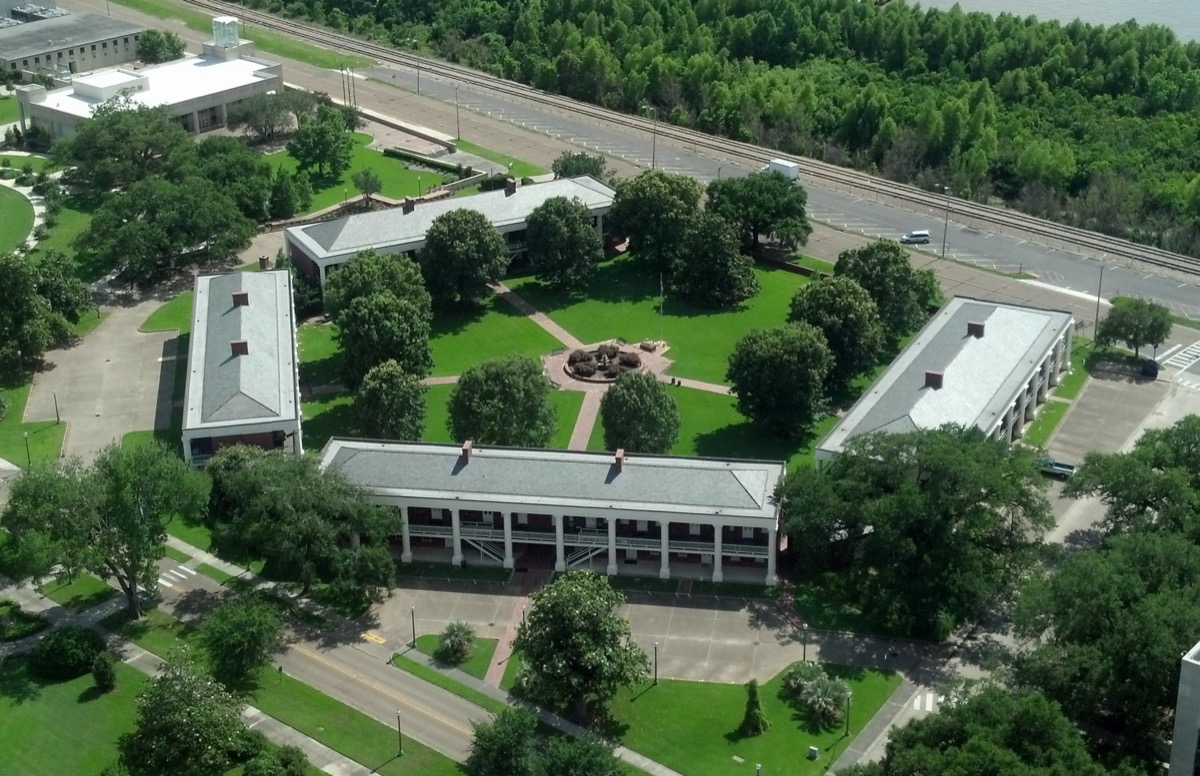
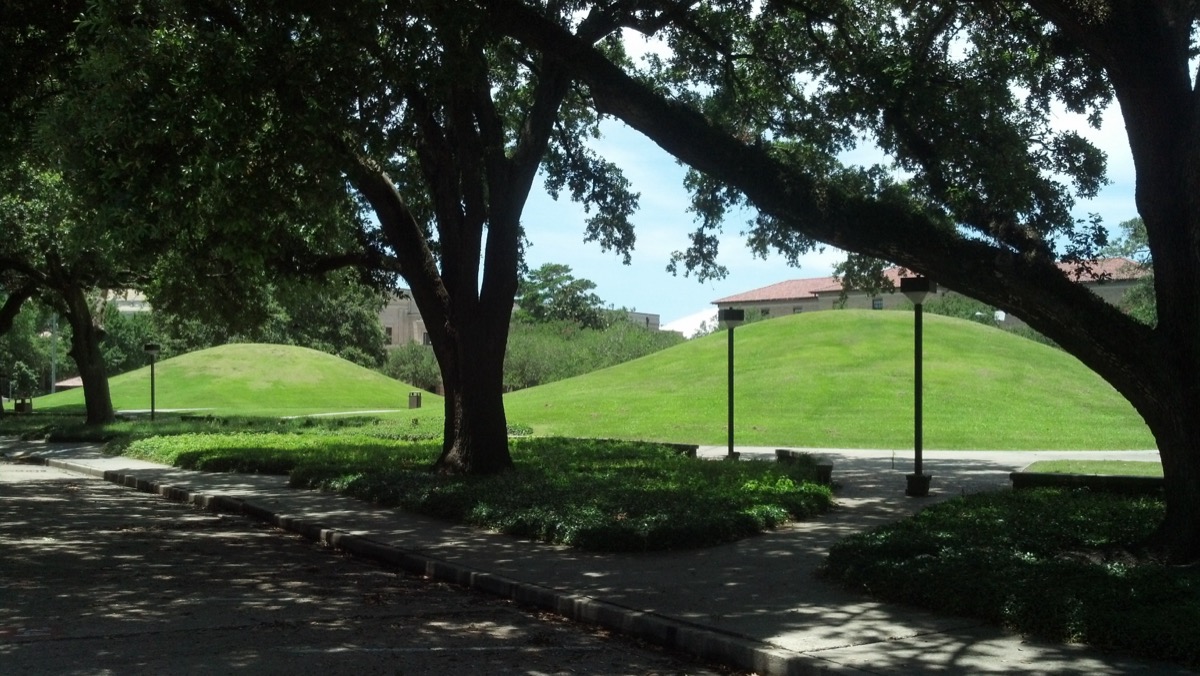
Two low, grass-covered mounds sit in the middle of the Louisiana State University campus in Baton Rouge, ringed by walkways and parking and the bulk of Tiger Stadium. Students say that when the campus goes quiet at night, drums come up out of them.
There's no named ghost here. No murdered bride, no figure with a story attached. What students describe is closer to a feeling — a low drumming from the grass when nothing else is moving, shadow shapes crossing the crests after dark, and a chest-tight weight standing near ground that has been treated as sacred for a very long time. The campus tells it as the spirits of the Native Americans who built the place. There's no dated account, no witness anyone can name. It's oral tradition, passed student to student, living in the telling and not in any file.
There is one older story underneath it. A creation legend, printed in a small weekly in 1842 and retold in the LSU student paper in 1955, has the mounds built to mark a peace: a young warrior captured on a hunt, the rival chief's daughter who steps in to delay his execution, the two of them later pleading the warring tribes into a truce. Even the 1955 version called it only a legend. No one can vouch for it past that.
The ground itself is older than almost anything people made in this hemisphere. The two mounds, each about 20 feet tall on a bluff above the Mississippi floodplain, were raised in the Archaic Period and are listed on the National Register of Historic Places. Scholars think they were ceremonial — marking points, not graves. Sediment cores pulled from them held ash from burned reed and cane and microscopic flecks of charred mammal bone, fires the researchers read as too hot for cooking. The crests line up about 8.5 degrees east of true north, matching where the star Arcturus would have risen 6,000 years ago.
How old, exactly, is where it gets strange. LSU geologist Brooks Ellwood's team argued in 2022 that Mound B was begun around 11,000 years ago, which would make these the oldest known human-made structures in the Americas, older than the pyramids by thousands of years. A group of LSU archaeologists pushed back hard, putting the mounds at a more conservative 5,000 to 7,000 years — old, but not record-breaking. The dispute is about how to read the same data, and it's still open; a new round of testing is underway to settle it.
What both sides agree on is the care now. The mounds are fenced, watched, and managed with the Chitimacha, Coushatta, and United Houma Nation. People walked around them for thousands of years before anyone built a stadium next door. Students say they still hear them.