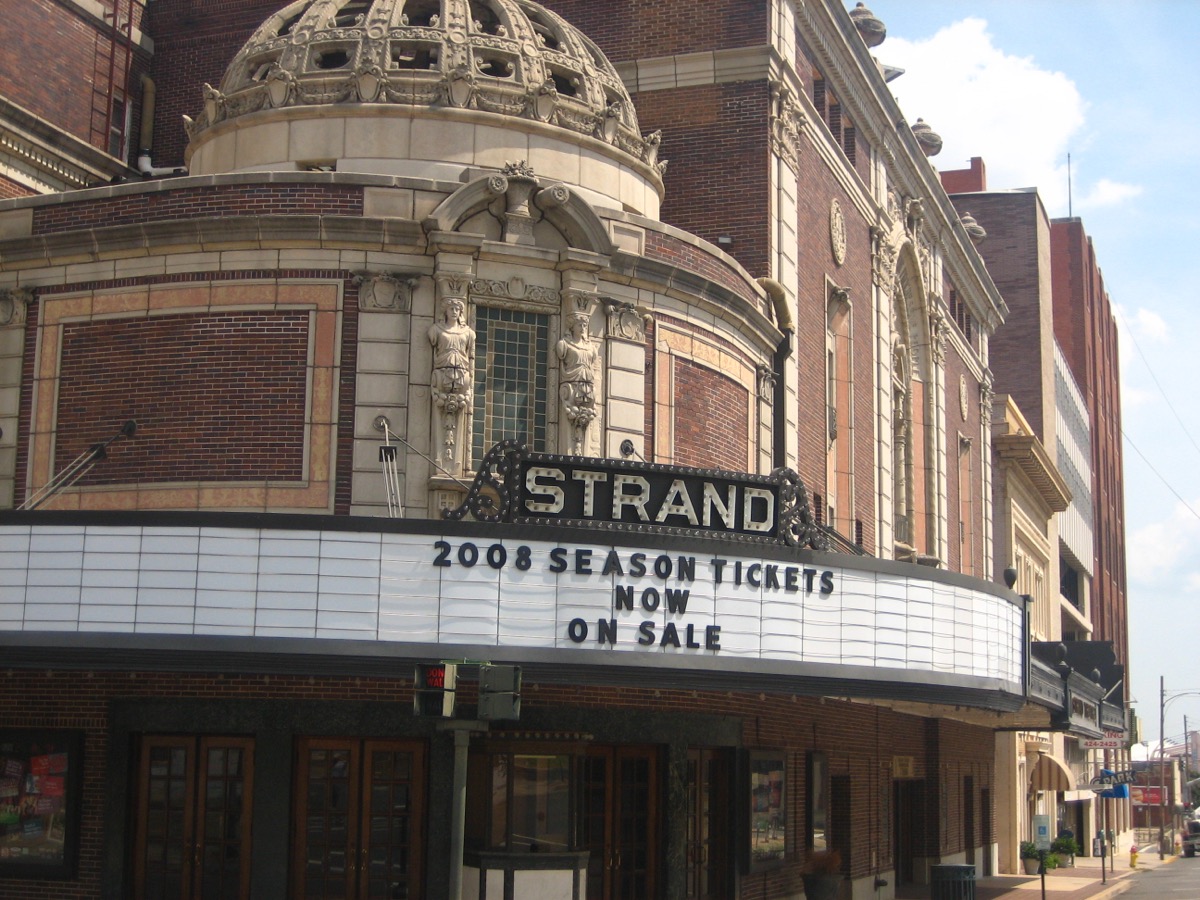
The Strand Theatre in Shreveport, Louisiana has exactly one ghost, and the staff aren't afraid of him. He's Jim Montgomery, a preservationist who died in 2013. When his portrait fell off the wall, the director apologized to it.
The Strand Theatre in Shreveport, Louisiana has one named ghost, and the people who work there aren't afraid of him. They apologize to him.
He's Jim Montgomery, and the strange thing about him is how recent he is. Most century-old theatres hand you a ghost from the silent-film era, a stagehand or an actress dead before talkies. The Strand's ghost died in 2013. Montgomery was a Shreveport actor and journalist, four times named Best Actor by the local paper, three times a Pulitzer nominee, and a co-founder of the city's River City Repertory Theatre. He was also one of three people who, in the 1970s, pulled this building off the demolition list. His portrait has hung in the Founders Room ever since, the room named for the three who saved it.
The theatre opened July 3, 1925, billed as the "Million-Dollar Theatre," with a comic opera called The Chocolate Soldier. The Saenger brothers built it as the flagship of a Southern chain, with a 939-pipe organ they called the Golden Voice, six murals of the muses across the walls, and a chandelier fourteen feet across hanging over the seats. John Wayne and William Holden came through in 1959 for a film premiere. It's the official state theatre of Louisiana, and it's on the National Register. But by the 1970s it had closed, couldn't be sold, and was set to come down. Montgomery and two others formed a nonprofit, and a coalition of citizens spent years restoring it. It reopened in 1984, and it's still running today, with a centennial gala in 2025.
For all those years it has carried exactly one ghost story, and it's a short one.
In April 2020, with the theatre shut for COVID, Executive Director Jenifer Hill walked into the Founders Room and found Montgomery's portrait lying in the middle of the floor. It had hung there for nearly twenty years.
"I found that portrait in the middle of the floor," Hill said. "It had 'jumped' from its place of honor."
She didn't call anyone. She talked to him. "Jim, we're doing everything we can to get your beloved theatre's lights back on again."
That was the whole reading among the people who knew him. The lights had been off too long. The theatre he saved was sitting dark and empty. And getting his portrait onto the floor, where someone would have to notice it, is precisely what Jim would do.