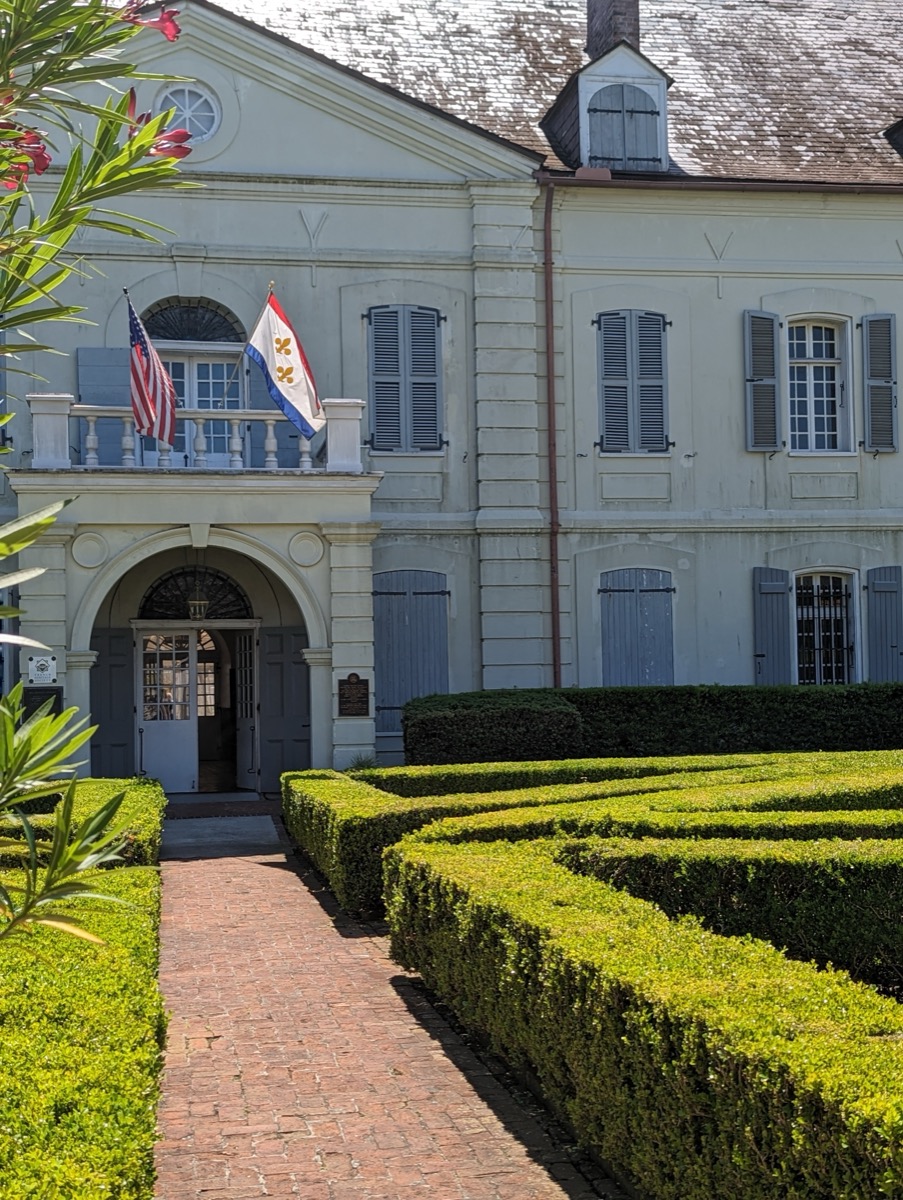
At the Old Ursuline Convent in New Orleans, the third-floor attic stayed sealed for more than two centuries. The legend says the nuns nailed the shutters shut after the Casket Girls' trunks turned up empty inside. In summer 2025, the room opened.
At the Old Ursuline Convent on Chartres Street in New Orleans, the third-floor attic stayed sealed for more than two hundred years, and the legend says the nuns wanted it that way. The story has them nailing the shutters shut over what came in with the Casket Girls.
The Casket Girls were real. Around 1728, young women arrived from France to marry colonists, each carrying a small chest of belongings the French called a cassette. In English records the word drifted toward "casket," and the coffin imagery followed it. The way the legend tells it, the girls' trunks were stored on the convent's sealed top floor, and when the nuns went back for them the luggage was empty. So they shut the room. One version puts 800 silver nails in those shutters, blessed by the Pope, so nothing could get back in.
The nuns had come to New Orleans the year before the girls did. In 1727, at the governor's request, Ursulines from Rouen crossed the Atlantic to run a hospital and teach young girls, and they have anchored this corner of the French Quarter ever since.
The historians have a problem with all of it. The Casket Girls arrived in 1728, but the convent standing today wasn't finished until around 1752, more than two decades later. As one account of the timeline puts it, "the casket girls couldn't have lived in the Old Ursuline Convent upon their arrival in 1728 — because it wouldn't be built for another 23 years." The vampire layer is modern, popularized in the late 20th century around Anne Rice's novels, with fainter rumors traced earlier. The louvered "sealed" shutters are hurricane shutters, put up within the last decade or so. The archdiocese archivist says the third floor holds archival records and storage, nothing else.
And still the story holds. In 1978, paranormal investigators reported unexplained noises and shadowy figures near the attic windows. Nobody found a vampire, but nobody stopped telling it either.
The building itself is the oldest surviving structure in the Mississippi Valley. It came through the great fires of 1788 and 1794, served as the archbishops' residence for most of the 19th century, and a salvaged cypress staircase from the 1730s convent still winds up from the entry hall. The museum inside even keeps the wooden chair Pope John Paul II used when he came to the city in 1987. In early summer 2025, after 200-plus years closed, the attic opened to the public.