At Magnolia Plantation and Gardens outside Charleston, a Ghost Hunters recorder caught a woman's voice asking "What are you doing?" Visitors report exhaustion in the house and a young woman crying in the fields by the old slave cabins, where no ghost has a name.
When the Syfy series Ghost Hunters investigated Magnolia Plantation and Gardens outside Charleston, South Carolina, for a 2012 episode, the clearest thing its recorders caught was a woman's voice, coming from nowhere, asking: "What are you doing?" The same session picked up unexplained music, a young girl's voice, and a single cough, none of it with a source anyone could find.
That voice is the courteous part. Inside the main house, visitors report a heavy exhaustion that lands the moment they step through the door, along with dizziness and cold spots that come and go. Phones die on the property and power back to a full battery once people leave. One visitor's family photograph from the late 1980s seemed to show a dark shape watching the children on a joggling board, the long springy bench found on Charleston porches.
The reports that keep coming, though, come from outside, in the fields near the antebellum slave cabins that survive on the grounds. Visitors describe apparitions there, and a young woman crying, and waves of grief and hopelessness that settle over them with no cause anyone can point to. In the old servants' quarters, now the gift shop, the cold arrives in sudden pockets. One woman, resting on a bench, felt three soft pats on her shoulder from someone she could not see.
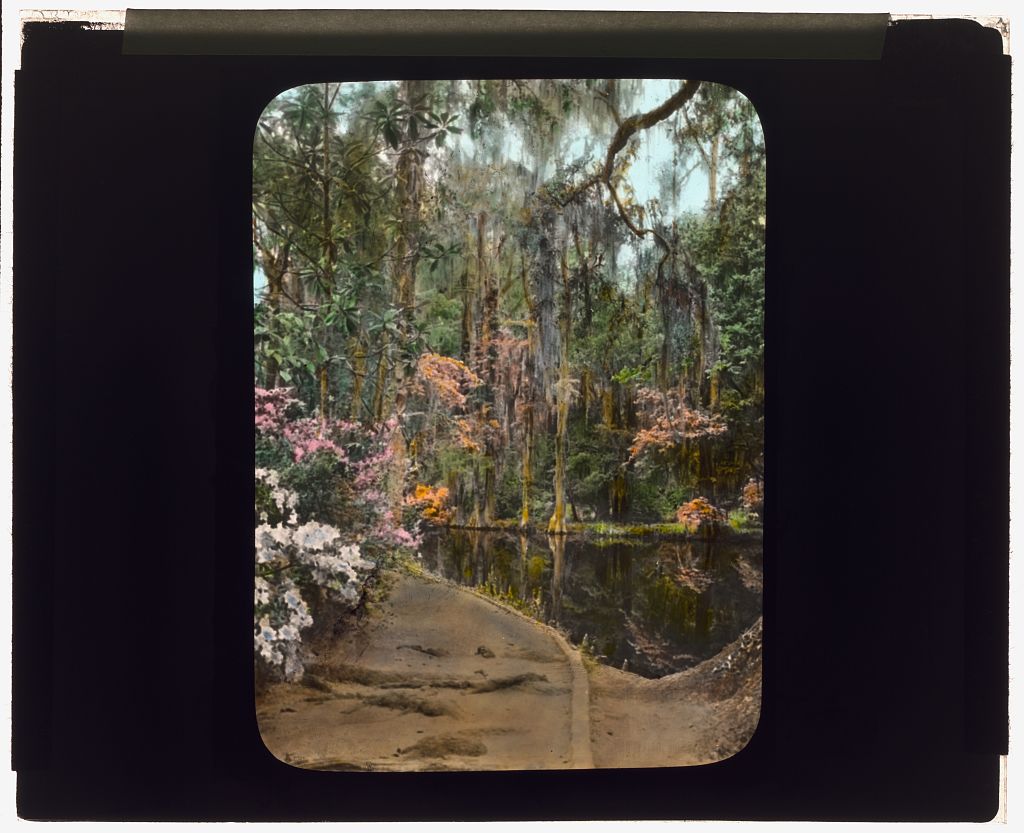
Magnolia is one of the oldest public gardens in America, and it has stayed in Drayton hands for roughly 15 generations. John Grimké Drayton, a tubercular young minister, planted its azaleas and camellias in the 1840s, possibly the first of either grown outdoors in America, to comfort a wife who was homesick for Philadelphia, and after the Civil War burned the house, he opened the garden to a paying public in 1870, ferried in by steamship up the Ashley River, to keep the ruined estate afloat. The beauty is real, and it was built on rice. The Draytons brought enslaved people from Barbados in the 1670s, and Africans from the continent's rice-growing regions dug the dikes, raised Carolina Gold, and shaped the Gullah language that outlived them. The first garden tours were guided by the formerly enslaved.
No single ghost is named here. There is no grieving colonel, no lady of the house on the stairs — the people who report the place tie what they feel to the men, women, and children who lived, worked, and died in its fields. The gardens draw crowds for their camellias every spring, and what visitors keep carrying back out of them is the grief.