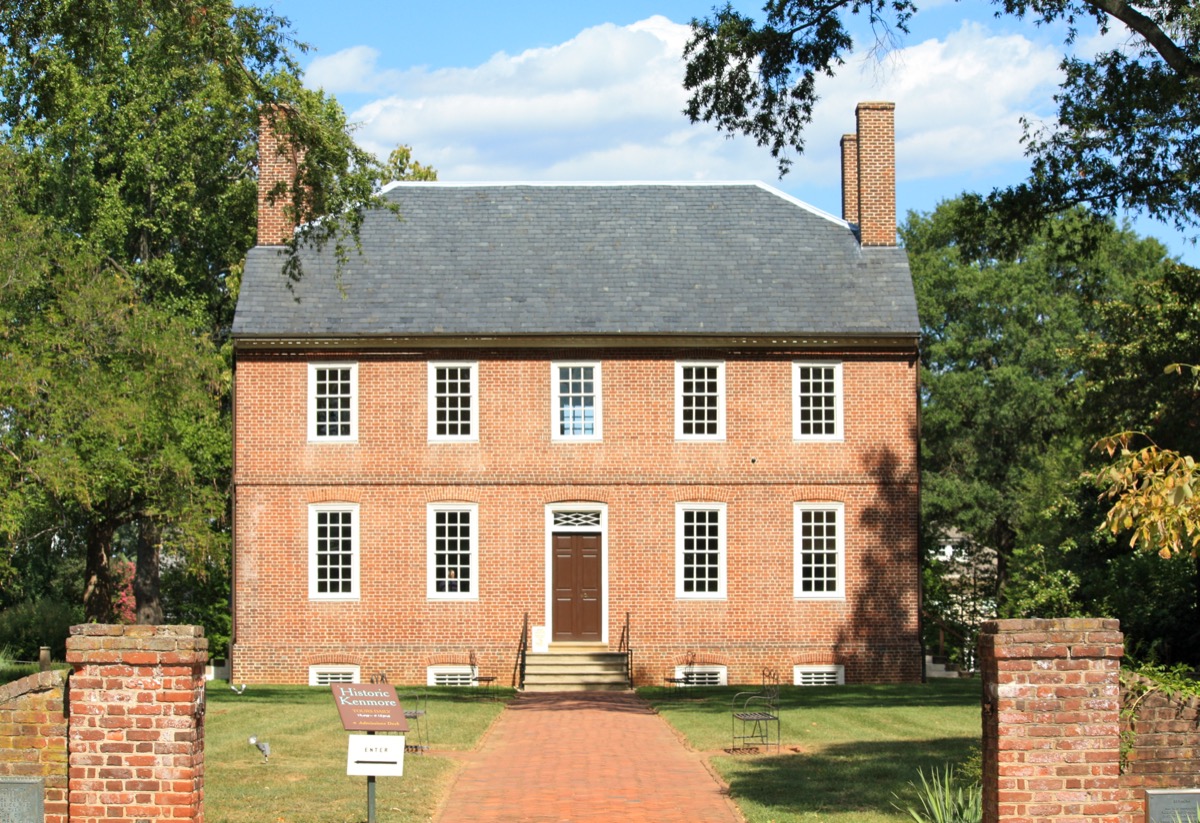
Kenmore's ghost is George Washington's brother-in-law, still at the desk going over a debt the Commonwealth of Virginia never repaid.
Colonel Fielding Lewis put roughly seven thousand pounds of his own money into making gunpowder for the Continental Army, watched the Commonwealth of Virginia never pay him back, and died in late 1781 with the books still open. The legend at Kenmore is that he's still at the desk in an upstairs room, in Revolutionary clothing, going through the accounts and not in a happy mood. Everything else at this house, and there is a lot of else, sits underneath that one image of a man and his ledger.
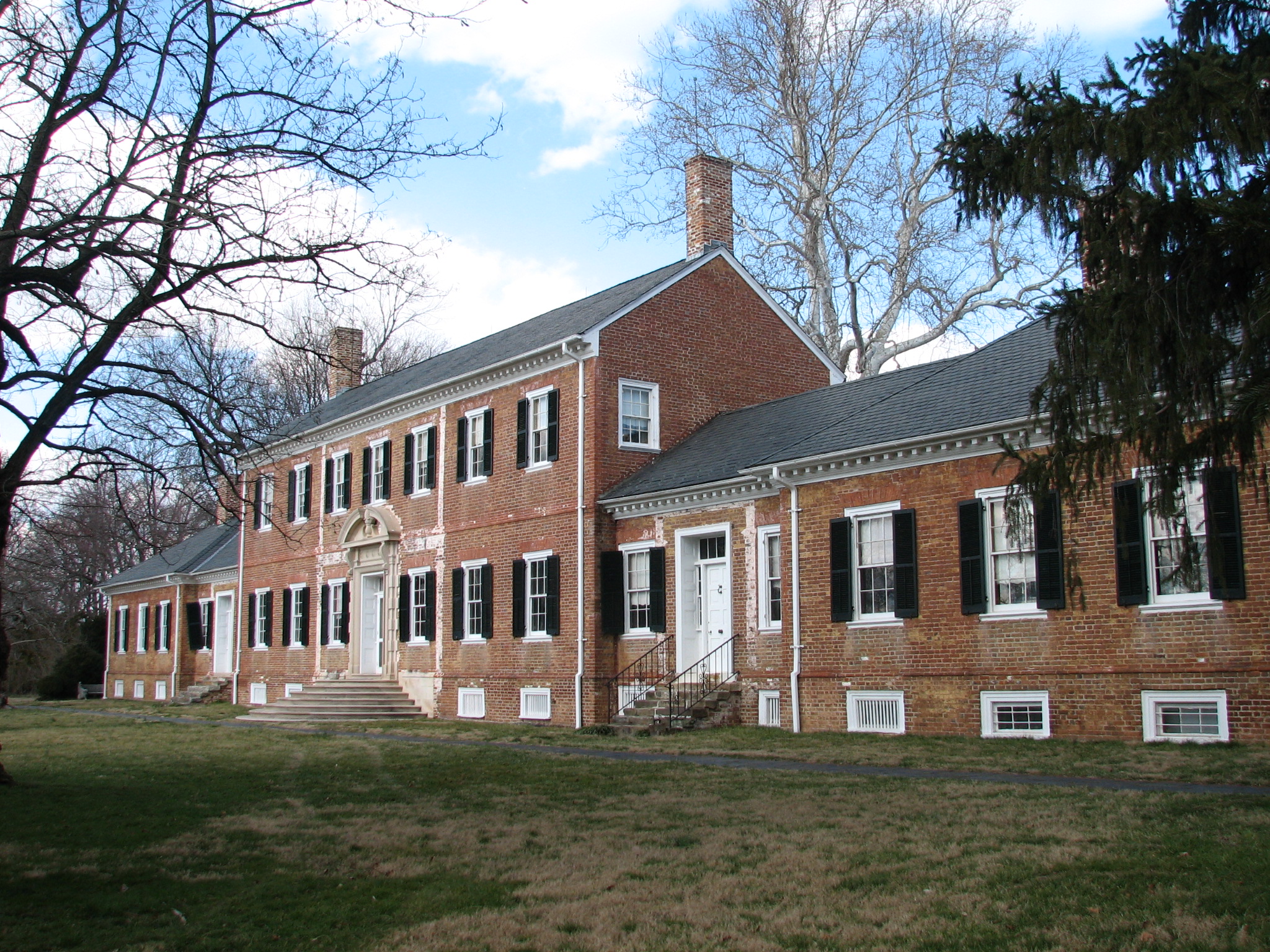
Lewis was George Washington's brother-in-law. He'd married Betty Washington, Washington's only sister, on May 7, 1750, and the two of them finished building Kenmore in 1775. The Georgian brick on Washington Avenue is mostly known for its ceilings. The Virginia Department of Historic Resources calls them "the finest 18th-century plasterwork ceilings and chimneypieces in the country," and they were done by an itinerant craftsman whose name nobody recorded. He's known only as the Stucco Man. Lund Washington, George's cousin and the man running Mount Vernon while George was off being George, wrote in 1775 that the plasterer "can plaster in one day more than our two men can in a week." The same craftsman later did the small dining room at Mount Vernon. Kenmore's dining-room overmantel still carries his bas-relief scenes from Aesop's fables.
In August 1775 Lewis got named one of the primary commissioners of the Fredericksburg Gun Manufactory. By February 1781 he was telling Virginia's state treasurer he'd borrowed somewhere between thirty and forty thousand pounds for the operation on the state's orders, plus seven thousand of his own. His health had been failing since January 1780. He died in late 1781. Encyclopedia Virginia won't pin a day. Older ghost-tour lore says he was buried under the steps at St. George's Episcopal in Fredericksburg, but the George Washington Foundation's own researchers call that "likely untrue." Documented evidence points instead to a property he owned in what's now Frederick County, near Winchester. The factory closed in 1783. The debt was never repaid.
The worry is what the legend hangs on. Some sources say sightings of him started in the 1920s, but no historical society or museum pins a date, and no named witness has ever been quoted in print. Hauntworld and Virginia Haunted Houses describe steady heavy footsteps pacing the downstairs hall and doorknobs turning by themselves. Visitors report small footsteps running through the empty house at 2 a.m. and whispered voices on the grounds. Other folklore in L.B. Taylor Jr.'s "The Ghosts of Fredericksburg" (fireplace tools moving on their own, napkins disarranged at meals) circulates in town but I couldn't find it documented anywhere older than Taylor's book.
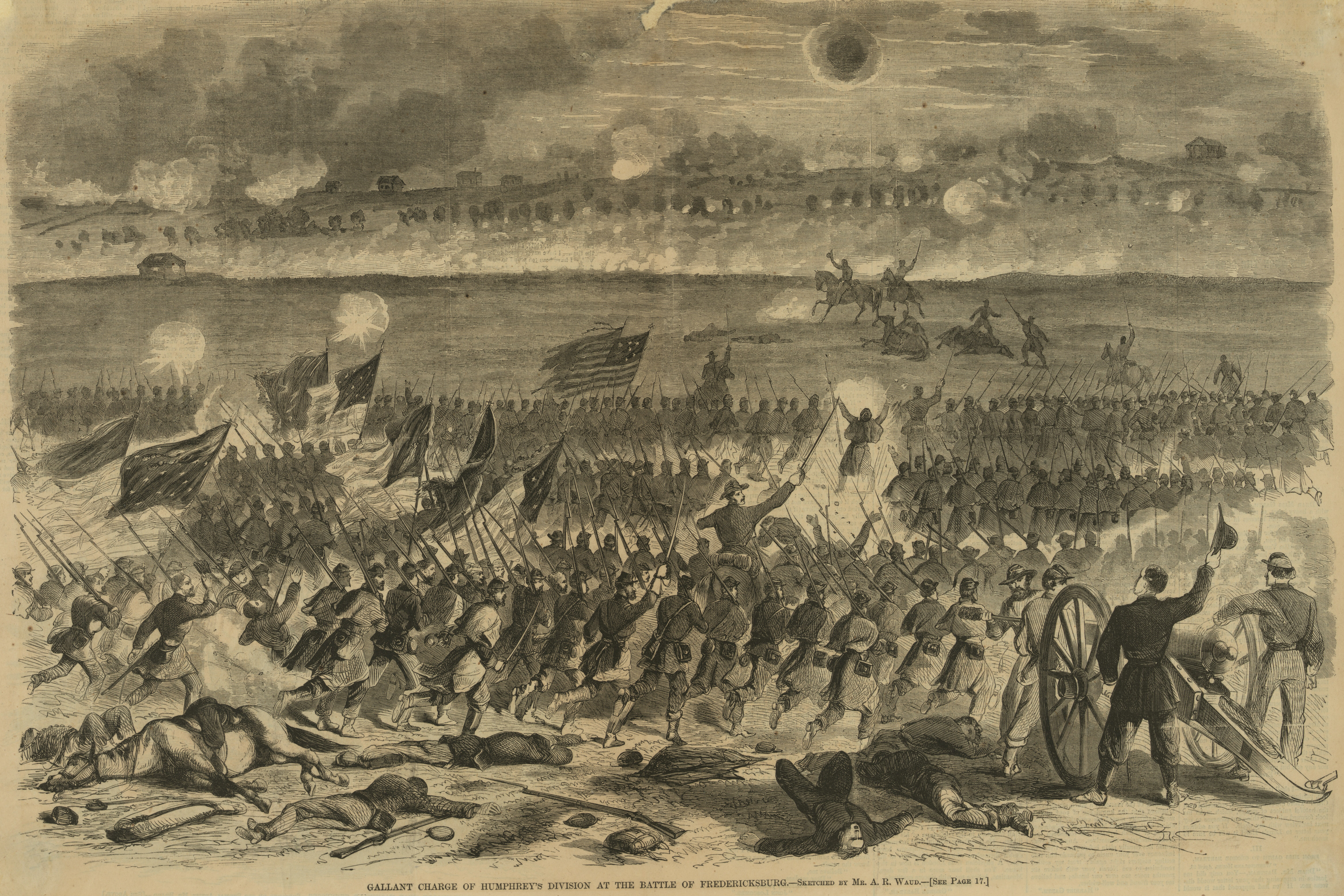
The Civil War turned Kenmore into something most house museums aren't. On December 13, 1862, the Battle of Fredericksburg dropped more than 17,000 total casualties in a single day, "more than half falling wounded or dead within sight of Kenmore," per the National Park Service. At least seven cannonballs hit the house. Some sources say more. Major J.O. Kerby, visiting in 1890, counted "scars of five solid shot on the wall facing the Federal army" and noted separate strikes elsewhere. Confederate guns from fortifications on the Kenmore grounds put rounds into the west side of the house between the cellar windows. A cannonball crashed through the roof and lodged beneath an upstairs chamber floor, where it sat until the 1930s restoration. In 1989 a Borman-fuzed common shell was found beneath the attic floor. It had failed to detonate. A ramrod from a Tower Enfield Model 1853 rifle turned up under floorboards in the southwest upstairs chamber, which is how restorers worked out that Confederate sharpshooters had been firing from the upper floors. Kitchen and laundry outbuildings were destroyed in the bombardment.
Eighteen months later it got worse. In May 1864, after the Battle of the Wilderness and Spotsylvania Court House, the Union army turned Kenmore into a field hospital. Lieutenant Amos Rood of the 7th Wisconsin Infantry was carried in May 14, 1864, and laid out on the second-floor landing because the rooms were full. He had an infected leg. "They gave me grog and put me to sleep with opium pills," he wrote. The dining room, the one with the Aesop ceiling, is believed to have been the surgery. The original floorboards were replaced after the war for reasons you can guess at. One hundred and three Union dead were buried in shallow graves on the lawn and later moved to Fredericksburg National Cemetery. The last body came up in December 1929 during kitchen construction and was reinterred with military honors. 1864 graffiti from wounded Union soldiers is still in the attic.
So when staff and tour writeups say the upstairs room feels heavy, the weight underneath is real. Nobody's been named, no dated investigation, the witness column is blank. What's not blank is the building's record. Three rounds of damage from the same December afternoon, a hundred and three burials, a body found in 1929, a shell in the attic in 1989, and one specific man who went broke trying to arm the side that won.
The Kenmore Association started in 1922, founded by Emily White Fleming and her daughter Annie Fleming Smith to save the house from being torn down for development. Calvin Coolidge, then Vice President, endorsed the campaign in writing: "It ought to be preserved for its own sake. It must be preserved for patriotic America." It opened as a museum in 1925. A decade-long restoration from 2001 to 2011 returned the interior to its circa-1775 appearance. The house got National Historic Landmark designation on April 15, 1970. The George Washington Foundation runs it now, along with Ferry Farm across the river.
The original plantation was 1,300 acres. Only the main house and three city blocks survived development. The Crowninshield Visitor Center's Bissell Gallery includes a display on Lafayette's connections to the Washington and Lewis families. You only get that level of granular curation at a place still being looked after by people who care.
Lewis's actual cause of death isn't settled. Encyclopedia Virginia says only "failing health" from January 1780. Ghost-tour sources name tuberculosis. The historical record won't go that far.
What it will go to is the seven thousand pounds, the gun manufactory, the closed factory in 1783, and the line in the 1775 letter about a plasterer who could do in a day what two men could do in a week. The upstairs room is where he's said to sit. The desk is where the papers are.