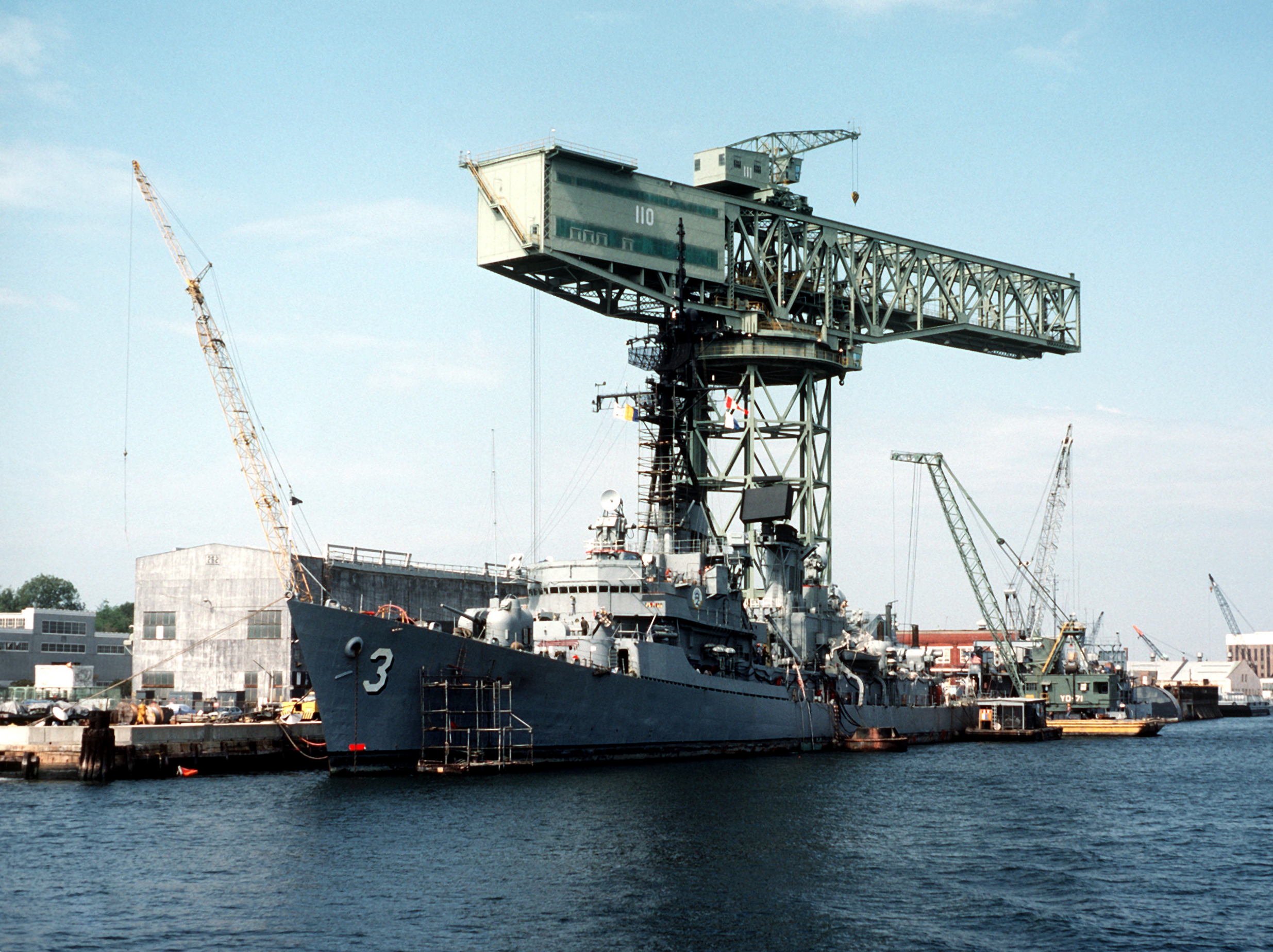
Norfolk Naval Shipyard burned twice in a single decade, birthed the CSS Virginia, and keeps an 18th-century ghost the workers call John Paul.
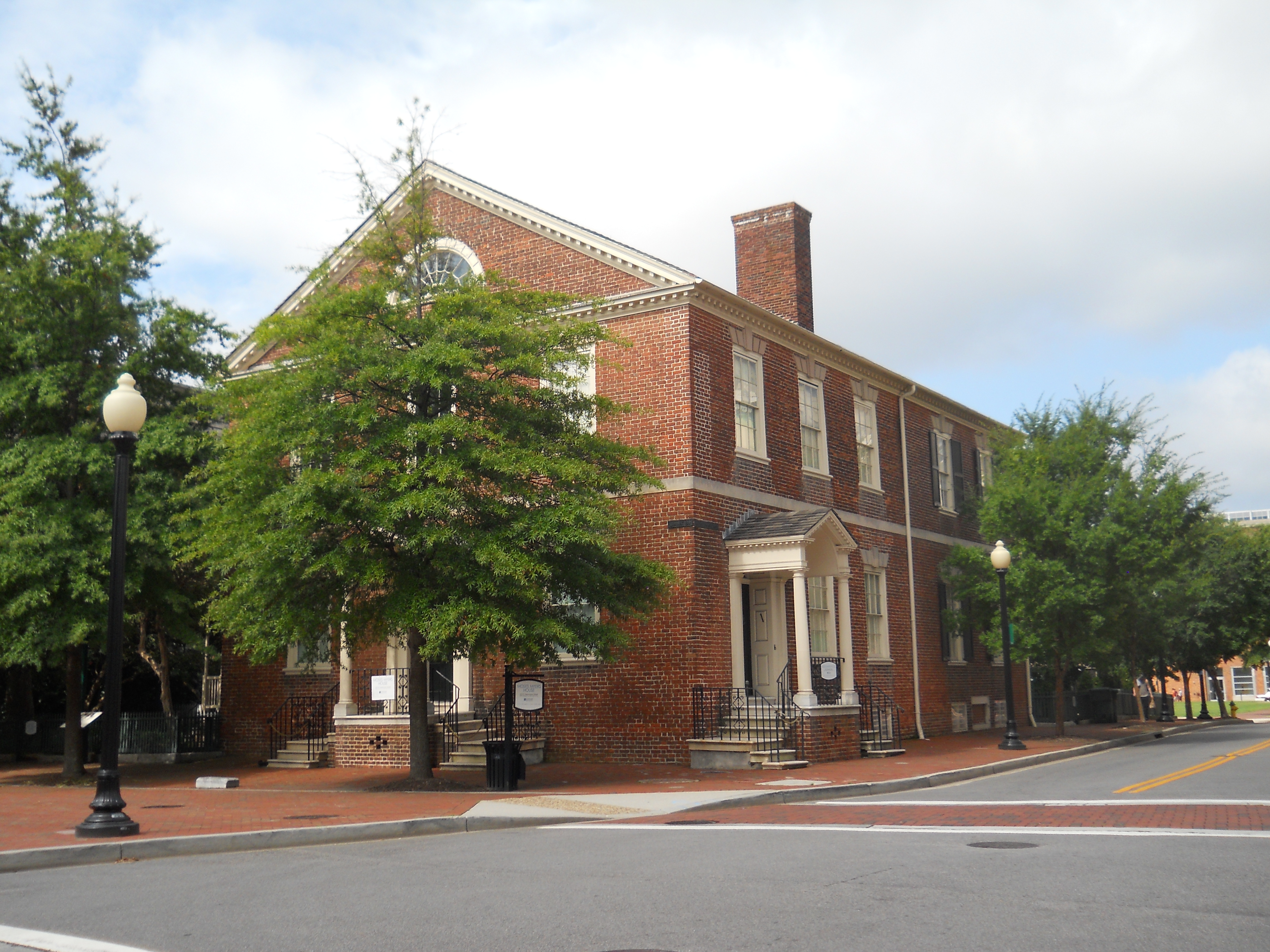
The brick wall around the officer's quarters at Norfolk Naval Shipyard has scorched patches and discolored sections where muskets were fired against approaching enemies. Two wars left those marks. The Revolutionary War put some of them there. The Civil War added the rest. The houses inside that wall, Quarters A, B, and C, are still standing because they somehow survived both the Union arson of April 1861 and the Confederate retreat-burn that followed thirteen months later.
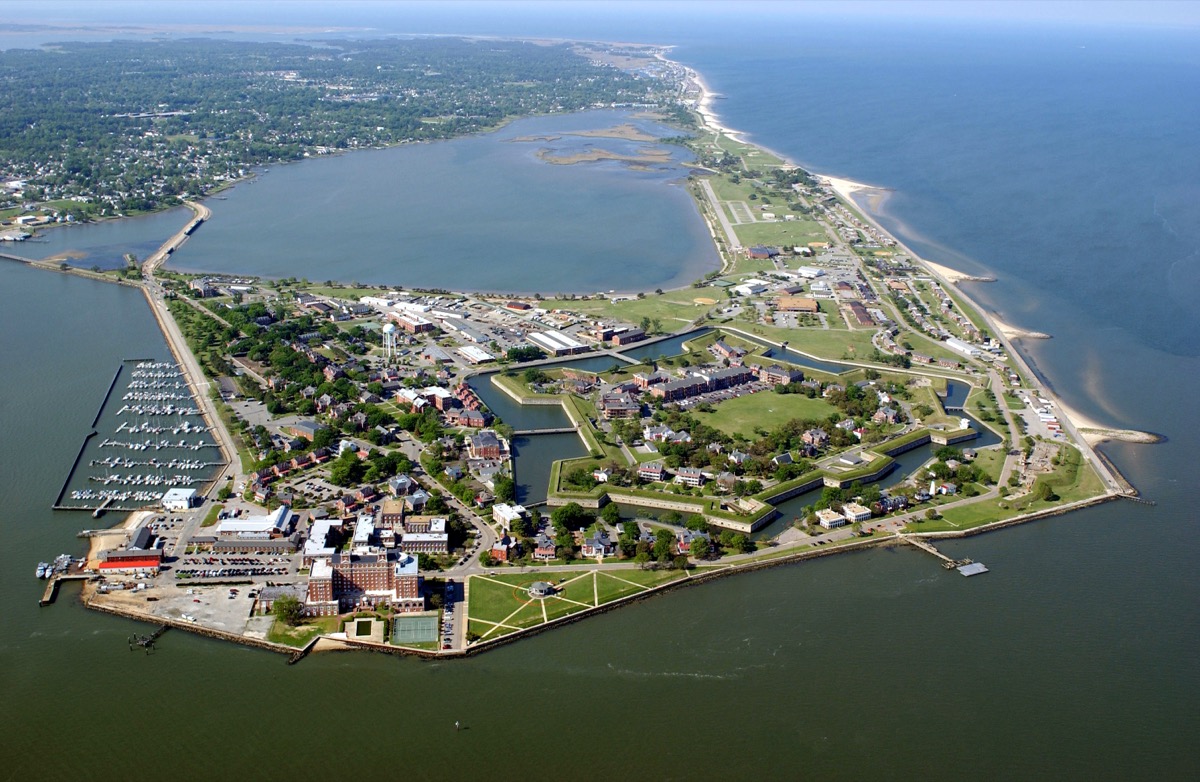
The place itself is a working Navy yard in Portsmouth, Virginia, founded November 1, 1767, by a Scottish merchant named Andrew Sprowle, who named it Gosport after the naval town in England and then stayed loyal to the Crown when his neighbors revolted. Sprowle was exiled to Gwynn's Island and died there in May 1776, buried in an unmarked grave. His shipyard outlived him by more than 250 years and is now the oldest one in the country. It still calls itself Gosport in the old hands' shorthand. The official name changed to Norfolk Naval Shipyard after the Union retook the yard in May 1862.
The hauntings cluster around the wall.
Eric Mills documented them in The Spectral Tide, his 2013 book from Naval Institute Press on Navy ghosts. The most famous one is called the John Paul. He appears in vivid 18th-century naval attire, descending a staircase inside the officer's quarters. Workers named him after John Paul Jones, even though Jones never set foot at Gosport. Mills records that in 1918 a sailor saw the apparition so clearly that he fell trying to get away from it and broke his leg on the stairs. No contemporary newspaper carries the story, so it lives or dies on Mills' account. Take it for what it's worth.
There's a second ghost in the lore who does something stranger. Workers call him the OCD Ghost because he rearranges keys on the pegboards near doors. People come in at the start of a shift and the keys are in a different order. Mills tells the story; the workers tell the story. Whether that's a ghost or a prank with a long shelf life is your call, and the shipyard isn't open to outside investigators, so nobody from a TV crew is going to settle it.
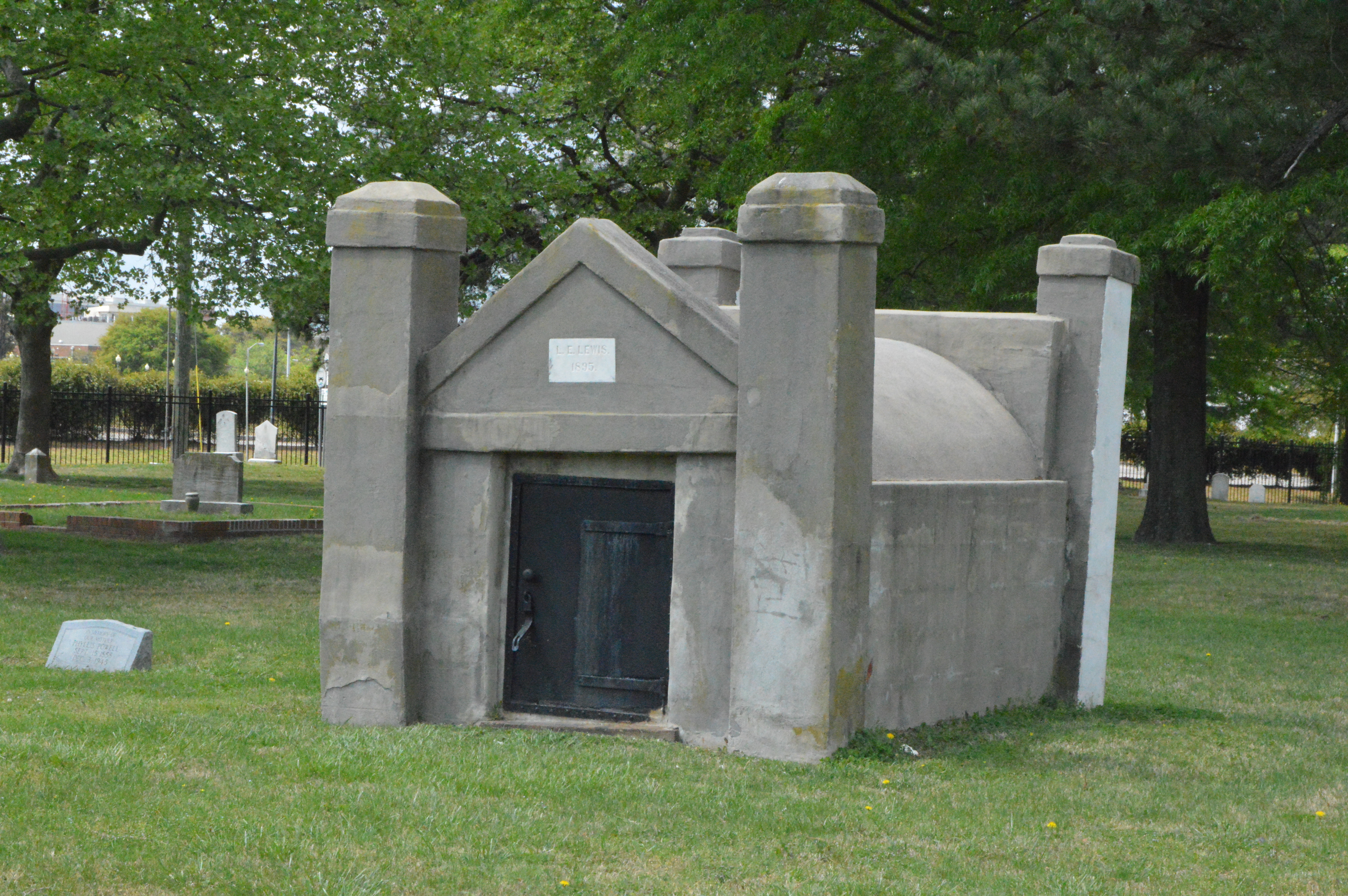
Then there's the 1971 trio. Construction work that year disturbed forgotten graves on yard property, and three figures in old British military dress started appearing around Dry Docks 1 and 2. Workers couldn't tell if they were Revolutionary War or War of 1812. The same year, on November 11, 1971, Dry Dock One was designated a National Historic Landmark. The graves and the landmark plaque happened the same calendar year. A coincidence that sticks even if the two things have nothing to do with each other.
Dry Dock One is the spine of this place. Construction started December 1, 1827, and the dock was first used June 17, 1833, when USS Delaware became the first ship ever dry-docked in America. The granite came up from Quincy, Massachusetts, the same stone used at Charlestown Navy Yard's contemporary dock. The dock measures 319.5 feet. Three-quarters of the labor force that built it was enslaved, paid 72 cents a day. The white stonemasons got $1.50 to $2.00. Construction officially finished in 1834. It remains the oldest continuously operating dry dock in the country.
That granite dock is where the CSS Virginia was built. Sort of built. What actually happened is one of the stranger ship stories in American naval history. On April 20, 1861, with Virginia seceding, Flag Officer Charles Stewart McCauley locked the yard's gates and ordered the place destroyed rather than let it fall to the Confederates. Hiram Paulding showed up at 8 that evening with 350 soldiers from the 3rd Massachusetts to finish the demolition. By 4:20 the next morning, the Union forces evacuated. USS Pennsylvania, USS Columbia, USS Raritan, USS Merrimack, USS Germantown, and the partially completed 74-gun USS New York were scuttled or burned. McCauley left the yard in tears, escorted aboard USS Cumberland by his son.
The Confederates walked in and started raising the wrecks. They pulled the Merrimack up out of the river, dragged her into Dry Dock One on May 30, 1861, and bolted iron plating over her hull. She came out as CSS Virginia. On March 8 and 9, 1862, she fought USS Monitor at the Battle of Hampton Roads, the first ironclad duel in history. Same granite dock that built and burned her, then rebuilt her. The Union retook the yard May 10, 1862. Confederates set fire to it on the way out. The officer's quarters survived again.
Quarters A, B, and C are Greek Revival, built between 1837 and 1842. Commodore Lewis Warrington moved into Quarters A in 1838, after the central section was finished. The design comes straight out of Plate 28 of Asher Benjamin's 1830 pattern book, The Practical House Carpenter. They were added to the National Register of Historic Places on December 19, 1974. Quarters A took heavy fire damage on August 12, 2014, and has since been restored.
The sail loft is the other place where things happen. Officially it's Shop 89, the Fabric Worker Shop, a real working facility at the yard. Workers have reported flickering lights, white blobs, voices with nobody attached, and the sound of phantom sewing machines stitching canvas in an empty room. Mills speculates the yard's ghosts may be tethered to old sailing-ship timbers reused in shipyard buildings. That's his theory, not a documented witness account. Worth knowing it's a guess.
You can't actually visit the haunted parts. The shipyard is an active military installation, closed to the public. Quarters A, B, and C can only be viewed from outside the brick wall, at the corner of Lincoln Street and 3rd Street in Portsmouth. The sidewalk gives you a clear line on it. Two hundred and fifty years of fire and gunpowder, and the scorch marks are still there on the bricks.