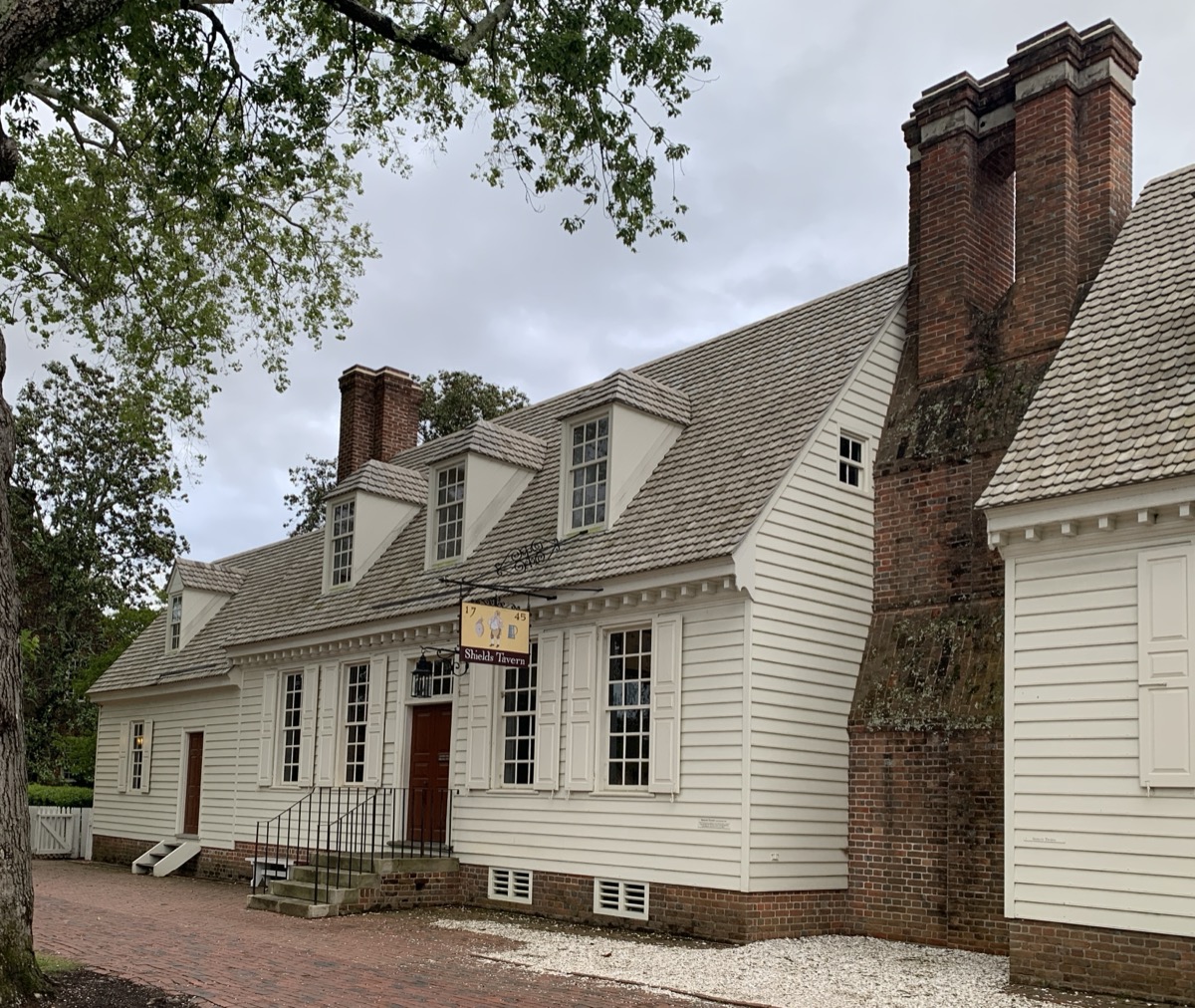
A Colonial Williamsburg historian held a seance at Shields Tavern, closed up alone, and heard her own voice answer her from the basement.
Dr. Kelly Brennan Arehart stayed late at Shields Tavern after a staff seance on the second floor. The group had set up a makeshift spirit board and tried to reach Frances Shields, a daughter left out of James Shields's 1750 will. Arehart, a Colonial Williamsburg historian with twelve years studying haunted history in the historic area, closed the tavern alone that night. From the basement, a voice answered her. It was her own voice. The words were specific: "I thought you would have known by now." In the weeks that followed, coworkers reported hearing her voice in rooms she wasn't in, and footsteps in halls she hadn't walked.
That account, told by Arehart herself to Visit Williamsburg, is the spine of the place. Not a vague colonial spook with a name borrowed from a guidebook. A working historian, on the record, about something that happened to her at the address where she teaches the history.
Now the history, because it actually matters here.
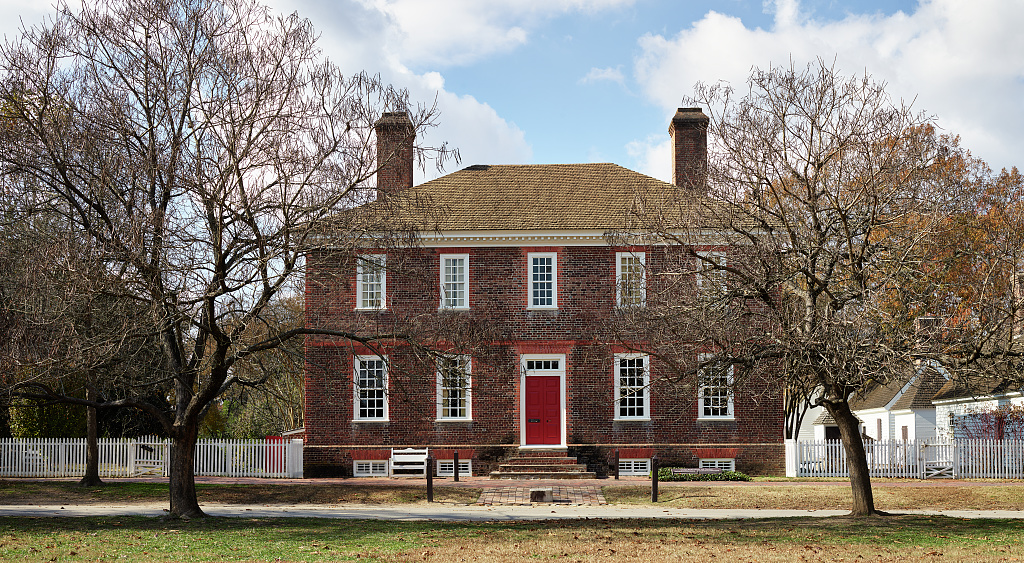
Shields Tavern sits on East Duke of Gloucester Street, near the Capitol end of the Historic Area. The site has been a tavern since Jean Marot, a French Huguenot immigrant, opened "Marot's Ordinary" here around 1705. Marot was murdered in November 1717. A rival tavernkeeper named Francis Sharpe, whose own license application had recently been denied, was arrested. On November 18, 1717, the York County Court found "just cause" to try him and remanded him to the public jail in Williamsburg. No trial record survives. He was apparently never convicted. The next year, 1718, Sharpe was granted a tavern license of his own.
Mark that as the first grievance in the file.
Marot's widow Anne kept the tavern going. Her daughter, also Anne, married James Shields, who took over operations. In May 1745 the Shieldses formally bought the property from Anne's sister Edith and her husband Samuel Cobbs. By 1750, Shields Tavern was one of seven licensed taverns in Williamsburg, feeding and lodging the "lesser gentry and upper middling ranks" with food, drink, gambling, and billiards. Not the elite. Not the bottom. A class-specific room.
James Shields died in late 1750. His widow Anne ran the place until July 1751, when she married Henry Wetherburn, who already ran the tavern next door. The chain of marriages and wills knits the two neighboring taverns together by family. Daniel Fisher took over Shields Tavern by October 1751 and gave it up by February 1752. The building stopped operating as a tavern.
The 1754 fire is the part that gets misremembered. In April of that year, a fire tore through the eastern side of the block. The Walthoe and Palmer houses were destroyed. The east end of the former Shields Tavern building was damaged but survived. Fisher, still living on site, wrote a diary entry about the fire that includes an account of a barrel of gunpowder exploding in a nearby store. What actually destroyed the building was a separate, much later fire in 1858, which the Williamsburg Weekly Gazette called "mysterious." A Mr. Moss rebuilt on the site afterward and ran carriage, buggy, and wagon shops there.
The Colonial Williamsburg Foundation reconstructed Marot's Ordinary on the site in 1953 and used it as housing for years. Archaeology in the mid-1980s preceded the building's conversion into a working restaurant tavern. An underground kitchen was excavated. Crucially, the reconstruction and furnishing were guided by James Shields's room-by-room estate inventory from 1750, so the rooms are arranged the way he left them at his death. The east-room wine cellar is original 18th-century fabric. Shields is counted among Colonial Williamsburg's "original" buildings on that thread of preserved material, with the rest reconstructed. The tavern reopened to the public in 1988.
So when staff talk about Frances Shields, here's what the record actually says. Four daughters got cash bequests in the 1750 will. Frances is not mentioned. Ghost tour operators read that as a snub — a deliberate disinheritance, a daughter cut out, a grievance the daughter is still working through. Colonial Williamsburg historians lean the other way. They think Frances was probably already dead by the time James wrote the will, which is why she got nothing. Both stories are out there, and which one you believe shapes whether the seance on the second floor was reaching for an angry ghost or a name in a family Bible.
Arehart, who was in the basement that night, hasn't said which one she believes.
Tour operators stack other ghosts onto the building. They say James Shields himself flicks lights and rummages through rooms. They describe a small boy who hides under dining tables and disappears when guests look twice. They tell stories about Revolutionary soldiers playing with modern faucets. None of those names show up in the documentary record the way Marot's murder and Frances's missing bequest do. Treat them as tour patter. The Tavern Ghost Walk starts in front of Shields Tavern on Duke of Gloucester Street, so guests hear them in roughly the order the tour guides have settled into.
What's worth defending here is the building itself, not the show around it. The east-room wine cellar is real 18th-century brickwork. The room layouts come from a dead man's inventory. The dinner tonight is a "Groaning Board" family-style meal modeled on 18th-century communal dining, sitting elbow-to-elbow with strangers the way the lesser gentry would have in 1750. You can take or leave the ghosts. The architecture, the genealogy, the murder of Jean Marot in 1717 with no conviction afterward — that part is preserved on the record.
And then there's the basement, and a voice that sounded exactly like the historian who was alone in the building, saying: "I thought you would have known by now."