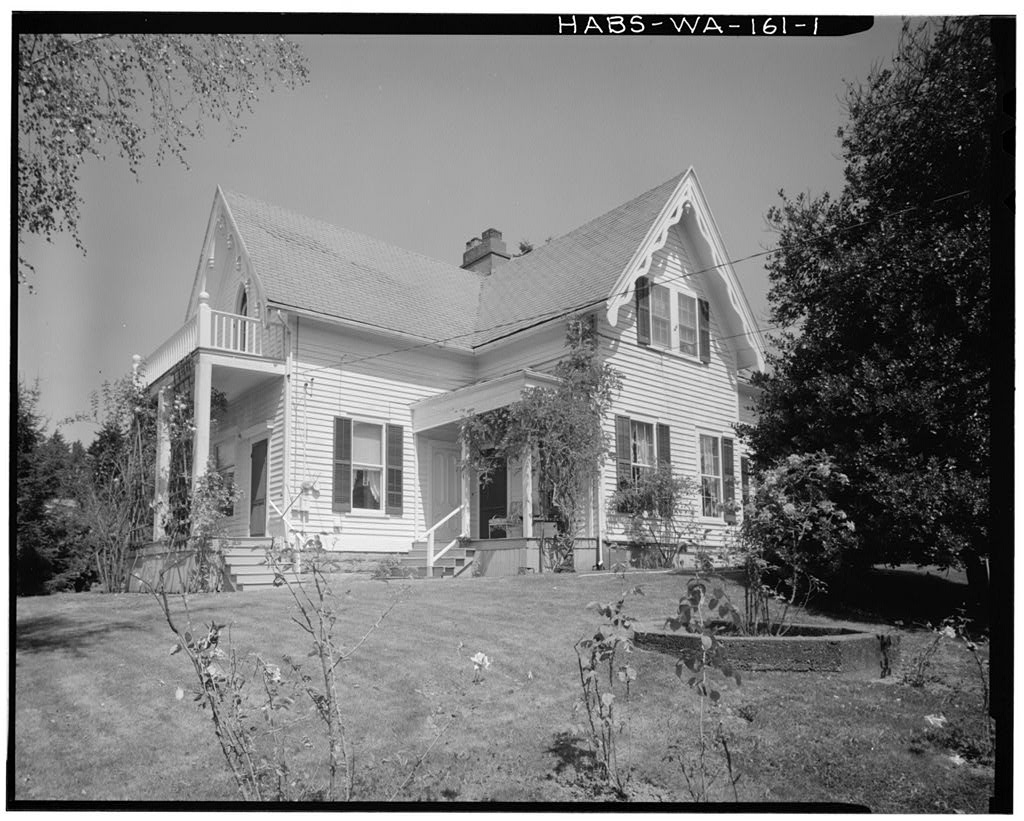
Staff locking up the Bigelow House Museum in Olympia, Washington report a well-dressed gentleman bent over the exhibit cases, examining the displays. Approach him and he is gone. They think he is Daniel Bigelow, who built the house and lived in it until 1905.
The Bigelow House Museum in Olympia, Washington closes at night with somebody extra inside. Employees shutting down the building report a well-dressed gentleman standing over the exhibit cases, taking in the displays. Anyone who walks toward him to ask reaches an empty room.
The accounts of him are thin, and they don't quite agree with each other. One calls him elegant, one distinguished, one notable. A Washington haunted-houses listing, three sentences long, is the only place that describes his face at all, and the word it uses is "scrutinizing" — a man leaning in over a case, working through the labels. Nothing in any account says what he's wearing, only that he's dressed well.
Staff and visitors have settled on who it is. They say it's Daniel R. Bigelow, who built the house and never really left it.
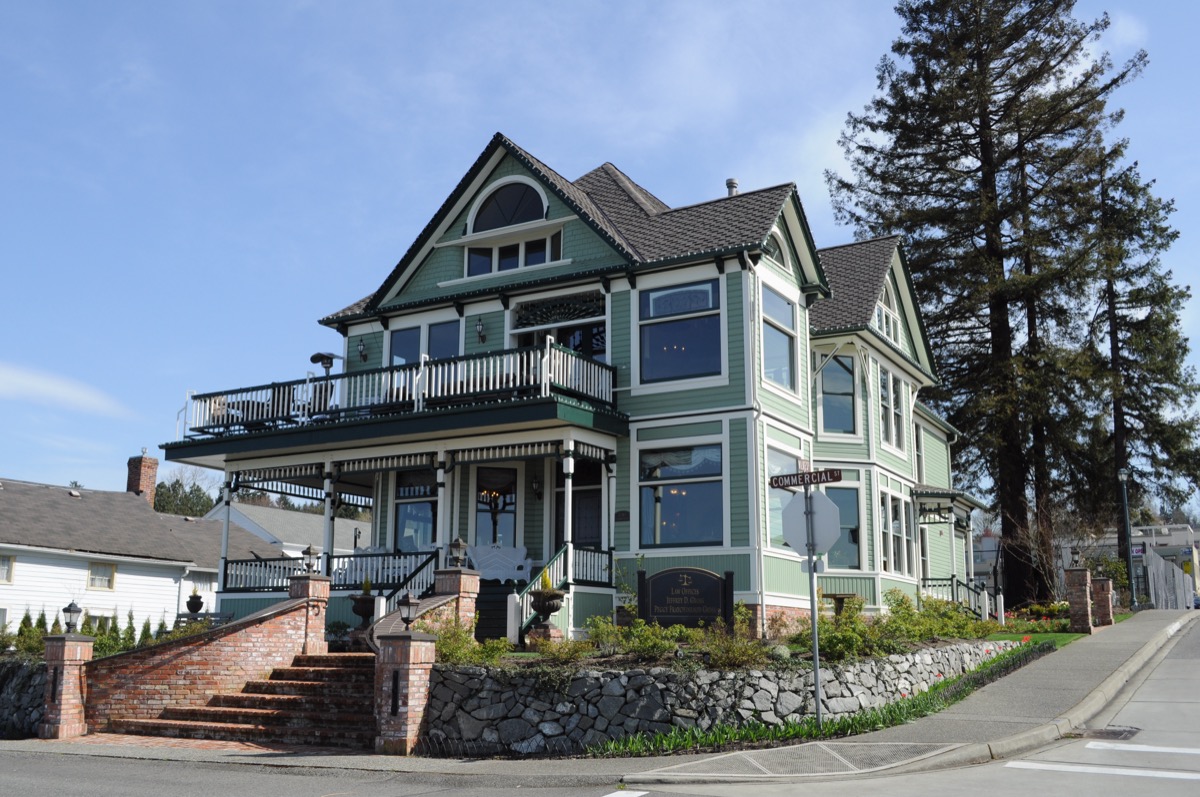
Bigelow read law at Harvard, came west over the Oregon Trail in 1851, and reached the settlement that became Olympia that November aboard a schooner called the Exact. He filed a land claim running from Puget Sound up the hill and raised a Carpenter Gothic house on it, though the house can't agree with itself about when: the Olympia Heritage Commission plaque out front reads 1854, and the county marker a few steps away says the home was completed by 1860. He died in Olympia on September 15, 1905, at 81, the last surviving member of Washington Territory's first legislature. His family stayed on for three generations after him, until 2005.
So the cases he bends over hold his own belongings. Most of the museum's furnishings came down through the family, unusual for a house museum, and among them is the massive walnut desk Bigelow hauled across the country by covered wagon. The Seattle Times reports he drew up the constitution for the new territory at it.
On October 18, 1871, Susan B. Anthony came to dinner in this house and wrote one line about it in her diary: "Dine at Judge Bigelow's - his wife splendid." The next afternoon she addressed the territorial legislature, the first woman in the country permitted to speak to lawmakers in session, and argued against Bigelow's own suffrage bill. Family legend holds that the red velvet armchair in the parlor is the one she sat in, and the tour points it out.
Everything else here is documented to the inch. Federal surveyors measured the place, took 15 photographs of it, and recorded that the front half rests on a raft of charred cedar logs laid straight on the ground. It went on the National Register in 1979. Three separate historical markers stand within a few steps of each other on Glass Avenue for this one address.
The man at the case has none of that. No sighting is dated, no employee has ever been named, and the Olympia Historical Society, which runs the museum, has never mentioned him in print.