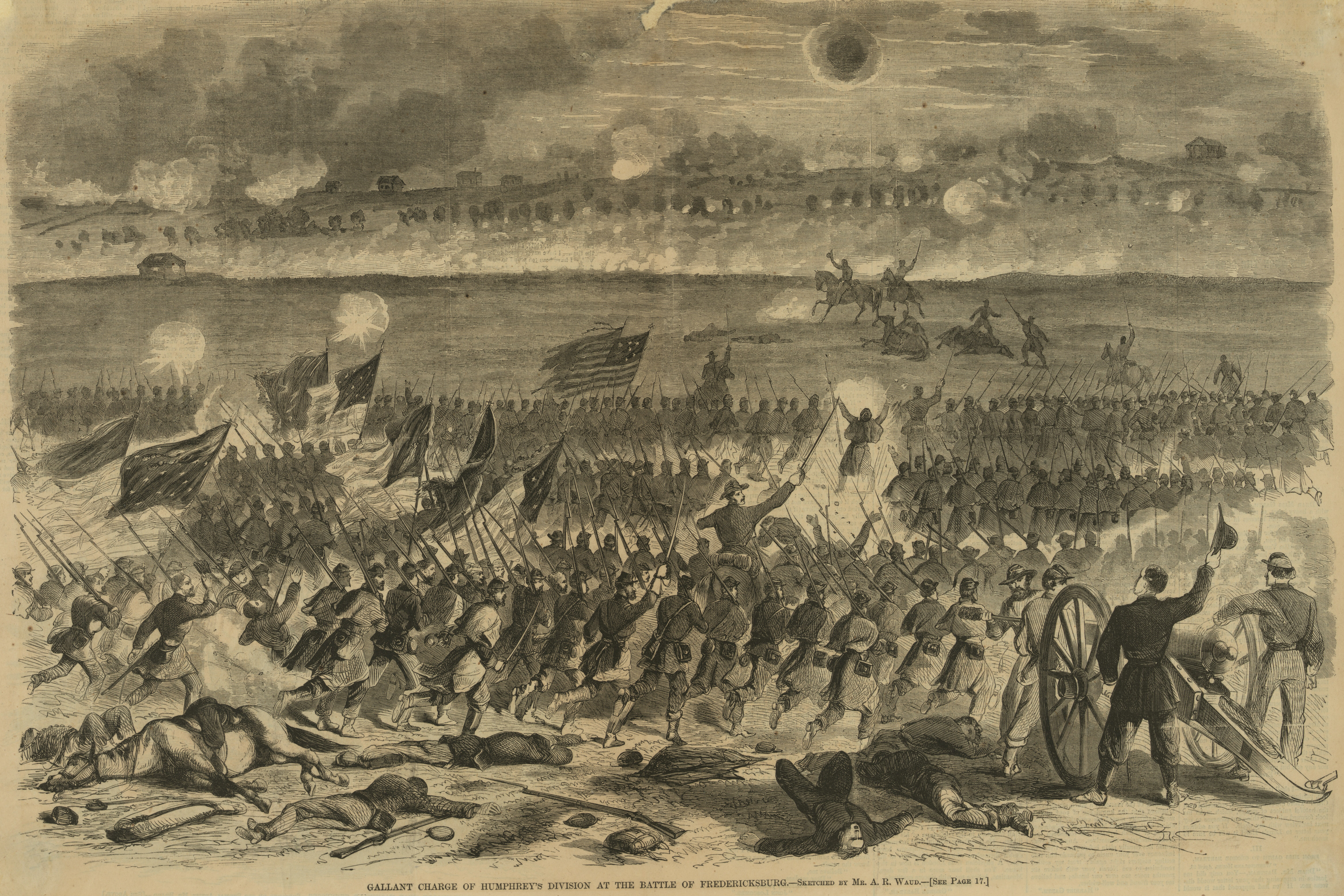
Fourteen Union charges broke against a four-foot stone wall at Fredericksburg in 1862. Visitors still hear the footsteps that never reached it.
Seven Union divisions launched fourteen separate charges at a four-foot stone wall on December 13, 1862. None of them got closer than fifty yards. By dusk, roughly 8,000 federal soldiers lay dead or wounded across the open slope below Marye's Heights, and the slope itself, frozen and trampled, was the loudest part of the war that day. The night after, the aurora borealis appeared over Fredericksburg, rare that far south, snapping and crackling above the field. Joshua Lawrence Chamberlain of the 20th Maine, burying his dead, called it "fiery lances of gold, all pointing and beckoning upward." Florida troops who had stood through the artillery, according to John W. Thompson Jr., stampeded in terror under the lights.
That is the day the place is built on. Everything else, the cemetery, the Kirkland statue, the visitor stories, sits on top of it.
The Confederate position was the Sunken Road, formerly Telegraph Road, fronted by a stone wall with log breastworks and Longstreet's infantry packed multiple ranks deep behind it. Before the assault, artillery commander Edward Porter Alexander told Longstreet, "A chicken could not live on that field when we open on it." He was almost right. The Union army committed roughly 123,000 men against about 78,000 Confederates and walked into ground Alexander had already ranged. Federal losses came in at more than 12,500 killed, wounded, or missing across the December 11-15 fighting. Confederate losses were about 5,000. By late afternoon on the 13th, General George Meade was asking John Reynolds, "My God, General Reynolds, did they think my division could whip Lee's whole army?"
The Irish Brigade went in with green sprigs of boxwood in their caps. About 1,200 men charged Marye's Heights. Roughly 545 were killed, wounded, or missing by the time they pulled back, including most of the brigade's field officers. Watching the Confederate counterattack later that day, Lee is supposed to have said, "It is well that war is so terrible, or we should grow too fond of it." The line was published by Alexander decades later and scholars treat it as attributed rather than directly documented, but it stuck because it fit. After the battle Pennsylvania Governor Andrew Curtin reported to Lincoln, "It was not a battle, it was a butchery." Lincoln answered, "If there is a worse place than hell, I am in it."
Out on the field that night, with wounded men still calling from the slope, a Confederate sergeant from Co. G of the 2nd South Carolina Volunteers asked permission to climb the wall. Richard Rowland Kirkland filled canteens and carried water to wounded Union soldiers stranded on the slope, under fire from his own side at first, then unmolested as both lines figured out what he was doing. NPS puts the act on the evening after the assault. Other accounts put it the following day. The traditional source for the story is General Kershaw, writing eighteen years later, and Kershaw was not precise about the clock. Kirkland was killed at Chickamauga on September 20, 1863, less than a year later. The statue at the wall was sculpted by Felix de Weldon, the man who also did the Iwo Jima Memorial, and dedicated in 1965. The inscription on it reads: "At the risk of his life, this American soldier of sublime compassion brought water to his wounded foes at Fredericksburg. The fighting men on both sides of the line called him 'the Angel of Maryes Heights.'"
Congress established Fredericksburg National Cemetery in July 1865, three months after the war ended, on Marye's Heights itself. The very ground Union soldiers had charged became the ground they were buried under. More than 15,000 US soldiers are interred there. Only about 20% have names. The rest are marked Unknown. The cemetery was closed to new burials in the 1940s.
Visitors to the Sunken Road and the cemetery describe distant war cries, footsteps that move along the wall and never arrive, formations of soldiers seen at the edge of sight, the smell of gunpowder where nothing is burning, and abrupt drops in temperature. The road itself has been restored to something close to its 1862 appearance, though the exact year of the restoration isn't easy to pin down. Mark Nesbitt, a former NPS Gettysburg ranger and historian who founded the Ghosts of Gettysburg tours in 1994 and the Ghosts of Fredericksburg tours in 2006, has collected EVP recordings here and at the nearby Wilderness and Spotsylvania fields. That is not the same as proof, and Nesbitt is candid that it isn't. But he is a working historian with a paranormal habit, which is not the same shape as a tour promoter.
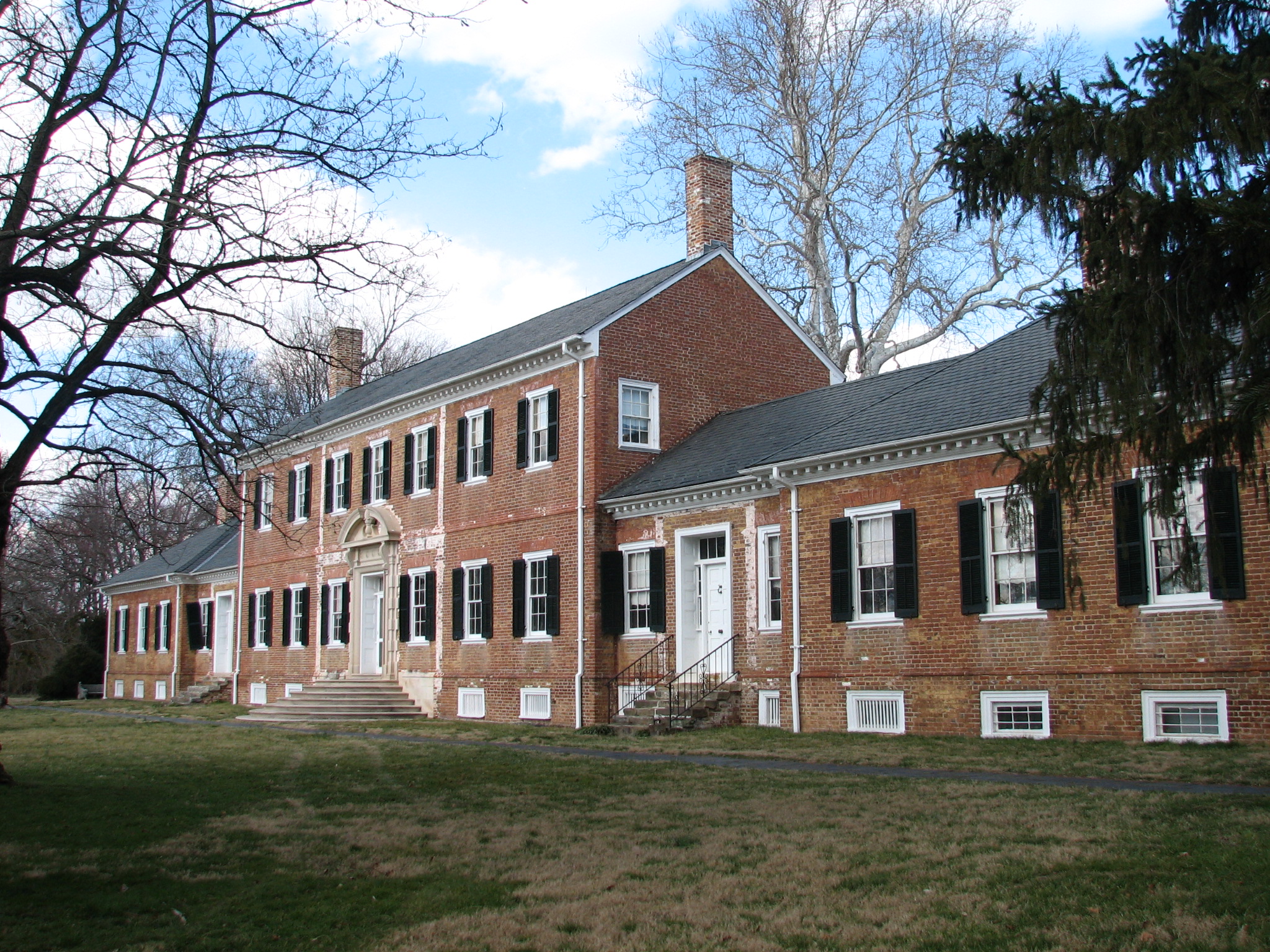
Across the Rappahannock, Chatham Manor served as the Union field hospital where Clara Barton and Walt Whitman worked the wounded; about 130 soldiers died inside and were buried on the grounds before being moved to the cemetery on Marye's Heights, joining that 80% of nameless graves. Chatham carries its own ghost story (see the [Chatham Manor page](/place/chatham-manor) for the Lady in White), but the battlefield's haunting sits squarely on the field.
What this place actually offers, set against the slick haunted-attractions further down I-95, is the field. The wall is still four feet high. The slope above it is still open. The cemetery sits on top of it. Fifteen thousand graves, eighty percent of them blank, on the ground where they fell.
The inscription on Kirkland's statue still ends with the line both sides used: the Angel of Maryes Heights.