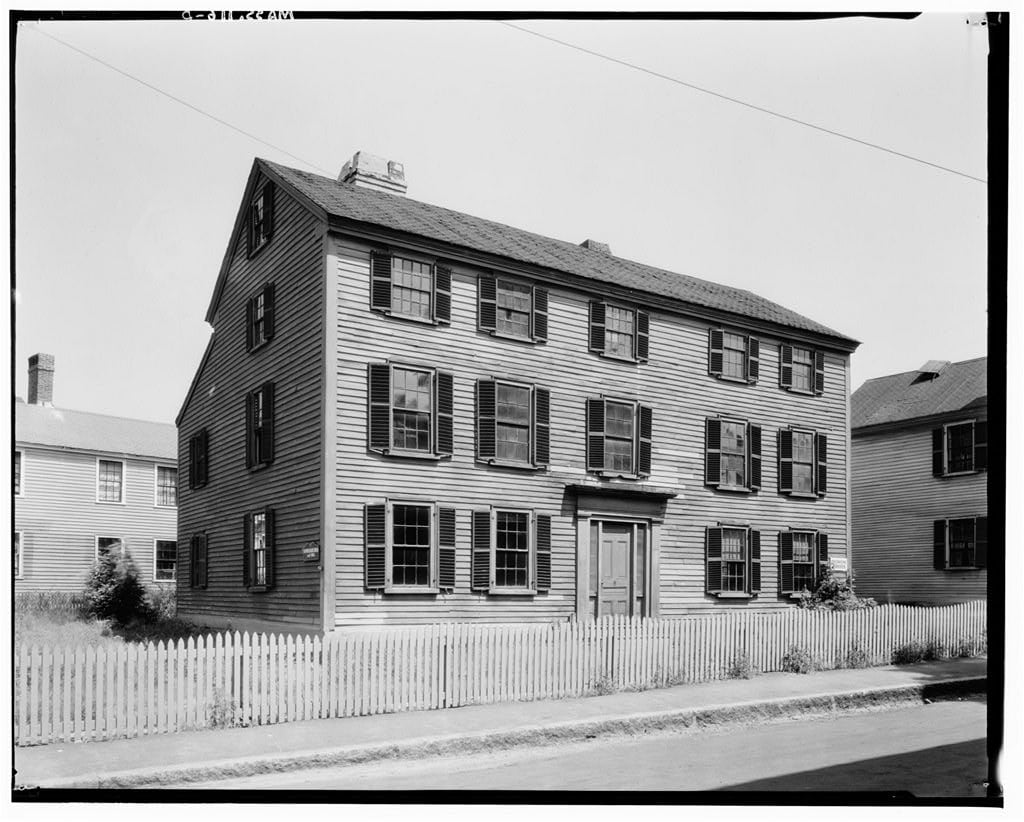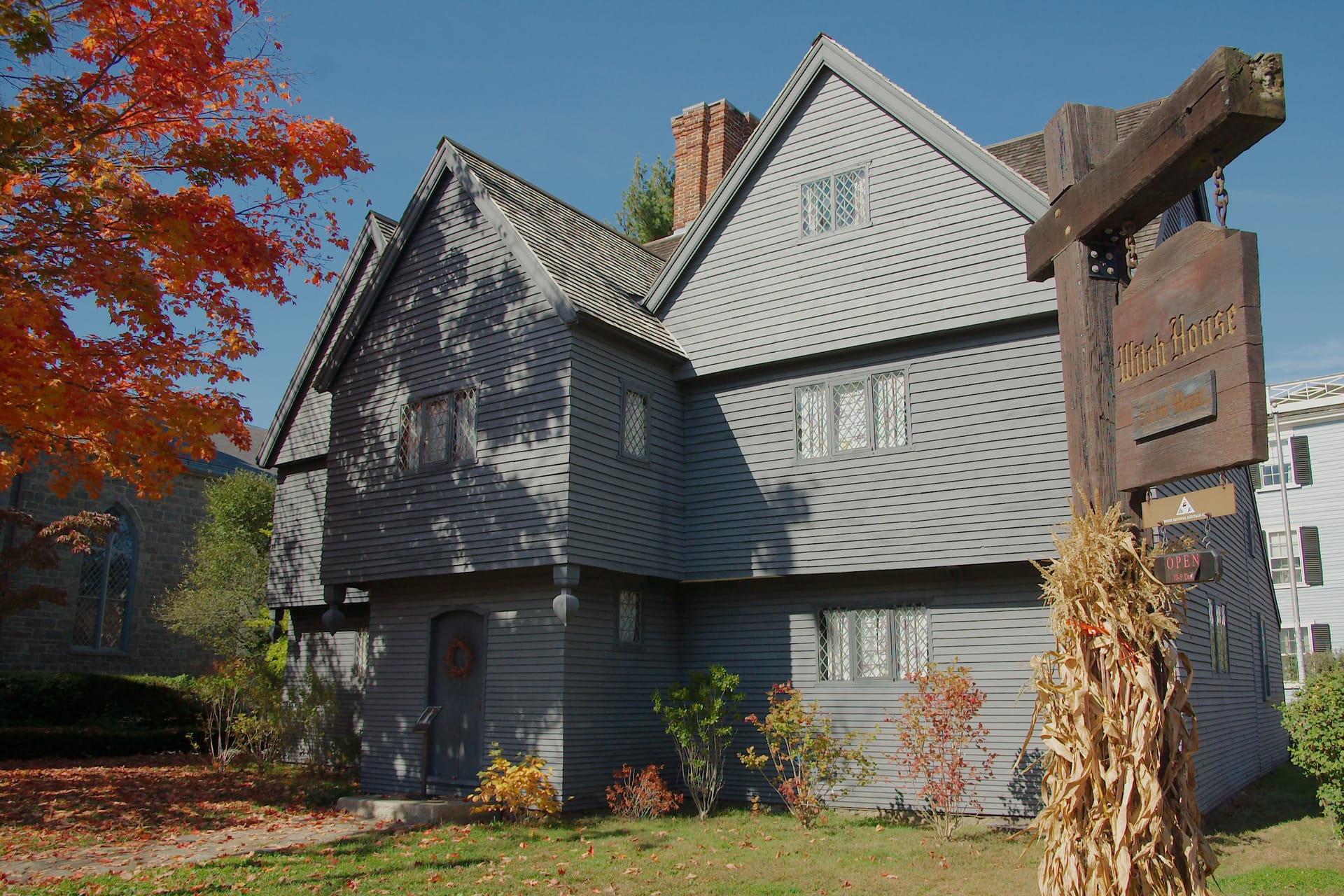
The Witch House in Salem, Massachusetts is the last building standing with a direct tie to the 1692 trials. It belonged to Judge Jonathan Corwin, who sent nineteen people to the gallows. Visitors keep hearing a little girl's voice from empty rooms.
The Witch House at 310 Essex Street in Salem, Massachusetts is the only building left in town with a direct line to the 1692 witch trials. Visitors inside it keep reporting the same thing: a little girl's voice, coming from rooms that are empty.
It was the home of Jonathan Corwin. He was a Salem merchant who bought the half-finished house in 1675 and lived in it for more than 40 years, until his death in 1718. In 1692 he sat as a magistrate on the Court of Oyer and Terminer, the court that sent nineteen people to the gallows. He took the seat after another judge, Nathaniel Saltonstall, resigned in the wake of the first execution. Corwin's court convicted partly on what they called spectral evidence — accusations built on dreams and visions, nothing you could hold in your hand. Of all the trial judges, he was the only one who never apologized.
The youngest person accused in the whole affair was four years old. Her name was Dorothy Good. On March 24, 1692, Corwin and a second magistrate, John Hathorne, examined the child, and she told them she kept a pet — "a little Snake that used to Suck on the lowest Joint of her Fore-Finger." They looked at her hand and found "a deep Red Spot, about the Bigness of a Flea-bite." On the word of a four-year-old and a fleabite, she went to jail. She was held for roughly nine months and released that December on a £50 bond. She was never indicted, never tried. She was four.
Visitors to the house today report doors slamming, heavy footsteps, chills, and a man in a black suit some take for Corwin himself. But the one people keep coming back to is the child's voice in the empty rooms. Ghost-tour tellers connect it to Dorothy, though nobody can prove whose voice it is. When Ghost Adventures brought a crew here for a Salem lockdown, airing in early 2011, they said they caught a child's voice on the recording too.
The house almost didn't survive to be haunted. In 1944 the city meant to tear it down to widen the street. A preservation group raised the money instead, and the whole building was lifted and rolled back about 35 feet from the road. It was restored to its 17th-century look and opened to the public as a museum, which it still is, run by the city, open through the warmer months.
The judge's house outlasted the judge by three centuries. He sent nineteen people to die and never once said he was sorry. And the small voice that still turns up in his empty rooms, the one the storytellers want to be Dorothy, belongs to the youngest name on his court's docket — a girl who was jailed at four and walked out at five, and who, if she ever did come back, came back to the house of the man who sent her there.