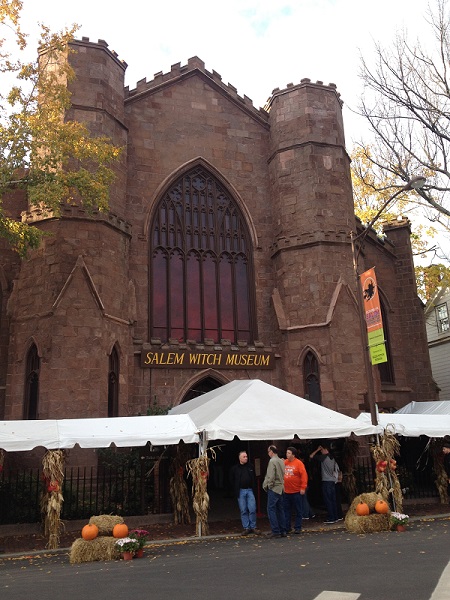
The Salem Witch Museum in Massachusetts doesn't just tell the story of 1692. It sits on the spot where Ann Dolliver — the minister's own daughter, accused of witchcraft and jailed — lived out her last broken years. The ghost reports here are thin. The ground is not.
The Salem Witch Museum in Salem, Massachusetts tells the story of the 1692 witch trials, and the visitors who file in for it never learn the worst thing about the building: one of the accused lived and died on the exact ground it stands on.
Her name was Ann Dolliver, and the plot at 19½ Washington Square North was her father's house. Reverend John Higginson was Salem's elder minister, and Dolliver was his grown daughter. Higginson was no zealot. People described him as a moderate man, "soft words, but hard arguments," and yet he sat in on the examinations all the same, including the questioning of 4-year-old Dorothy Good.
Then, on June 6, 1692, an arrest warrant came for his own daughter. Mary Walcott and Susanna Sheldon accused her, pointing to two wax poppets found in her possession. Ann admitted she'd used "counter-magic" with them. But, she told the magistrates, "not with intent to hurt anybody." She was jailed. She never stood trial. By then she was in her 40s, abandoned by her husband, raising three children, and she came back to her father's house on this ground — a woman he himself described as "melancholy" and "crazed in her understanding." There she spent her last years.
The 1692 trials killed 25 people in all: 19 hanged, Giles Corey pressed to death under stones for refusing to plead, and at least 5 dead in jail. The first to hang was Bridget Bishop, on June 10, 1692.
The building that stands over Dolliver's old home today went up in the 1840s as the meeting house for Salem's East Church, designed in the Gothic Revival style with pointed arches and corner buttresses topped by battlements. It has survived three fires since — in 1902, 1925, and 1969, the last one starting on the balcony and climbing into the attic. Long after the church congregation left, it served as an auto museum, then opened as the Salem Witch Museum on May 6, 1972, the first place in town to tell the full story of 1692.
The hauntings are the thin part. A few paranormal-travel sites repeat the same small handful of reports — cold spots near the stage sets that depict the trials, footsteps and voices in the galleries when the rooms are empty. No witness is named. No date is given. No investigation is on record. There's no lady in white here, no named spirit.
What's documented isn't the ghost. It's the ground. Visitors file into a museum about the accused, never knowing one of them lived and broke and died on the dirt beneath their feet.