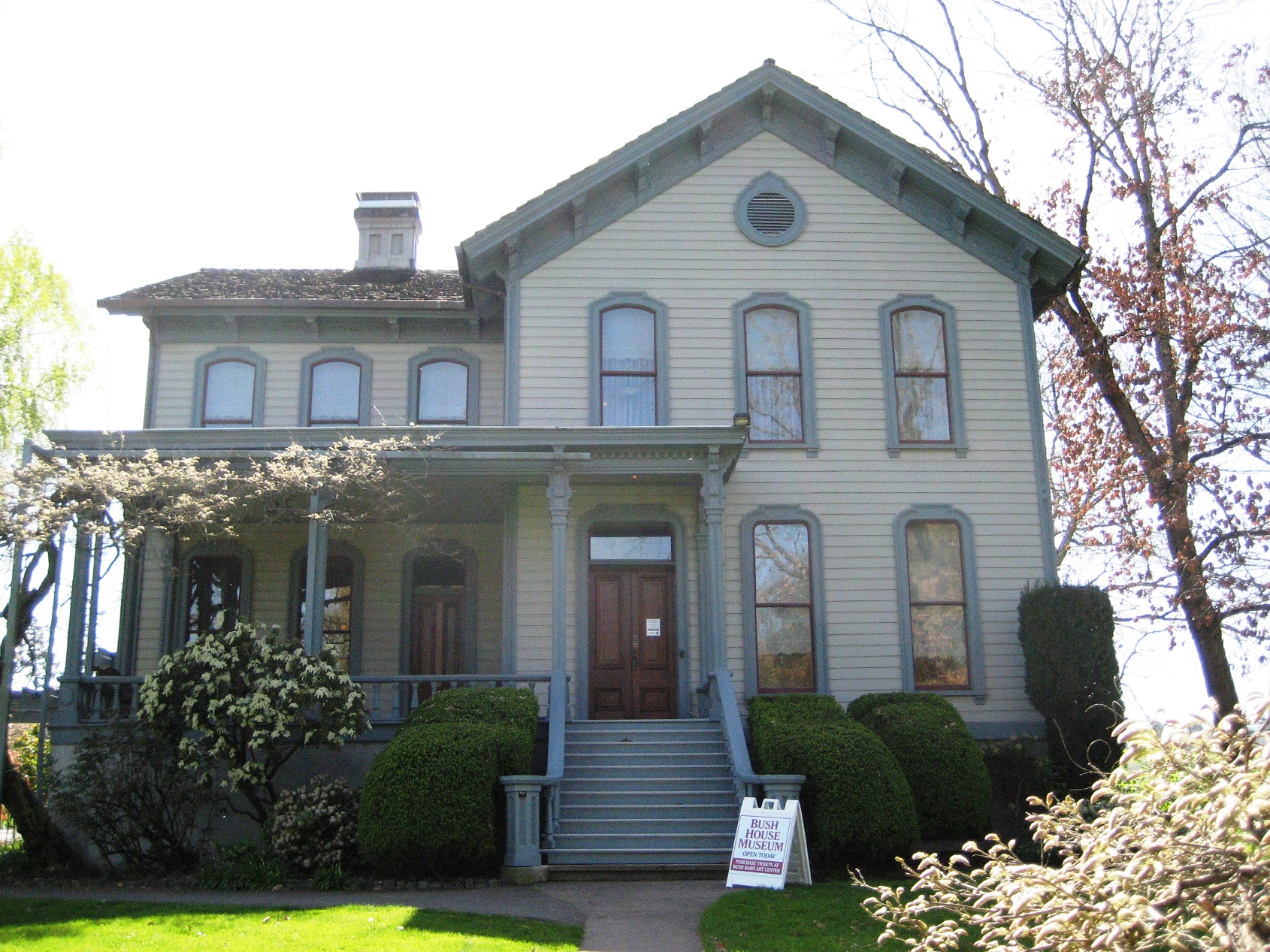
The Bush House Museum in Salem, Oregon comes with a cruel legend: a newspaper baron who locked his mentally ill daughter in the basement out of shame. The truth runs the other way. And the figure people report inside isn't a bitter old woman, but a young girl.
At the Bush House Museum in Salem, Oregon, the heat keeps going up on its own. When Asahel Bush II built the Italianate mansion in 1877, he filled it with things almost no house in the Pacific Northwest had yet: central heating, indoor plumbing, gas lights, ten fireplaces of Italian marble. The central-heating controls are the part that matters here, because someone keeps nudging them up, and staff have come to expect it. The people who have rented its rooms say they know who: a young girl, moving through the house.
The legend gives her a crueler story. Bush, the newspaper baron who founded the Oregon Statesman, is said to have locked his mentally ill daughter Eugenia in the basement, ashamed of her, and her spirit is supposed to still wander where he kept her.
Museum staff have spent years taking that version apart, because the record says he did the opposite.
Eugenia "Genie" Bush, born in Salem in 1862, was the youngest of Asahel's four children. By the museum's own timeline, she was committed to the Bloomingdale Asylum in New York in 1893, then the Hartford Retreat in Connecticut the year after. He sent her east for private care, not down to a cellar. During those years she kept up correspondence from the institution: with Edward Kemble, who illustrated Huckleberry Finn, about art schools, and with the architect Henry Janeway Hardenbergh about working in his field.
She was gone more than twenty years. After Asahel died in 1913, her brother enlisted an Oregon senator to win her discharge, and in 1914 she came home to Salem to live with her sister Sally. She died here in 1932, at 70.
So the figure people describe fits nothing in the legend. They report a young girl, not a bitter old woman, slipping through the parlor with its imported French wallpaper and warming the rooms behind her. Renters and visitors also report cold spots, shadows that don't hold still, and a woman's voice or soft crying from rooms standing empty.
The museum doesn't tell any of this. Its own history is about the architecture and the family, and the ghosts live only in third-party ghost books. What staff will say is that the Bush family has moved on.
There is a second figure. A man in an 1800s frock coat, winding a pocket watch, has been seen in the house; one visitor matched him to an old photograph of Asahel himself. The father the story made a villain keeps turning up in the same rooms as the daughter it never understood.