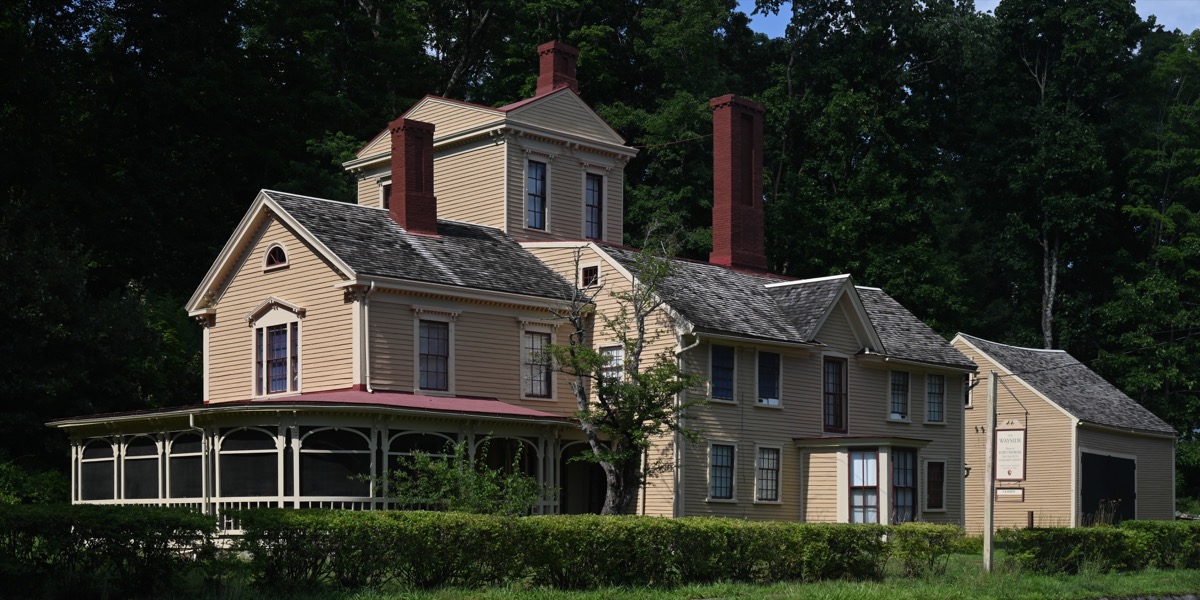
The Wayside in Concord, Massachusetts is the one house three literary families called home. Nathaniel Hawthorne bought it with a ghost story attached — a former owner who swore he'd never die — and spent his last years failing to write the man down before his own death in 1864.
The Wayside, on Lexington Road in Concord, Massachusetts, is the one house where three American writers lived in turn. Its ghost isn't a face at a window. It's a story Nathaniel Hawthorne inherited with the deed, and never managed to put down.
When Hawthorne bought the place in 1852, Henry David Thoreau told him a piece of its history. A man had lived there a generation or two back who believed he would never die, and his spirit was rumored to haunt it. Hawthorne wrote it in a letter that year, plainly: "I know nothing of the history of the house, except Thoreau's telling me that it was inhabited a generation or two ago by a man who believed he should never die." Nobody could name the man. Nobody could date him. The legend survived only because Thoreau passed it on and Hawthorne wrote it down.
He couldn't let it go. His son Julian later wrote that the deathless man was one of the themes his father returned to again and again in those years. In 1860, back from Europe, Hawthorne built a three-story tower onto the rear of the house and worked at the top of it, in a room he called his sky parlor. There he tried to turn the deathless man into a novel, "Septimius Felton; or, The Elixir of Life," a romance of immortality he set at The Wayside itself. He died on May 19, 1864, with it unfinished, the manuscript left in the tower study where he'd been writing it.
So the man who built a story around someone who refused to die left it half-written, in the room he built to write it, in the house where the legend started. And it was never even his story. He'd heard it secondhand, from a neighbor, about a stranger no one could name, and spent his last years trying to give it an ending he didn't reach.
A second story grew up around that tower. People said Hawthorne sat on a trap-door, the only way up, and weighted it with his chair so nobody could reach him. His own editor knocked it flat in print: "It is wholly unfounded. There never was any trap-door." A reclusive writer in a tower invites a legend; this one just isn't true.
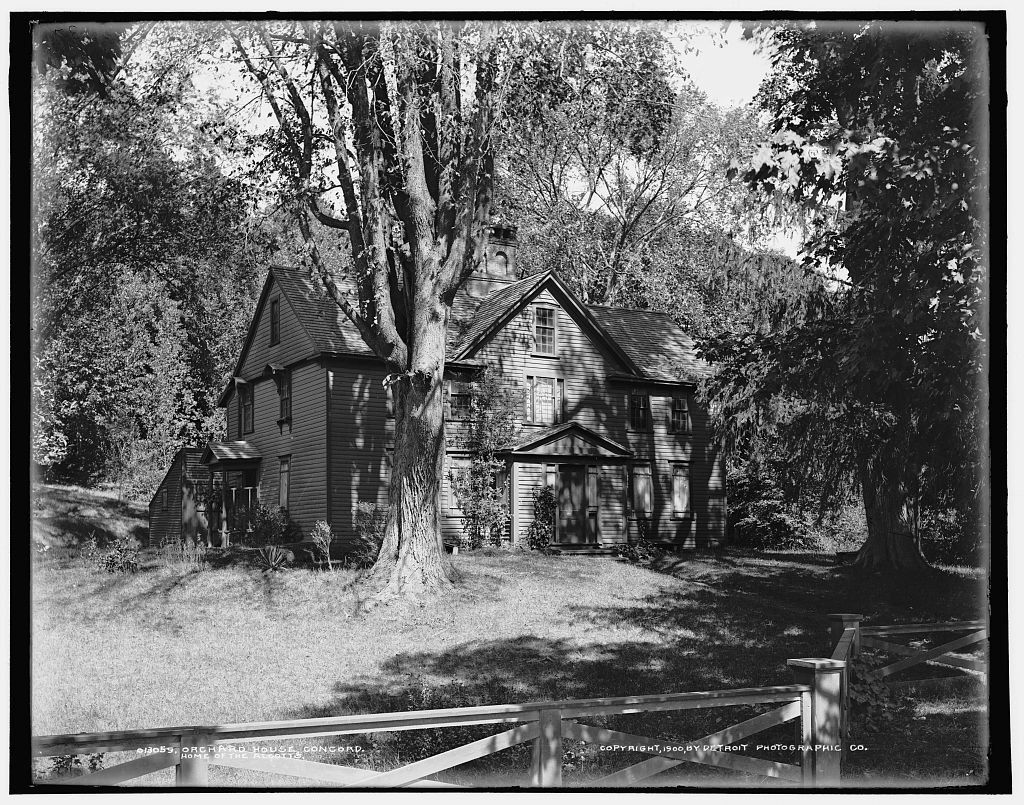
The house wore three names before it was done. The Alcotts called it Hillside, and a teenage Louisa May Alcott wrote her first book under its roof. Hawthorne renamed it The Wayside. Margaret Sidney of the Five Little Peppers books kept it for decades after. It's a National Historic Landmark now, open for tours, and the figure people go looking for never appears. What stayed is the story its most famous resident chased to the end and never caught.