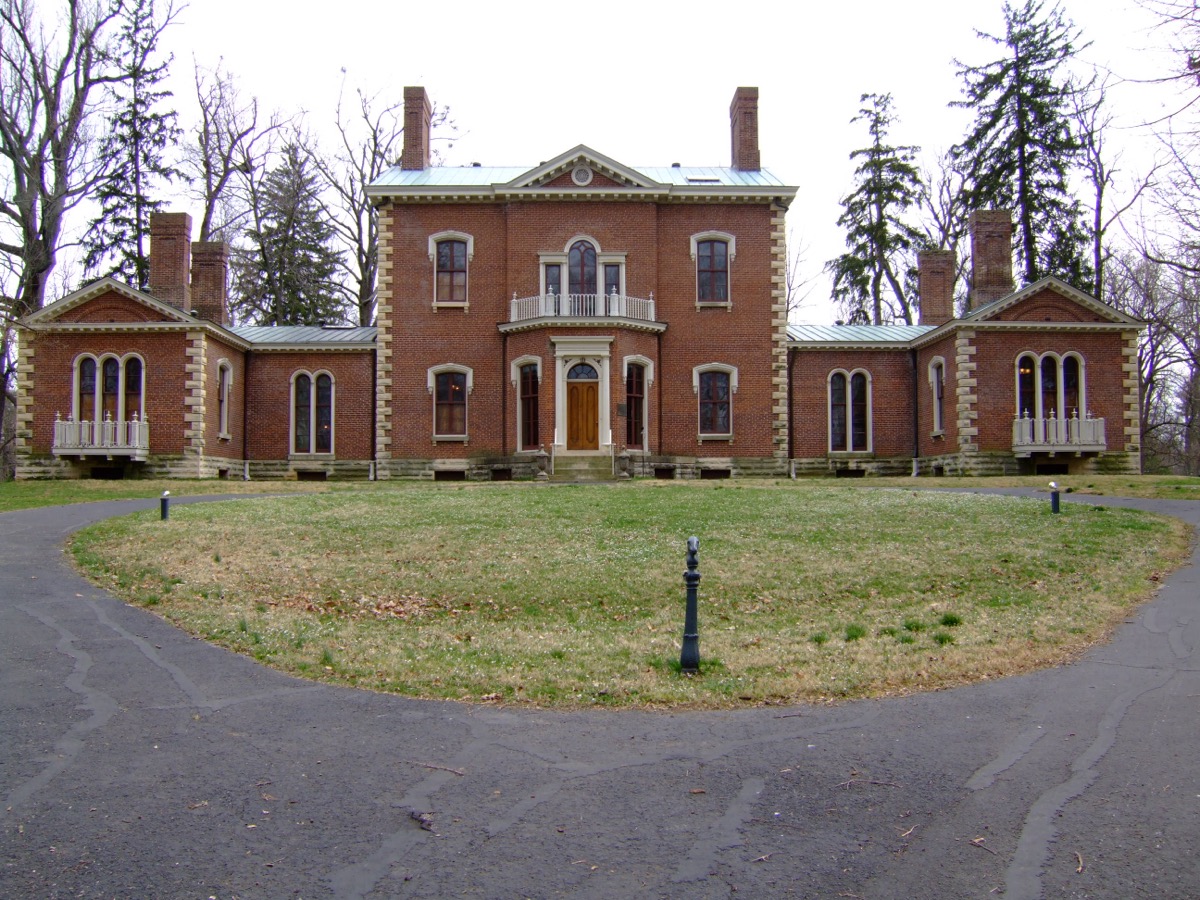
At Ashland in Lexington, Kentucky, visitors keep seeing Henry Clay himself: a white-haired man in a black frock coat, leaning on the study mantel, looking over the mementos of a career that never got him the one job he wanted.
At Ashland, the Henry Clay Estate in Lexington, Kentucky, the man people keep seeing is Henry Clay himself. White hair, a black frock coat, leaning against the fireplace mantel in the red parlor that's now staged as his study. He doesn't reach for anyone. He stands there and looks at the career mementos laid out around the room, and the people who report him say he seems satisfied, like a man taking inventory of his own life's work.
That work was enormous, and it was short one thing. Clay came to Lexington from Virginia in 1797 and started buying land in 1804. He named the place Ashland by 1809, after the ash forest that stood on it. He was Speaker of the House, Secretary of State, the great deal-maker who held the country together more than once. He also ran for president three times and lost every time. The one job he wanted was the one he never got.
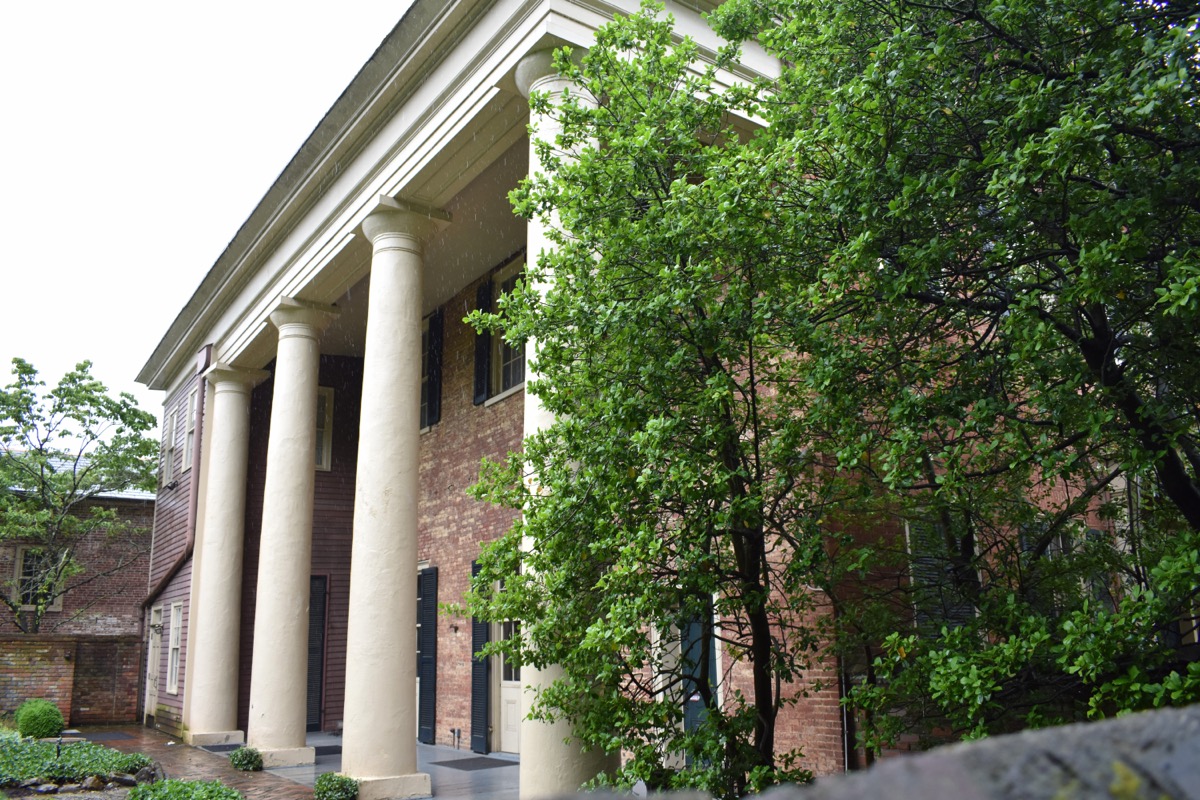
He died in 1852, the first American to lie in state in the Capitol rotunda. And the house his ghost leans against isn't the house he lived in. He spent nearly fifty years building this estate, the original Federal house going up around 1806, with two wings added by Benjamin Latrobe, the architect of the U.S. Capitol. By the time Clay died, that house had deteriorated. His son James Brown Clay had it razed in 1854 and rebuilt on the same foundation and footprint, finished in 1857. The mantel Clay's apparition rests against was set in place years after he was already gone. He came back to a copy.
The parlor was one of his favorite rooms in life, so the accounts read his lingering there as attachment, not menace. Other reports are stranger and harder to place. One visitor recalled a 1990s tour when a door opened on its own as the group climbed the staircase, watched by the guide too. A 2021 account described two black silhouettes in period dress walking toward the gardens at night, a woman in a bell-shaped dress and a man in a suit, both so dark the streetlights "didn't touch" them.
Ashland opened to the public in 1950 and is a National Historic Landmark, the grounds now a green space of gardens and old trees where once there were 600 acres of hemp and tobacco. Staff and visitors still report shadowy figures and faint murmurs drifting the halls. But the one most often seen is the man at the mantel. He stands in a room rebuilt after his death, in a house he never set foot in, looking over the mementos of everything he won and the one thing he didn't. Clay, by every account, never left.