At the Amos Shinkle Townhouse in Covington, Kentucky, the innkeeper made up the bed in Sarah Shinkle's old room, stepped into the bathroom, and came back to find someone had sat down on the smoothed quilt. He was alone in the house except his assistant, who never left the bathroom.
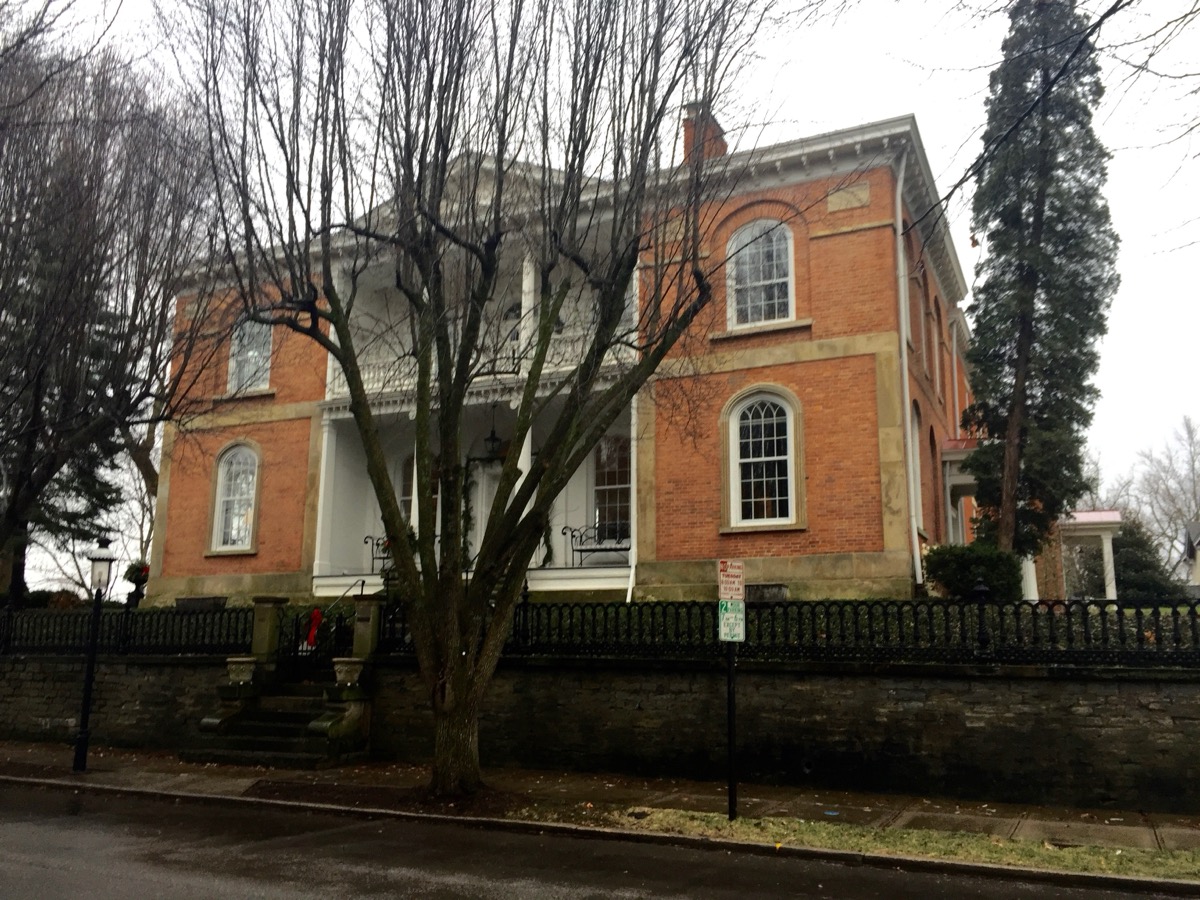
At the Amos Shinkle Townhouse on Garrard Street in Covington, Kentucky, the innkeeper finished making up the bed in Sarah Shinkle's old room one day, smoothed the quilt flat, and stepped into the next-door bathroom. When Don Nash came back, there was a deep impression on the bedding, a body-shaped one, as if someone had sat down on the spot he'd just smoothed. His assistant had been in the bathroom with him the whole time. The only word he ever had for what he found was "a butt impression upon it."
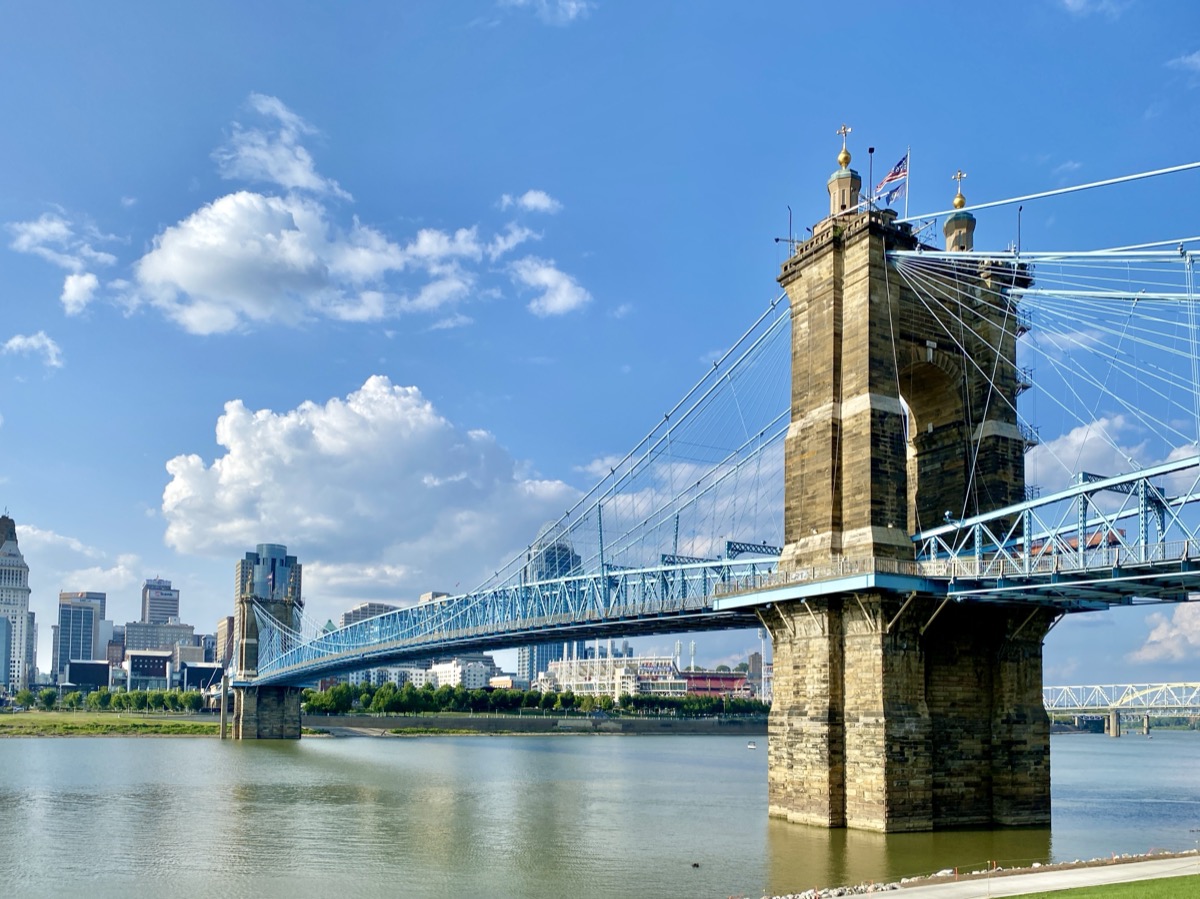
The house was built in 1854 for Amos Shinkle, a coal and steamboat baron who became one of the richest men in northern Kentucky. He ran a coal-reloading operation for the riverboats, built steamboats of his own, brought gas lighting and water service to Covington, and as president of the bridge company, bankrolled and oversaw the John A. Roebling Suspension Bridge across the Ohio. It opened to traffic on New Year's Day, 1867. His townhome on Garrard Street is Italianate, with 16-foot ceilings, hand-painted murals on the walls, and a cast-iron porch. Amos and his wife Sarah lived here for years.
Then, in 1869, Amos built her a far grander place, a Gothic mansion over on Second Street, and the story goes that Sarah never wanted it. She'd liked the Garrard Street house. She resented the move. Legend has it that after she died she came back to the one she preferred, and the room where she keeps turning up is the bedroom that was hers.
Nash and his partner, former Covington mayor Bernie Moorman, bought the townhouse in 1986, restored it, and ran it as a bed and breakfast until 2010. The bed story was theirs, told over and over across those years.
The darker thing happened out back. The carriage house, by local legend, once hid people fleeing slavery, and Moorman swore he'd kept that history to himself. Then a paranormal convention came through and some guests spent the night out there. They came into the main house the next morning shaken, reporting "feelings of sadness, fear, and despair, and even saw a hoard of faces on the second floor."
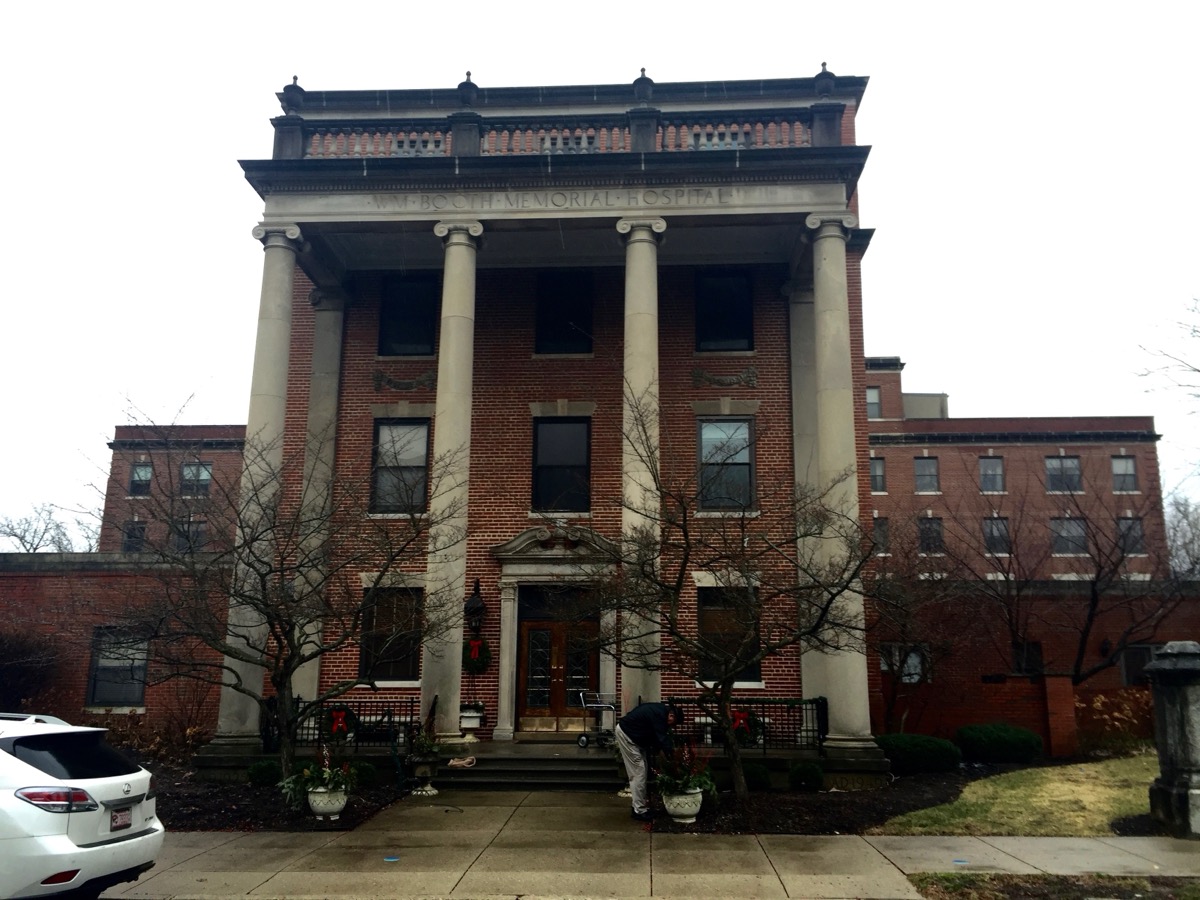
The Second Street mansion is long gone, donated to charity, turned into a hospital, demolished in the 1920s. The Garrard Street townhouse is the only Shinkle home left standing. It sold in 2012 and went back to a private family. Of all the houses Amos built her, the small one she liked is the only one that survived, and it's the one she came back to.