About This Location
The site of the bloodiest single day in American military history - September 17, 1862, when 23,000 men were killed, wounded, or went missing in 12 hours. Often cited as the most haunted place in Maryland.
The Ghost Story
Antietam National Battlefield witnessed the bloodiest single day in American history on September 17, 1862. In just twelve hours, 23,000 men were killed, wounded, or went missing—a casualty every two seconds. The battle resulted in a tactical stalemate but gave President Lincoln the political capital to issue the Emancipation Proclamation. Today, this hallowed ground is considered one of the most haunted places in America.
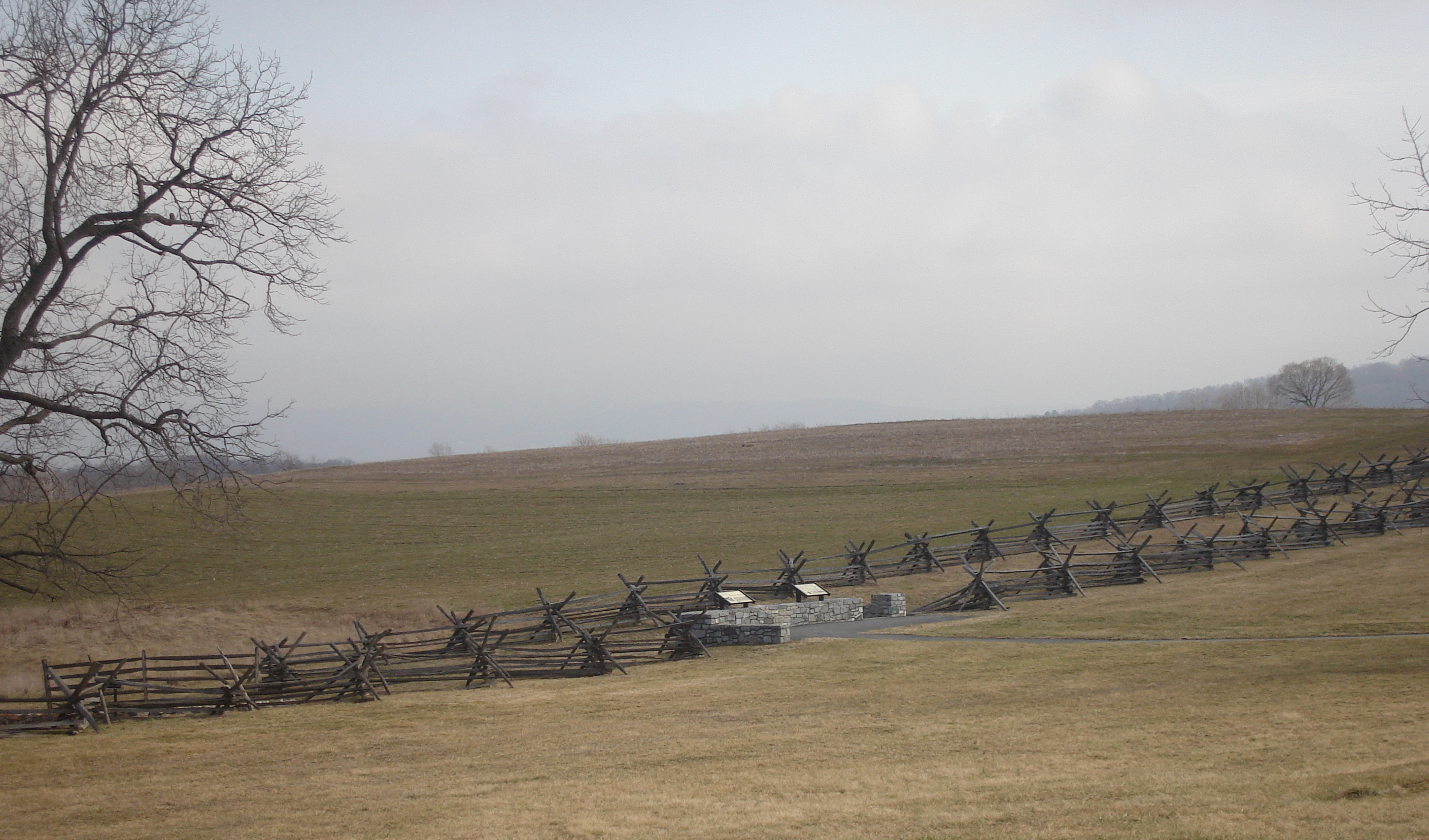
**Bloody Lane (The Sunken Road)**
The sunken farm road that divided two properties became a natural trench where Confederate soldiers held their position. In under four hours, approximately 5,500 men from both armies fell along this quarter-mile stretch. Bodies piled so thick that witnesses said you could walk its entire length without touching the ground. The road earned its grim name from the literal rivers of blood that flowed through it.
Visitors today report phantom gunfire piercing the air and the unmistakable smell of gunpowder lingering where no battles have occurred for over 160 years. Some have seen Confederate soldiers in full uniform walking the lane, appearing to be reenactors—until they vanish into thin air when approached. One of the most documented accounts involves a group of Baltimore schoolboys on a field trip who heard what they described as Christmas caroling coming from the fields near the observation tower. They hummed the tune for their teacher, who recognized it was not "Deck the Halls" but rather "Faugh-a-Balaugh" (meaning "Clear the Way")—the Gaelic battle cry of the Irish Brigade.
The Irish Brigade, primarily the 69th New York Regiment known as "The Fighting 69th," charged Confederate positions at Bloody Lane five times that day. They suffered 60% casualties, with eight successive color-bearers shot down as each man picked up the fallen flag. General Thomas Francis Meagher had his horse shot from under him and was carried unconscious from the field. The phantom chanting of their Gaelic war cry continues to echo across the battlefield.
One group of modern reenactors decided to spend the night sleeping on Bloody Lane at the exact spot where Alexander Gardner's famous photographs showed piles of Confederate dead. One by one, they abandoned the location, complaining of "auditory anomalies" and an overwhelming sense of wrongness. The last volunteer who remained, mocking his departing comrades, later fled screaming into the darkness. He described feeling what seemed like a human arm pressing down on his chest from the blood-soaked earth, accompanied by whispers and moans.
**Burnside Bridge**
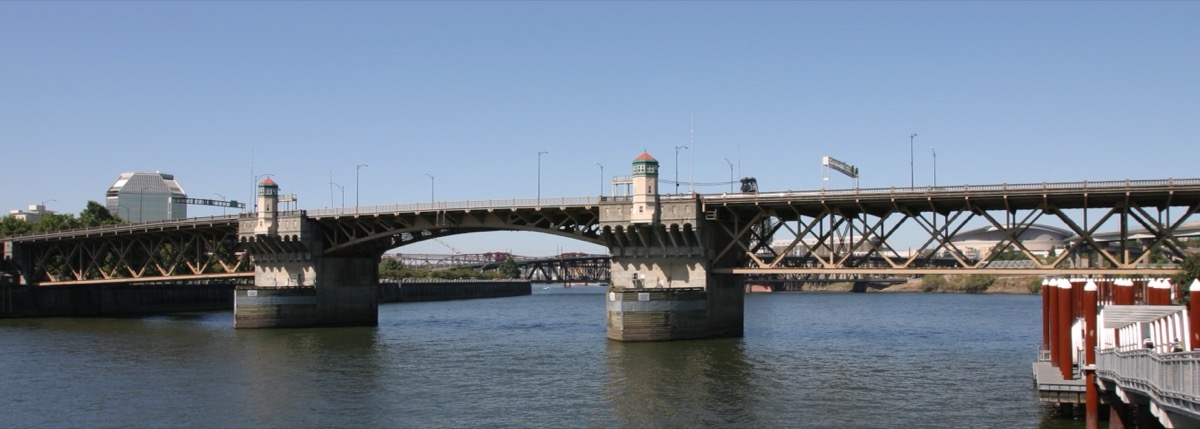
At the southeast corner of the battlefield, Union General Ambrose Burnside spent hours attempting to cross a stone bridge over Antietam Creek while just 400 Georgian sharpshooters held them at bay. Many soldiers were hastily buried in unmarked graves around the bridge after the battle. Night visitors report glowing blue orbs of light moving around the structure and the sound of a phantom drummer beating out a cadence before fading into silence. Witnesses have seen blue-uniformed apparitions crossing the bridge in formation, only to vanish mid-span.
**The Pry House**
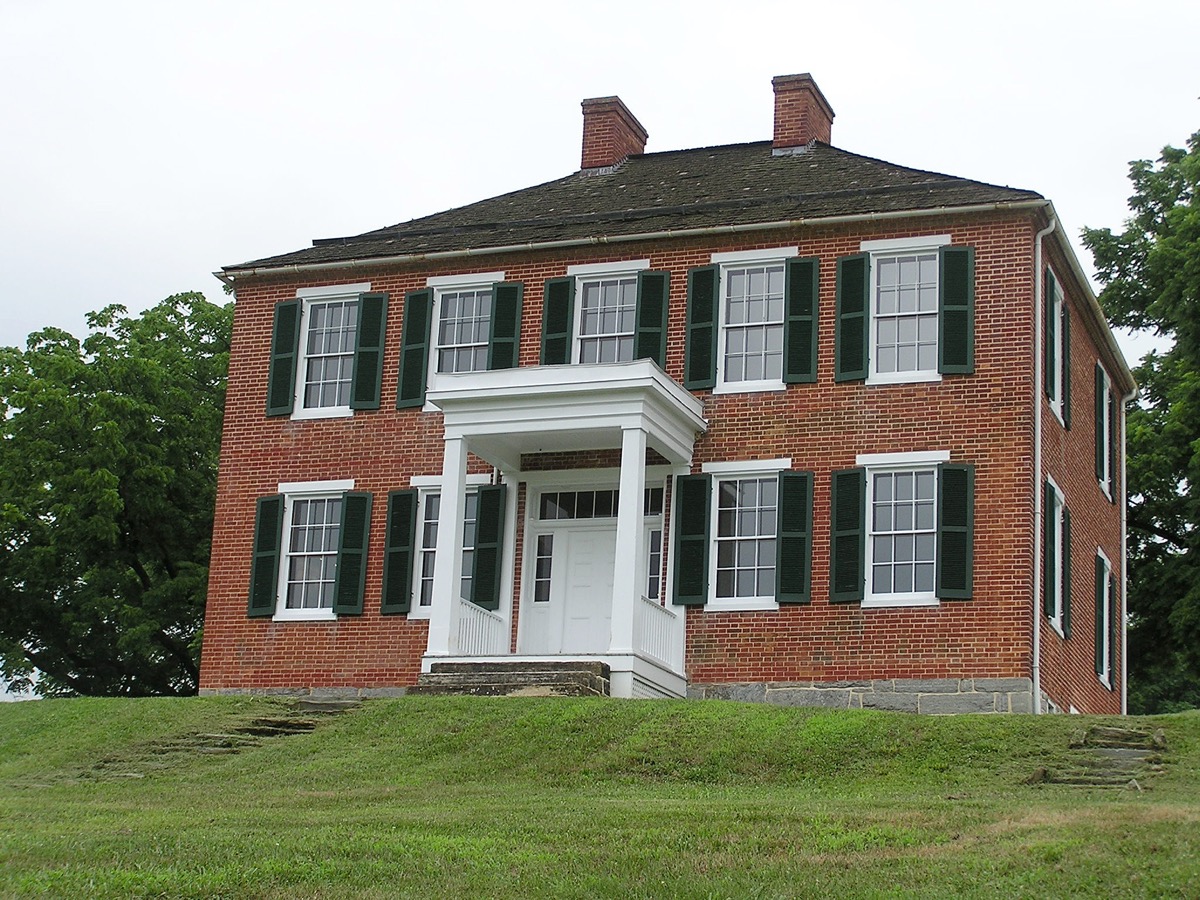
This farmhouse served as Union headquarters for General George McClellan during the battle. As casualties mounted, it became a field hospital. General Israel Bush Richardson was wounded during the fighting and brought to a second-floor room to recover. His wife Fannie traveled from Michigan to nurse him. President Lincoln himself visited Richardson in October 1862. Tragically, the general developed pneumonia and died in that room on November 3, 1862.
During a 1976 fire, firefighters battling the blaze reported seeing a woman in 19th-century clothing standing at the second-floor window of Richardson's death room—even after the entire floor had collapsed. When restoration contractors arrived later, they too spotted a woman in the same window and found no floor beneath it. One contracting crew abandoned the project entirely after witnessing the spectral figure. Museum director George Wunderlich experienced his own encounter on his first day: after opening all the doors in the house, each one slammed shut in sequence from front to back. When he reopened them, they slammed again, this time from back to front. His 12-year-old son saw a woman in period dress walk through a wall on the second floor. The ghost is believed to be Fannie Richardson, who never stopped watching over her husband. The Pry House now serves as the National Museum of Civil War Medicine.
**The Piper House**
Located in the middle of the battlefield, this farmhouse served as headquarters for Confederate Generals James Longstreet and D.H. Hill. The barn became a field hospital. After the fighting ended, three dead soldiers were removed from beneath the parlor piano. When farmer Henry Piper returned home, he found his house standing but filled with blood and bodies. Visitors today report unexplained figures, mysterious footsteps on the stairs, and strange sounds throughout the structure.
**Dunker Church**
The simple white church of the German Baptist Brethren (known as "Dunkers" for their baptism by immersion) became a focal point of the battle and afterward served as a makeshift hospital and morgue. A truce was called here to allow both sides to care for their wounded. Ghost hunters report hearing voices and footsteps when the church stands empty, along with the moans and wailing of soldiers reliving their final moments.
**St. Paul Episcopal Church, Sharpsburg**
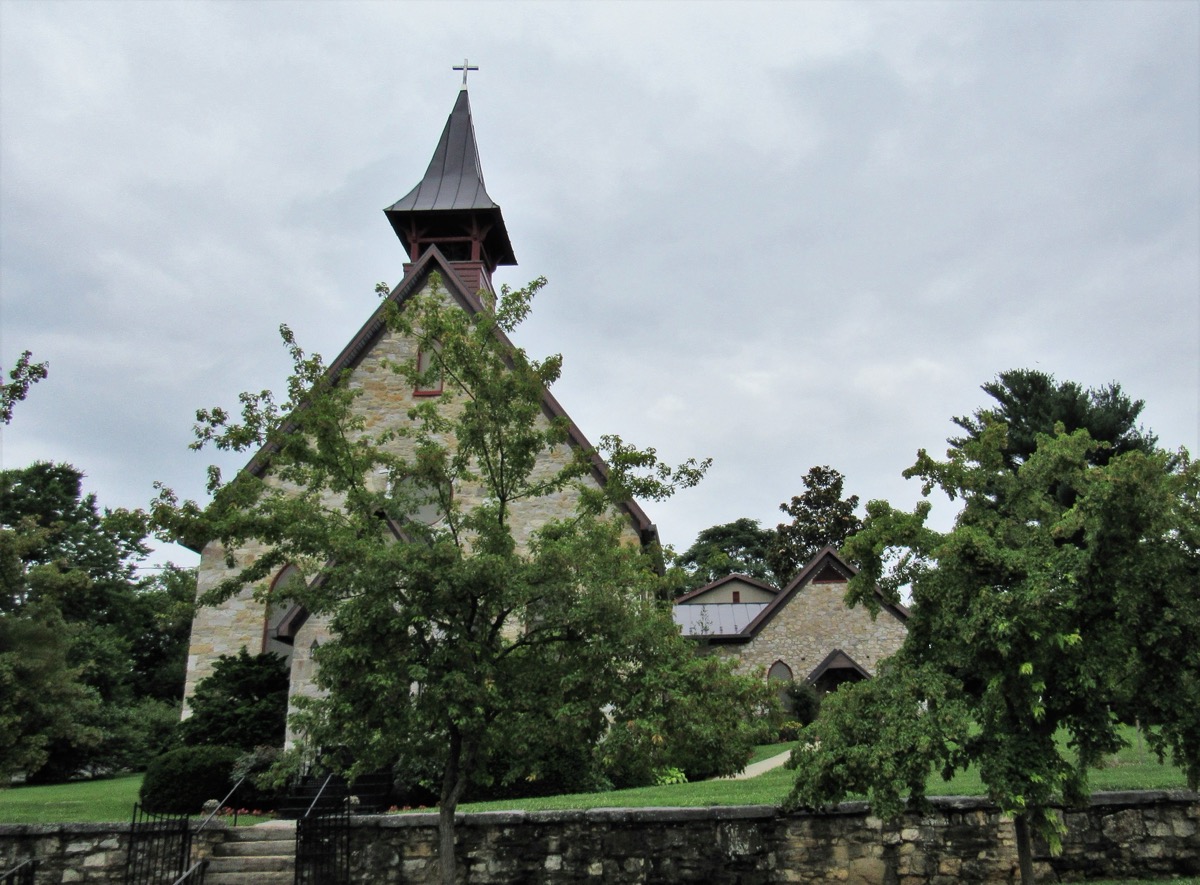
In the center of town, this church was badly damaged during the battle and converted to a Confederate hospital. The floorboards remain stained with blood that cannot be removed even with sanding. Visitors report hearing screams of the injured and dying emanating from inside, and mysterious flickering lights appear in the church tower when no one is present.
Park Ranger Brian Baracz has noted: "There are times it's eerie to be at the battlefield. I've never seen anything, but it's more of a feeling, because some terrible things happened here." Paranormal activity reportedly intensifies every September 17th, the anniversary of the battle. Investigators have documented electromagnetic field spikes at locations corresponding to historical regiment positions, unexplained lights captured in photographs, and cold spots throughout the battlefield. The 4,776 Union soldiers buried in Antietam National Cemetery—along with countless more in unmarked graves across the battlefield—seem unwilling to leave the ground where they fell.
Researched from 11 verified sources including historical records, local archives, and paranormal research organizations. Learn about our research process.